Government to introduce strong incentives for rental housing development
Government to introduce strong incentives for rental housing development
The construction ministry has proactively proposed new policy measures to translate the Party and State leadership’s directives into amendments to the Housing Law and the law on real estate business, which are expected to be submitted to the National Assembly for approval in October.
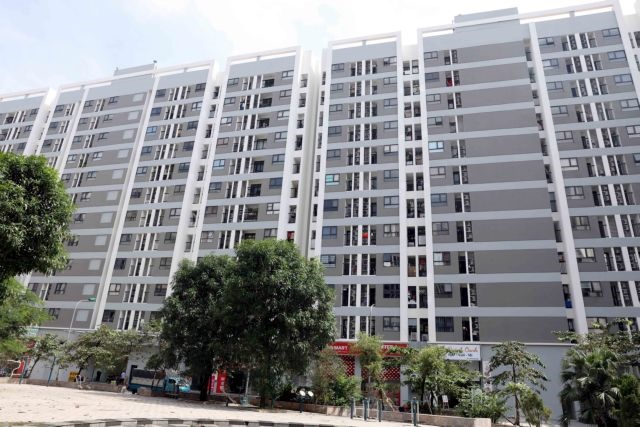
A social housing project in Hưng Yên Province. — VNA/VNS Photo |
Policy reforms in the coming period will focus on introducing more incentives to support the expansion of the rental housing sector, a Ministry of Construction official said at the Government’s regular press conference for May, held in Hà Nội on Wednesday.
Responding to media questions about breakthrough mechanisms to attract investment in the long-term rental housing segment, Lâm Văn Hoàng, Chief of the ministry's Office, said the rental housing model was not new and that the current legal framework already provided relatively comprehensive regulations. Notably, the 2023 Housing Law clearly distinguishes between housing for sale, rental housing and lease-purchase housing. However, rental housing development has remained limited.
Against the backdrop of rapid urbanisation and rising housing demand, Hoàng stressed the need for stronger measures regarding financing, land access and preferential management mechanisms.
According to the official, to accelerate the development of rental housing, the ministry is focusing on three key tasks of improving policies and legal mechanisms, reviewing and issuing technical standards and regulations, and assessing demand across different groups and regions.
The construction ministry has proactively proposed new policy measures to translate the Party and State leadership’s directives into amendments to the Housing Law and the law on real estate business, which are expected to be submitted to the National Assembly for approval in October.
Under the proposed changes, housing policy would shift from a primary focus on commercial housing to a more balanced approach encompassing commercial housing, social housing and rental housing. Rental housing is identified as a strategic long-term segment serving a broad range of people, particularly workers, students, civil servants, public employees and members of the armed forces.
“We are studying exceptional incentives relating to land and finance to help businesses gain easier access to land resources and credit for project development,” Hoàng said. “Alongside housing for sale, priority should be given to rental housing, especially apartment-for-rent models in major cities, industrial parks, economic zones, growth centres and key economic corridors.”
The ministry will work closely with other ministries, agencies and local authorities – initially focusing on Hà Nội, HCM City, Đồng Nai, Hải Phòng and Đà Nẵng, where demand is particularly strong – to assess rental housing needs and provide a basis for planning and resource allocation, thereby helping to avoid supply-demand imbalances, the Chief of Office noted.
Providing further details at the press conference, Minister-Chairman of the Government Office Đặng Xuân Phong said that within just 10 days of conclusions issued by the Party General Secretary and State President, the Prime Minister had held working sessions with several localities facing significant demand for rental and social housing.
These included Hà Nội, localities in the Mekong Delta such as Cần Thơ, Vĩnh Long and Đồng Tháp, as well as those in the Red River Delta including Hải Phòng, Quảng Ninh, Hưng Yên, Ninh Bình and Bắc Ninh. The Government leader is scheduled to continue discussions next week with authorities in the southeast region.
- 08:13 05/06/2026