Can Tho levels-up industrial infrastructure for growth
Can Tho levels-up industrial infrastructure for growth
Can Tho is accelerating its push to build large-scale industrial zones and clusters with modern infrastructure, positioning the city as a key driver of development in the Mekong Delta.
With its outstanding advantages in location, resources, infrastructure, and market size, Can Tho is emerging as a potential industrial growth pole, strongly luring local and foreign investment capital.
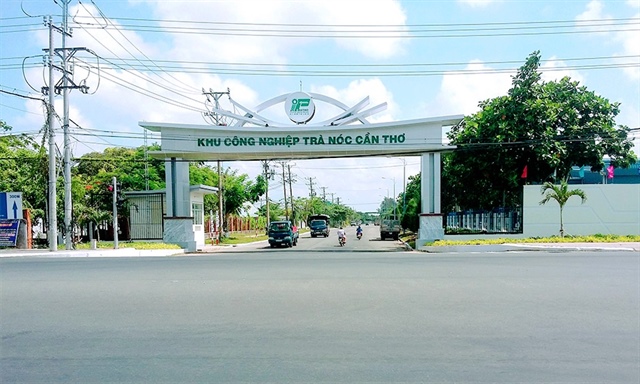
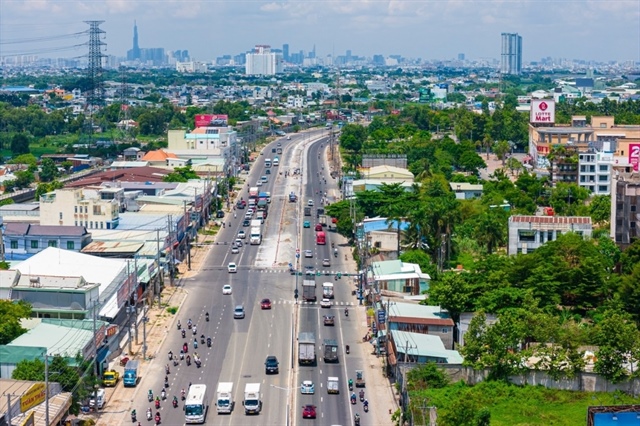
Can Tho aims to develop dozens of industrial clusters and other complexes over the next few years |
After the provincial merger with Hau Giang and Soc Trang last year, Can Tho has significantly expanded its industrial development space beyond the core urban areas to the areas within the newly merged localities. This facilitates the development of large-scale industrial zones with diverse industries while reducing pressure on land resources in the inner urban areas.
This creates favourable conditions for the development of large-scale, multi-sector industrial parks (IPs) while easing land pressure in the inner urban areas. Some areas with ample room for development in Hau Giang and Soc Trang have been planned as new IPs and integrated industrial–urban complexes to cater to the demand of major investors.
Can Tho is strategically located at the heart of the Mekong Delta region with vast development space, abundant resources, and diverse potential. Its unique selling point lies in its synchronous infrastructure with seamless connectivity to the entire Mekong Delta, Ho Chi Minh City, and southeastern region.
The city boasts a network of multimodal transport infrastructure including expressways, waterways, international sea routes, and international air routes.
The expressways passing through the city are reshaping the entire transportation map. For example, the Can Tho-Ca Mau section of the eastern North-South Expressway, along with the coastal road, will shorten the commuting time of goods transport, bringing Can Tho closer to the consumption markets in the southeast region and Ho Chi Minh City.
Tran De international deep-water seaport also plays a pivotal role in the new megacity’s maritime strategy. The seaport is designed to handle vessels with a capacity of up to 100,000 DWT, transforming Can Tho into an international cargo transshipment hub for the entire Mekong subregion.
The improved connectivity between industrial zones, seaports, and airports within the same administrative unit will help the city optimise supply chains, reduce operating costs, and become more attractive to international investors.
A magnet to corporations
Over the past time, Can Tho has wooed a number of large developers. Some notable ventures include the Vinh Thanh IP by Vietnam-Singapore Industrial Park (VSIP) Can Tho, Vinh Thanh IP by Thanh Binh Phu My, and Song Hau 2 IP by Kinh Bac Urban Development Corporation.
Among them, VSIP Can Tho boasts investment of around $160 million. The venture has completed land compensation and site clearance, while the technical infrastructure for Phase 1 is now largely in place. Its first secondary investor, Bestway, is building the Bestway Can Tho Sports Technology Factory. The $100 million factory specialises in manufacturing toys, games, sports equipment, and plastic products.
Lawrence Chan, head of VSIP Sembcorp Development, said, “We highly appreciate the investment environment in Can Tho. In particular, the city leaders have created a favourable condition to resolve obstacles for the investors. With support during the project implementation, Besway has become more confident to scale up the venture by an additional 9.2 hectares and raise investment capital by $40 million.”
Numerous domestic and international investors have visited the city to explore opportunities in industrial infrastructure development. Duga Vietnam is keen on investment in Tran De IP and Vinh Thanh IP. A delegation from Thang Long Vinh Phuc IP and Sumitomo Corporation Vietnam made a working visit and on-site survey of industrial planning ventures in the city. Alos, Loc Phat Paper JSC eyes investment opportunities in Tran De IP.
In addition, Tan Hoa IP has attracted interest from several major investors, including Stavian Group, Sojitz Vietnam, and Aqua One. Meanwhile, Long Thanh IP has drawn attention from Xuan Thien Group and Truong Lam Manufacturing and Trading.
Investors also express interest in other ventures, with Dinh Quoc Ninh Binh Investment and Sao Bac Dau Technologies Corporation considering infrastructure development at My Thanh IP. Meanwhile, A1 Dragon Group is exploring opportunities at Tan Phu Thanh IP.
Developing modern zones
As of this year, the city plans to develop large-scale IPs, industrial clusters, and economic zones with modern and synchronised technical infrastructure meeting international standards. The city will accelerate the development of urban areas and service zones, specialised IPs, eco-IPs, and eco-industrial energy hubs linked with strategic transport corridors. The ventures aim to attract large-scale, modern, high-tech ventures while also promoting a network of clusters serving small and medium-sized enterprises.
The city’s IP system will be developed under a structure that ensures a reasonable division of roles between the central area, the central axis region, and the coastal region. IPs prioritise attracting key industries with high added value such as high-tech agricultural and aquatic products processing, energy equipment, supporting industries, and electronics. The industries are linked with the goals of promoting exports, enhancing competitiveness, and increasing the share of green and circular industries that support climate change adaptation in the Mekong Delta.
The city continues to maintain the existing parks, apart from Hung Phu 1 and Hung Phu 2 IPs, which are planned to be scaled down based on the area that has already been cleared. At the same time, the city plans to develop 27 new IPs, expand Vinh Thanh 4 IP by approximately 1,100 hectares, and relocate Khanh Hoa IP to Long Phu IP, linked to a coastal expressway and Southern Hau River National Highway.
Under Can Tho’s planning for 2030 and beyond, the city will form one economic zone (Tran De Economic Zone) and 40 IPs with a total area of around 61,240 hectares. The ventures will facilitate the development of a modern, integrated industrial, service, and logistics base, paving the way for the city to become the growth pole of the Mekong Delta.
Can Tho aims to develop 46 industrial clusters. Of these, 35 clusters are targeted for completion by 2030.
Under the plan, Tran De Economic Zone would span more than 40,000 hectares in the coastal area, including reclaimed land linked to the Tran De deepwater seaport. Envisioned as a multi-sector economic zone, it would feature modern, integrated technical and social infrastructure while adhering to environmental protection and national security requirements.
Tran De Economic Zone is poised to become a growth pole and driving force for the southeastern part of Can Tho and the Mekong Delta region. It is expected to be a focal point for international maritime trade through the Tran De deep-water seaport while also serving as a pilot centre for digital transformation, green transformation, advanced manufacturing, and high-quality workforce training. The zone is also envisioned as a destination for ecotourism, resorts, and recreational activities linked to the marine economy.
|
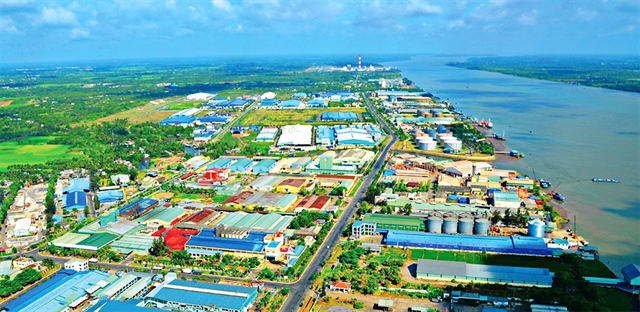
Can Tho People’s Committee has issued a list of 86 projects calling for investment before 2030. Among them, there are 14 IP infrastructure ventures and eight cluster infrastructure initiatives. Some of the developments include Nhon Nghia A IP, Phu My Industrial Urban Service Zone, Tran De Industrial Urban Service Zone, O Mon High-Tech IP, Long Thanh IP, and both Vinh Thanh 2 and 3 parks.
| Marriott International to take reins of Legacy Mekong Can Tho in June Can Tho poised to become Mekong Delta growth engine Can Tho utilises its growth advantages Sumitomo sets eyes on industrial infrastructure in Can Tho |
- 11:50 17/06/2026