Eastern Ho Chi Minh City enters new development phase
Eastern Ho Chi Minh City enters new development phase
After more than a decade of strategic planning, eastern Ho Chi Minh City is entering a new phase of development, driven by maturing transport infrastructure, a growing knowledge-based economy, and end-user demand from high-income residents gradually replacing speculative expectations, laying the groundwork for more sustainable real estate value in the long term.
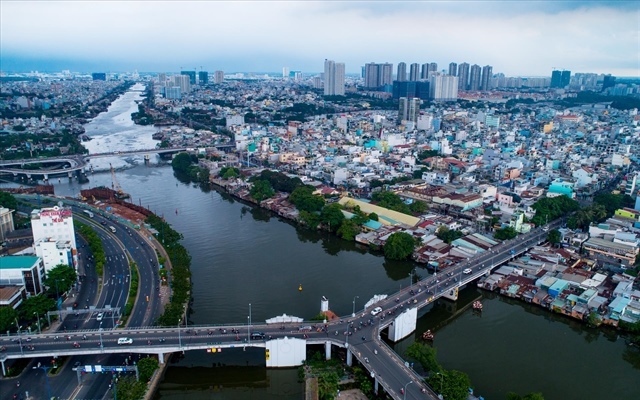
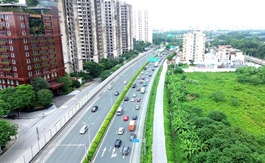
Eastern Ho Chi Minh City is now among the few urban areas in Vietnam that simultaneously benefit from a comprehensive network of strategic transport infrastructure, including expressways, a commercially operational metro line, inland waterway connections, and direct access to Long Thanh International Airport, whose first phase is expected to commence commercial operations by the end of 2026.
According to Ly Nguyen, Market Research manager at Cushman & Wakefield Vietnam, key transport arteries such as Mai Chi Tho Boulevard and the Saigon River Tunnel have played a pivotal role in shaping a 'core-to-core' urban structure, directly linking the city's existing financial centre in former District 1 with the emerging urban hub of Thu Thiem, creating a dual-core growth corridor of Ho Chi Minh City.
“Major infrastructure projects such as Metro Line 1 (Ben Thanh–Suoi Tien), Ring Road 3, the An Phu Interchange, and the Ho Chi Minh City-Long Thanh-Dau Giay Expressway are reducing travel times while reshaping real estate values across the entire area. Both investors and end-users are reassessing the long-term potential of eastern Ho Chi Minh City within the context of the city's evolving urban landscape,” said Nguyen.
In Ho Chi Minh City’s broader urban planning framework, infrastructure development in the eastern area serves to enhance connectivity and plays a critical role in the city’s polycentric development strategy, aimed at easing the population and economic pressures concentrated in the traditional urban core, including former Districts 1, 3, and Binh Thanh.
This direction is clearly reflected in the city’s revised Master Plan to 2040, with a vision to 2060, under which Ho Chi Minh City is transitioning from a monocentric model to a multi-centre urban structure featuring several distributed growth poles. In this framework, the eastern is positioned as a centre for economic activity, innovation, and high-end urban services.
This strategic positioning provides a strong long-term foundation for real estate values in the area. When an urban growth pole is clearly defined through policy and supported by adequate infrastructure, the relocation of residents, businesses, and investment capital from the inner city to surrounding districts is no longer a spontaneous trend but rather a structured and increasingly irreversible process.
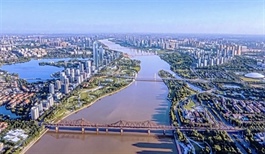
Eastern Ho Chi Minh City is also among the few urban areas that still possess significant development potential along major riverfront corridors, particularly the Saigon and Dong Nai rivers. This comes as the city accelerates plans to develop riverside corridors aimed at enhancing public spaces and improving overall urban quality. Combined with strategic transport connectivity, these natural landscape advantages provide a rare opportunity for the long-term development of high-quality residential communities.
Beyond transport infrastructure, the eastern area is increasingly establishing itself as a knowledge-based economic hub, anchored by two key growth drivers: the Saigon High-Tech Park (SHTP) and the Vietnam National University-Ho Chi Minh City more than 80,000 students are enrolled, as well as numerous research institutes and R&D centres operated by multinational corporations.
According to Cushman & Wakefield, this ecosystem provides a solid foundation for attracting sustainable foreign direct investment while fostering a high-quality residential community comprising expatriates, technology professionals, and a growing pool of knowledge workers.
This group typically prioritises housing close to employment centres and tends to have well-defined residential preferences, including completed infrastructure, a secure living environment, premium amenities, and spacious living areas. These are requirements that the current housing supply in the eastern corridor has yet to fully satisfy.
The gradual completion of infrastructure across the eastern region is also creating a new filtering mechanism within the local real estate market. As infrastructure transitions from a future expectation to a tangible and verifiable reality, buyers, particularly in the mid- to high-end segments, are becoming increasingly selective in their purchasing decisions.
In the real market, a clear movement in buyer behaviour is seen, which shifts from increased value towards a stronger focus on intrinsic value. Factors such as planning quality, legal transparency, the actual delivery and operation of amenities, and the long-term livability of a community are becoming key considerations in the decision-making process.
For high-income homebuyers, real estate is no longer viewed solely as a financial asset but also as a reflection of lifestyle quality. This requires consistency between a developer's vision and its ability to deliver on that promise in practice.
|
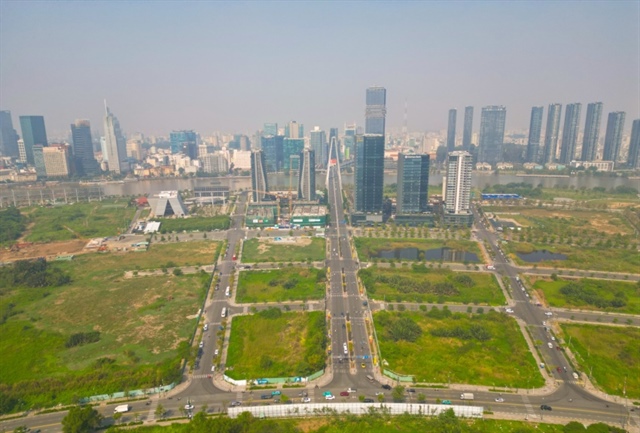
This poses a significant challenge for projects with incomplete internal infrastructure, unresolved legal procedures, or amenity development plans that are scheduled to be delivered over an extended period.
In contrast, projects that have achieved a high level of completion in terms of legal status, infrastructure, amenities, and connectivity are well positioned to benefit directly from this shift in buyer preferences.
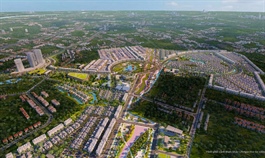
Against this backdrop, IKI Village, developed by An Khai Hung Investment, is seen as a project that reflects the evolving preferences of the high-end end-user segment in eastern Ho Chi Minh City. The development enjoys direct access to the Go Cong-Ring Road 3 interchange, one of the city's most strategically important regional transport corridors for the coming decade.
IKI Village is being developed as a low-density riverside urban community, guided by a design philosophy that places people and long-term wellbeing at its core. Rather than competing on the sheer number of amenities, the project focuses on the attributes increasingly sought after by affluent owner-occupiers such as extensive green spaces, thoughtfully designed living environments that offer privacy and depth, and a sustainable residential setting suitable for multi-generational families.
This approach mirrors a broader trend emerging across more mature urban markets in the region, where real estate value is no longer defined solely by location or floor area, but increasingly by a project's ability to enhance residents' quality of life and deliver meaningful long-term livability.
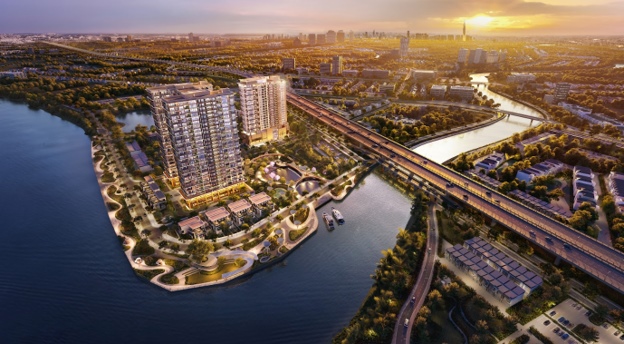
IKI Village is scheduled for completion in the first quarter of 2028 |
With its people-centric positioning and the increasingly robust connectivity infrastructure of eastern Ho Chi Minh City, IKI Village represents a new generation of real estate developments that are gradually redefining market standards: not competing on short-term speculative appeal but genuine end-user value, long-term livability, and sustainable growth potential.
- 09:00 12/06/2026