Vietnam’s digital growth bet
Vietnam’s digital growth bet
As Vietnam races towards an ambitious double-digit growth target, policymakers and tech leaders are pushing to turn digital transformation, AI and regulatory sandbox reforms from long-term strategy into immediate economic momentum.
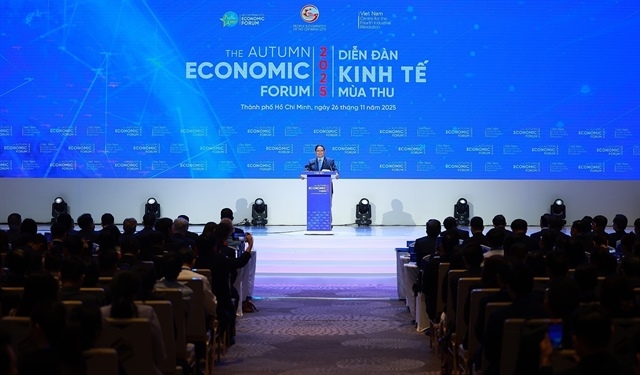
On May 28, at the plenary session of the 2026 Vietnam-Asia Digital Transformation Summit, Deputy Minister of Science and Technology Bui Hoang Phuong described this year as a pivotal milestone for achieving the country’s ambitious double-digit growth target.
Phuong stressed that Vietnam could no longer rely on traditional growth drivers and instead must prioritise innovation powered by sci-tech.
“After 2025 laid the groundwork through the completion of key legal frameworks such as the Law on Digital Transformation, the Law on Artificial Intelligence, and the Law on Data, 2026 has been identified as the acceleration phase with a strong focus on execution,” he said. “The priority now is to translate institutional foundations into tangible outcomes that directly benefit individuals and businesses.”
The deputy minister emphasised that digital transformation is fundamentally about changing mindsets and ways of working.
“Government agencies and businesses should not sit back waiting for policies or fully completed legal frameworks in every sector. They need to proactively use technology to solve real-world issues,” he said. “Businesses must work directly from the ground up, from the day-to-day difficulties faced by citizens and enterprises, to propose breakthrough solutions, even if that means redesigning workflows and operational processes rather than simply focusing on legal amendments.”

Bui Hoang Phuong, Deputy Minister of Science and Technology |
He added that pilot initiatives should initially target specific problems, but once proven effective, their implementation models should be scaled up more broadly to create wider spillover effects.
Regarding regulatory sandbox mechanisms, Phuong said a dedicated legal framework had already been incorporated into the Law on Science and Technology. The ministry is prepared to work closely with local authorities to pilot new models, including allowing exemptions from certain standards and regulations within legally permitted boundaries to facilitate innovation and research.
“The Ministry of Science and Technology is directly instructing specialised agencies to coordinate with localities in implementing sandbox models,” Phuong said. “For example, the ministry is currently working on a pilot programme in Dien Bien province involving unmanned aerial vehicles. Within the sandbox framework, certain standards and regulatory requirements under existing laws may be temporarily exempted to help businesses overcome obstacles when deploying new technologies.”
He added that the ministry remained committed to supporting businesses and local governments in conducting such trials to accelerate the practical adoption of technology.
Ngo Dien Hy, vice president of VINASA and deputy general director of VNPT Group, said this year’s forum represented an urgent call to action for Vietnam’s digital technology business community.
“Two critical strategic priorities are using technology as a core engine to improve labour productivity across the economy, and pioneering emerging sectors such as AI, the low-altitude economy, and robotics technology,” said Hy. “The Vietnamese digital business community has shifted from passive technology adoption to mastering ‘Make in Vietnam’ capabilities, ranging from AI infrastructure and cloud infrastructure to large language models.”
However, he also warned of mounting challenges, including workforce constraints, limitations in clean energy infrastructure, and legal gaps surrounding deep-tech development. Hy stated that VINASA would continue acting as a connector between institutions, businesses, and markets to support Vietnam’s next growth phase.

Ngo Dien Hy, vice president of VINASA and deputy general director of VNPT Group |
Hoang Huu Hanh, deputy director general of the National Digital Transformation Agency under the Ministry of Science and Technology, argued that economic productivity was not determined by application layers alone, but by the quality of foundational infrastructure and the economy’s capacity to absorb technology.
According to Hanh, these foundational layers include shared infrastructure and data systems, enabling institutions that create room for innovation while minimising legal risks, and an implementation apparatus capable of translating policies into practical outcomes.
“The Law on Digital Transformation is gradually building a resilient foundational layer,” he said. “One notable feature is its dual mechanism, strengthening governance discipline while simultaneously creating leverage through safe regulatory corridors designed to protect individuals and organisations willing to innovate and experiment with unprecedented models.”
Tran Thi Lan Huong, senior digital specialist at the World Bank Group, warned against the surface-level technology trap, where AI appears across multiple sectors without becoming deeply embedded in the real economy.
“To close the gap and create a breakthrough in growth, Vietnam needs to develop five pillars simultaneously: connectivity, computing, context, competency, and responsible AI,” she said.
“Many economies began building these foundations early, instead of waiting for AI technologies to fully mature before deploying applications. Once the AI wave accelerated, those foundations became multipliers that significantly increased the value generated from digital infrastructure investments.”
- 12:31 29/05/2026