Vietnam strengthens FDI appeal as global supply chains shift
Vietnam strengthens FDI appeal as global supply chains shift
Amid growing uncertainty in the global economy, Vietnam continues to maintain a strong attraction for foreign investment inflows. Le Gia Phong, deputy head of the Industry and Construction Statistics Department under National Statistics Office, shares insights into the factors behind foreign investors’ continued confidence in Vietnam.
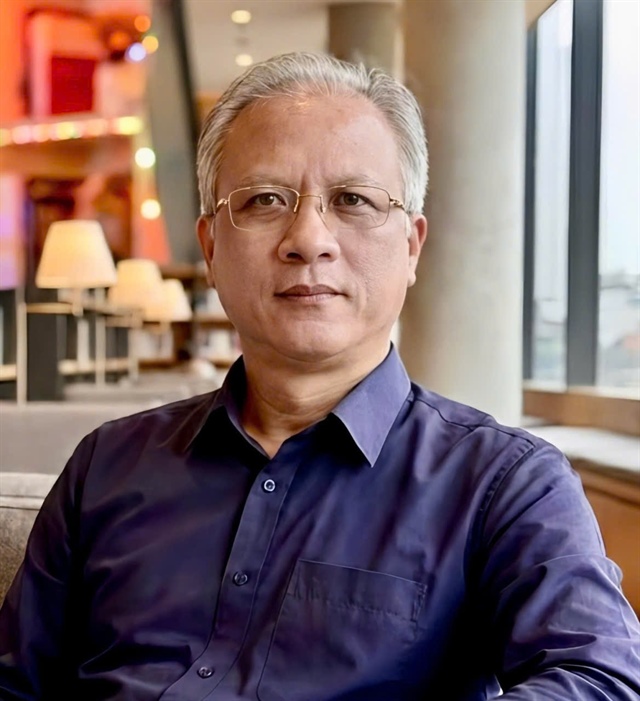
Le Gia Phong |
What are the core factors helping Vietnam maintain its attractiveness to foreign investors?
Over the past three years, despite major global disruptions such as post-Covid-19 inflation, the war in Ukraine and import tariff policies under US President Donald Trump, foreign direct investment (FDI) inflows into Vietnam have remained stable at between $38.23 billion and $39.39 billion, a significant improvement compared with previous years.
In the first four months of this year, while the world witnessed escalating geopolitical tensions in the Middle East, Vietnam still attracted $18.24 billion in FDI, including newly committed capital, additional capital and capital contributions through share purchases, up 32 per cent on-year. These figures clearly demonstrate foreign investors’ confidence in Vietnam.
Many factors contribute to Vietnam’s attractiveness, but the most prominent – besides political and social stability and sound macroeconomic fundamentals – is the country’s determination to pursue high and stable economic growth, along with the openness of local economy and deep international integration.
Vietnam currently participates in 17 free trade agreements, including many new-generation agreements with major markets such as the Comprehensive and Progressive Agreement for Trans-Pacific Partnership, the EU-Vietnam Free Trade Agreement and the Regional Comprehensive Economic Partnership. This creates a major advantage for FDI enterprises, enabling them to access export markets with preferential tariff rates.
In addition, Vietnam holds a favourable geographical position within Asia’s regional supply chain, possesses an abundant workforce, competitive costs and an increasingly improving business and investment environment. These are factors that foreign investors are particularly concerned about amid growing geopolitical volatility worldwide.
Another noteworthy point is that Vietnam continues to accelerate administrative reforms, improve the investment and business environment and develop infrastructure. These factors are helping strengthen the confidence of the international business community.
Looking at FDI inflows over the past five years, what is your assessment?
Newly registered FDI has fluctuated depending on global investment flows. There were years when inflows into Vietnam declined, such as in 2025 when newly registered FDI reached $17.3 billion, down from $19.7 billion in 2024 and $21.36 billion in 2023. However, realised FDI has increased continuously, from $19.7 billion in 2021 to $22.4 billion in 2022, while the past three years recorded corresponding figures of $23.18 billion, $25.35 billion and $27.62 billion.
In the first four months of this year alone, realised FDI reached $7.4 billion, up nearly 10 per cent on-year. This marks the highest realised for the first four months of the year in the past five years.
It should be noted that newly registered capital only reflects investors’ initial commitments or interest, whereas realised capital represents actual cash flows entering the economy.
The strong increase in FDI disbursement shows that foreign investors are genuinely implementing their investment plans in Vietnam. This is an important signal reflecting foreign-invested enterprises’ confidence in investment efficiency and market prospects.
Notably, in 2025, many foreign-invested enterprises already operating in Vietnam continued to increase capital and expand production capacity. This is an even more positive signal than newly registered capital, as it indicates that existing investors are satisfied with the business environment and operational efficiency in Vietnam.
From another angle, strong disbursement also demonstrates that Vietnam continues to play an important role in the supply chain diversification strategies of international corporations.
Trade tensions between the United States and the European Union are showing signs of re-emerging. How do you assess Vietnam’s FDI attraction going forward?
Internally, based on the country’s existing strengths, I believe Vietnam’s prospects for attracting FDI remain positive. Vietnam holds many advantages in international integration, its position within the regional supply chain and macroeconomic stability.
However, competition among countries to attract investment is now extremely intense. Therefore, Vietnam needs to gradually shift from attracting FDI in breadth to attracting it in depth, prioritising high-tech, environmentally friendly projects with strong linkages to domestic enterprises.
More importantly, the country must continue improving infrastructure quality, human resources and the investment and business environment. If Vietnam maintains its current reform momentum, I believe it will continue to be an attractive destination for international investment flows for many years to come.
Changes in global trade policies under the administration of President Donald Trump will certainly affect investment and export activities in many countries, including Vietnam. The trend of global supply chain relocation is still continuing.
Multinational corporations are increasingly diversifying production locations under the “China+5” and “China+6” strategies to reduce dependence on a single market, and Vietnam is benefiting from this trend. Of course, to better capitalise on these opportunities, Vietnam needs to continue improving the investment environment and enhancing the quality of infrastructure and human resources.
Expectations have grown regarding Vietnam’s ability to engage capital from the Middle East. How can Vietnam seize this opportunity?
Capital inflows from the Middle East currently consist mainly of indirect investment, meaning investment through share purchases, equities or participation in financial markets, rather than traditional FDI involving factory and production facility construction. In the first four months of this year, Vietnam attracted $2.96 billion in indirect investment capital, significantly higher than the $1.83 billion and $930 million recorded in the same period of the previous two years. However, there is still no verified data identifying the exact origin of these funds.
To pull in indirect investment more effectively, Vietnam needs to continue developing its capital markets, particularly the stock and bond markets.
FTSE Russell’s recognition of the significant progress made by Vietnam’s stock market, along with its official confirmation that Vietnam remains on track for an upgrade from frontier-market to emerging-market status, will further enhance the country’s appeal to international investors, including investment funds from the Middle East.
- 10:34 20/05/2026