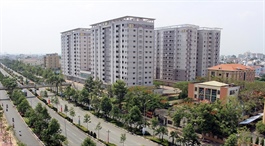
Rental housing should be treated as welfare infrastructure rather than a real estate segment
Rental housing should be treated as welfare infrastructure rather than a real estate segment
Bùi Đức Hưng, former Deputy Director of the Ministry of Construction’s Planning and Finance Department, spoke to the Vietnam News Agency on the shift in housing policy, urban development thinking, the real estate market and social welfare policy.

Bùi Đức Hưng, former Deputy Director of the Planning and Finance Department under the Ministry of Construction. — VNA/VNS Photo Thu Hằng |
During a meeting on social housing policy, Party General Secretary and State President Tô Lâm said housing should be for living, not speculation, and called for stricter controls to prevent profiteering. He also urged Việt Nam to prioritise rental housing through 2030, especially in major cities and industrial zones. Bùi Đức Hưng, a former Ministry of Construction official, spoke with Vietnam News Agency about the policy shift.
Why is it time to treat social rental housing as welfare infrastructure rather than simply another real estate segment?
For many years, Việt Nam has mainly developed housing with an ownership-oriented mindset. This means that policies, markets and social psychology have all revolved around the goal of buying and owning homes.
Although it is considered a legitimate aspiration, the reality now shows that most workers and low-income earners can no longer afford to access housing through outright purchases.
Property prices in many urban areas have risen far faster than incomes. A small segment of the population can afford to buy multiple homes for investment or asset accumulation, while the majority must spend most of their income on housing costs or accept cramped and unstable living conditions.
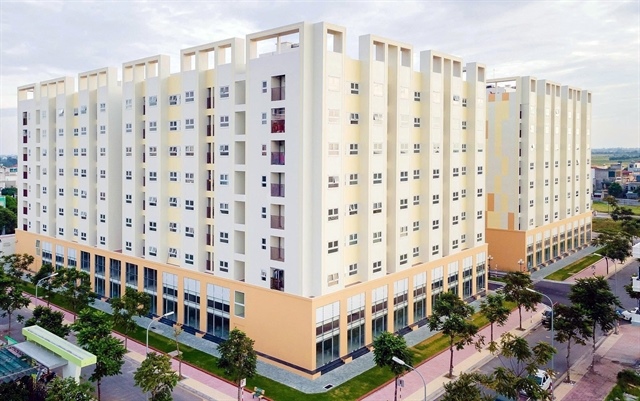
There is now a major imbalance between supply and demand. Commercial housing is oversupplied but mainly serves high-income buyers or speculators. Social housing, meanwhile, faces severe shortages despite enormous real demand.
Even social housing for sale has become unaffordable for many workers. In my view, the root problem is that society places too much emphasis on the asset value of housing while paying insufficient attention to its use value.
From a political economy perspective, housing is a commodity with two attributes: value and use value. Value is reflected in price, buying and selling and ownership rights, while use value lies in its ability to meet people’s need for shelter and stable living conditions.
If housing is viewed only as an asset for buying and selling, speculation, accumulation and price inflation become inevitable. But if housing is viewed as a basic living necessity, policies must shift towards ensuring everyone has access to suitable accommodation.
At that point, social rental housing should be considered an essential component of welfare infrastructure, similar to education, healthcare or public transport.
A modern city cannot rely solely on roads, skyscrapers and shopping centres while lacking affordable housing systems for workers.
If workers do not have stable accommodation at a reasonable cost, it will be difficult to maintain a sustainable workforce for industrial parks and large urban centres.
However, the psychology of owning homes remains widespread in Việt Nam. Is large-scale development of social rental housing realistic?
Bùi Đức Hưng, former Deputy Director of the Planning and Finance Department under the Ministry of Construction. — VNA/VNS Photo Thu Hằng |
I believe that it is an inevitable trend, although it might take time to change public perceptions.
For many years, home ownership has been viewed as a measure of stability in life. However, socio-economic conditions today are very different from those of the past.
In major cities, housing prices have exceeded the savings capacity of most young people. An ordinary worker can hardly buy a home based solely on salary. Many families must borrow for decades and shoulder heavy financial pressure to own an apartment.
This creates many consequences for the economy and society.
When most income is devoted to mortgage repayments, households reduce spending on education, health care and other development needs.
At the same time, the real estate market remains under constant strain because housing is viewed as a tool for asset accumulation.
Meanwhile, in many developed economies, renting is a common practice. People do not necessarily need to own homes to be considered stable.
Countries such as Singapore, the Republic of Korea and China have all strongly developed rental and rent-to-own housing models. Governments there play an important role in creating housing stock and regulating the market to ensure people can access homes suitable for their incomes.
The most important issue is ensuring long-term protections for tenants. If rents fluctuate continuously, contracts are unstable and housing quality is poor, it will be difficult to build public trust.
On the other hand, if social rental housing is properly invested in, reasonably priced, supported by adequate infrastructure and professionally managed, people’s perceptions will gradually change.
In my opinion, it is necessary to shift the mindset from the idea that settling down means owning a home to the idea that settling down means having suitable accommodation. This is not only a change in perception but also a requirement of modern economic development.
In a market economy, labour needs to move flexibly. Workers may relocate according to market demand. If people feel they must buy a home wherever they work in order to achieve stability, the social cost will be enormous.
By contrast, with a sufficiently large rental housing system, workers can confidently move to any locality for employment without the pressure to own property at all costs.
What are your recommendations for developing social housing for rent in line with the spirit of social welfare infrastructure?
Bùi Đức Hưng, former Deputy Director of the Planning and Finance Department under the Ministry of Construction. — VNA/VNS Photo Thu Hằng |
First, thinking on housing development must shift from prioritising sales to prioritising rental and rent-to-own models.
Rental housing should be recognised as a strategic pillar in major urban centres, industrial parks and labour migration areas, in line with the orientation set out by Party General Secretary and President Tô Lâm. This direction should be regarded as a breakthrough in housing policy for the coming period.
If housing development continues to focus mainly on sales, it will be difficult to meet the real needs of most workers because their purchasing power is limited. Rental models, meanwhile, would allow far more people to access housing at affordable costs.
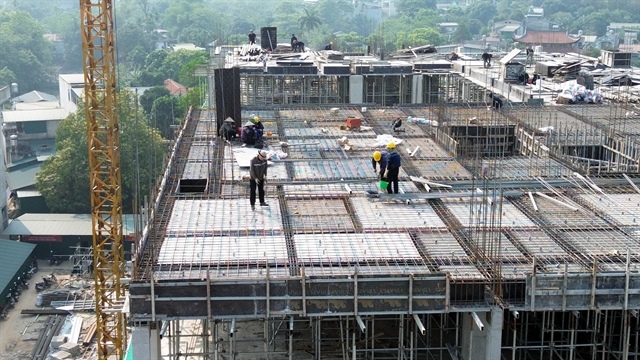
For this to happen, the Government must play a leading role, which should go beyond issuing laws and incentive policies but should include direct participation in creating a social housing supply.
I believe Việt Nam should reconsider the model of public-utility enterprises in the housing sector. The State should establish enterprises capable of investing in, building and managing social rental housing stock.
If the country relies entirely on private developers, achieving social welfare goals will be difficult because businesses must prioritise profits.
Social housing requires large capital investment, has long payback periods, and generates low returns, making it unattractive to many private firms.
State-invested social housing stock could then be used flexibly for long-term rentals, rent-to-own programmes or sales supported by preferential credit schemes.
Most importantly, the Government must retain control over part of the housing supply to regulate the market effectively.
At the same time, it is critical to enhance transparency in the land and real estate market with the development of integrated information systems to monitor prices and curb speculation.
When social rental housing is viewed as welfare infrastructure, urban development policies will become more sustainable.
Beyond solving housing shortages, the model could also support labour mobility, reduce pressure on the property market and create a more stable foundation for long-term socio-economic development.
- 08:02 28/05/2026