Maekyung Vietnam Forum highlights next chapter of Korea–Việt Nam cooperation
Maekyung Vietnam Forum highlights next chapter of Korea–Việt Nam cooperation
Dr Chang Dae-Whan, Chairman of Maekyung Media, talks to Việt Nam News and Law about the return of the Maekyung Vietnam Forum, the growing strategic partnership between Korea and Việt Nam and why AI, semiconductors and digital transformation will shape the next chapter of bilateral cooperation.
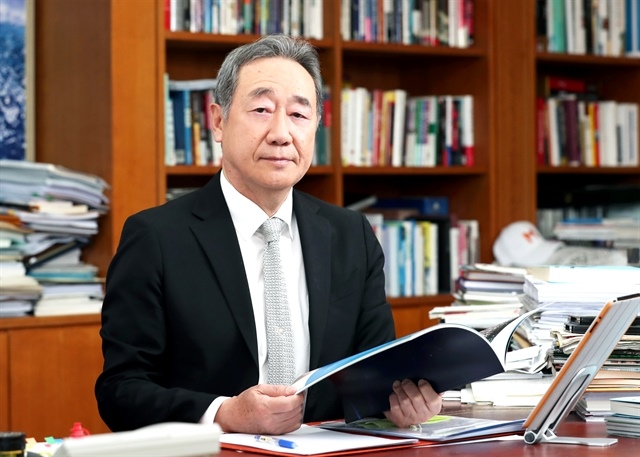
Dr Chang Dae-Whan , Chairman of the Maekyung Media Group, founder of the World Knowledge Forum. Photo Courtesy of Maekyung Media Group |
Dr Chang Dae-whan, Chairman of Maekyung Media, talks to Việt Nam News and Law about the return of the Maekyung Vietnam Forum, the growing strategic partnership between Korea and Việt Nam and why artificial intelligence (AI), semiconductors and digital transformation will shape the next chapter of bilateral cooperation.
The Maekyung Việt Nam Forum returns for the first time since 2017. Why is 2026 the right moment to bring it back, and why was Hồ Chí Minh City chosen as the host? Given that the forum takes place shortly after President Lee Jae-myung’s state visit and during a new leadership period in Việt Nam, how does this political context elevate the forum's significance?
This year marks the 34th edition of the Maekyung Global Forum, and it is the third time the forum has been held in Việt Nam. Even during the COVID-19 pandemic, we hosted a forum in Seoul to commemorate the 30th anniversary of diplomatic relations between Korea and Việt Nam.
Over the past 34 years, the relationship between Korea and Việt Nam has already developed into a strong and trusted partnership. But today, the global environment is becoming far more uncertain. Supply chain disruptions, geopolitical tensions and economic nationalism are weakening international cooperation and pushing countries towards greater self-reliance.
At a time like this, closer cooperation between Korea and Việt Nam is more important than ever if both countries want to achieve the next stage of growth. That is also why we chose this year’s forum theme: Korea–Vietnam: Advancing Together for National Rise.
This year is especially meaningful because it marks the 34th anniversary of diplomatic ties between the two countries. Last month, President Lee Jae-myung paid a state visit to Việt Nam and held a summit meeting with General Secretary Tô Lâm, making this an especially significant moment in bilateral relations.
During the summit, the two countries reaffirmed their shared goal of expanding bilateral trade to US$150 billion by 2030. To reach that goal, Korea and Việt Nam must build on their successful cooperation in manufacturing and trade while expanding collaboration into future industries such as AI, biotechnology and finance.
Since 2010, Maekyung Media has continued to promote the vision of One Asia, advocating greater economic cooperation and shared prosperity across Asia. In an era in which AI and advanced technologies increasingly define national competitiveness, Korea and Việt Nam must move beyond traditional trade relations and strengthen their roles as indispensable strategic partners.
What is especially encouraging is Việt Nam’s ambition for the future. Through bold investment and strong policy support in industries such as AI, semiconductors, biotechnology, energy and nuclear power, Việt Nam has presented a clear vision of becoming a high-income developed country by 2045.
In many ways, Korea and Việt Nam are pursuing similar goals. Korea has strong capabilities in industries such as semiconductors, nuclear energy, batteries and advanced manufacturing, sectors that will play a critical role in the AI and energy transition. Last year, the two countries also agreed to deepen cooperation in renewable energy, nuclear workforce development and critical mineral supply chains.
Against this backdrop, Korean companies operating in Việt Nam, including Samsung, Hyundai Motor, SK, LG and POSCO, will have greater opportunities to contribute to Việt Nam’s industrial advancement through joint technology development and market expansion.
Hồ Chí Minh City, in particular, is striving for a major leap forward through digital and AX (Artificial Transformation).
Korea is pursuing many of the same ambitions, which is why I believe cooperation between the two countries holds even greater promise going forward.
We also hope Korean companies will play a greater role in the city’s next phase of transformation, including major projects such as the Ho Chi Minh City International Financial Centre initiative, the Can Gio coastal urban development project and the expansion of transportation infrastructure, including metro systems.
This year’s focus is on semiconductors, AI, biotechnology and digital transformation. Why were these specific high-tech sectors prioritised for 2026? Furthermore, what specific lessons from South Korea’s rapid development in these fields could serve as a roadmap for Việt Nam?
If Việt Nam has the Miracle of the Red River, Korea has the Miracle on the Han River. Korea achieved rapid national development through close cooperation between the public and private sectors, combined with bold investment in human capital.
Like Korea, Việt Nam launched its Đổi Mới reform and opening-up policy in 1986 and has since achieved remarkable economic growth. With its outstanding human resources and strong leadership, Việt Nam is expected to continue its impressive growth trajectory in the years ahead.
But national transformation does not happen on its own. It requires careful preparation, long-term planning and a clear national strategy. In the age of AI, countries must build systems that enable citizens to use AI effectively in their daily lives while also fostering advanced industries that drive job creation and economic growth.
To mark its 60th anniversary this year, Maekyung Media adopted the slogan AI Native Korea. The vision is both simple and ambitious: all 50 million Koreans should be able to use AI as naturally as their native language, improving both productivity and quality of life. We believe this transformation is essential for Korea to emerge as a global AI leader. More importantly, it can help revive the country’s slowing growth potential and accelerate the path towards a $50,000 per capita income era. We believe this is part of Maekyung’s responsibility as we look towards the next 60 years.
In March, we went a step further by presenting a detailed roadmap aimed at positioning Korea among the world’s top three AI powers.
The core message of that roadmap is clear: in the AI era, widespread adoption matters more than invention itself. History shows that those who successfully scale and spread technology often shape the future more than those who invent it first. The British inventor Henry Bessemer developed modern steelmaking technology, but it was Andrew Carnegie in the United States who transformed steel into the foundation of industrial power. Electricity was pioneered in Europe, but it was the United States under Thomas Edison that built the power grid and changed modern civilisation. AI is likely to follow the same pattern. The countries that lead in real-world adoption and large-scale implementation, not just invention, will ultimately shape the next era. This is also where countries like Korea and Việt Nam, which still trail the United States and China in large language model development, such as ChatGPT and DeepSeek, can find a strategic opportunity to compete.
As part of this AI-native transformation, we proposed a 3+1 Action Plan built around four pillars: Diffusion, Exception, Foundation and Nation. The proposal calls for bold support measures that would allow citizens to use AI freely in their everyday lives without financial burden, while also leveraging national infrastructure to accelerate the growth of physical AI industries.
More specifically, under the Diffusion pillar, we proposed providing every citizen with an AI Native Card worth approximately KRW30,000 (VNĐ529,000) per month to support everyday AI usage, along with the introduction of certified AI support specialists to help digitally underserved groups adapt to new technologies.
Under the Exception pillar, we proposed designating areas such as Busan New Port and Incheon International Airport as regulatory-free zones for physical AI industries, while also introducing special labour flexibility measures that would exempt core AI talent from Korea’s 52-hour workweek limit. Under the Foundation pillar, we recommended expanding AI infrastructure through GPU subscription programmes and regional innovation clusters linking major cities and local economies. Finally, under the Nation pillar, we proposed bold governance reforms, including introducing AI advisory systems into cabinet meetings and appointing AI-focused directors to corporate boards.
These ideas remain at the blueprint stage even in Korea. But both Korea and Việt Nam have now reached a point at which visible and concrete steps towards an AI-native transformation can no longer be delayed.
What distinguishes the Maekyung Vietnam Forum from other international business summits in the region? Beyond high-level networking, what unique Maekyung signature can participants expect?
After the Asian Financial Crisis, Maekyung Media came to believe that knowledge and insight would be the key to Korea’s recovery and long-term growth. Since then, we have continuously pursued a wide range of initiatives aimed at helping Korea become a truly knowledge-driven nation. Two of the most representative examples are the World Knowledge Forum and the Maekyung Global Forum.
Since its launch in 2000, the World Knowledge Forum has been held 26 times and has grown into one of the world’s leading platforms for knowledge exchange.
Over the years, the forum has welcomed global leaders, including former US President George W. Bush, former UK Prime Minister Tony Blair and former French President Nicolas Sarkozy, as well as influential business innovators such as Microsoft founder Bill Gates and OpenAI CEO Sam Altman, who have shared insights on the future and the changing direction of technology and business.
The Maekyung Global Forum, meanwhile, celebrates its 34th edition this year. The first forum was held in Washington, D.C. in 2004, and since then it has expanded to countries including China, Japan, India, the United Arab Emirates, Türkiye, Russia and Italy. We take pride in the role the forum has played in strengthening international cooperation and helping create opportunities for shared growth and prosperity around the world.
Korean companies operating overseas often face unfamiliar business environments and unexpected challenges. So whenever we hear that relationships and networks built through the Maekyung Global Forum helped solve real business problems or opened new opportunities, it reminds us why these forums truly matter.
As I mentioned earlier, Maekyung Media has emphasised the concept of One Asia since 2010. Although Asian countries have different histories, cultures and political systems, we believe the region can achieve far more through cooperation than through competition alone. Beyond the growth of individual nations, Asia has the potential to build a future defined by harmony, coexistence and shared prosperity.
In fact, I believe the meaning of One Asia has become even more important today as geopolitical rivalry and global power competition continue to intensify. And the foundation of that vision ultimately lies in greater human and economic exchange across borders. That is also why Maekyung Media continues to organise global forums every year.
The forum is described as the first large-scale private economic exchange in this new bilateral context. Why do you believe private-sector dialogue is especially important at this stage?
This forum is the first large-scale private-sector event to be held following last month’s summit between the leaders of Korea and Việt Nam. In many ways, the forum is intended to build on the vision presented by the two leaders and turn it into practical cooperation. It is also an opportunity to give concrete shape to the 74 memorandums of understanding signed during the Korea–Vietnam Business Forum, along with other areas of real economic collaboration between the two countries.
Many of the companies that signed MOUs between Korea and Việt Nam will be represented at the forum, and more than 150 Korean business leaders are expected to attend.
Among them are Sohn Kyung-shik, Chairman of the Korea Enterprises Federation and Chairman of CJ Group, as well as Kim Ki-mun, Chairman of the Korea Federation of SMEs, together with the organisation’s full delegation of vice chairmen. It is also significant that senior executives from major Korean companies, including Samsung, SK, LG and Lotte, will participate directly in the forum.
Two lawmakers from the National Assembly, including Kim Seok-ki, Chairman of the Foreign Affairs and Unification Committee, will attend the event as representatives.
In parallel with the forum, KOTRA (Korea Trade-Investment Promotion Agency), which supports Korean companies expanding overseas, will organise a business exhibition featuring around 30 Korean companies, including firms in K-consumer products and other emerging industries. The exhibition is designed to help Korean businesses explore new opportunities in the Vietnamese market and strengthen bilateral cooperation.
Ultimately, it is the private sector that turns discussions between national leaders into tangible results. And at this moment, the willingness to deepen cooperation between Korea and Việt Nam is especially strong on both sides.
According to the Export-Import Bank of Korea, the number of newly established Korean corporations in Việt Nam increased by 550 last year, bringing the total number of Korean companies operating in Việt Nam to nearly 11,000.
Maekyung Media has a long history of bridging the gap between policy and investment. In what ways does the forum aim to create practical partnerships and real business outcomes, rather than simply discussions?
More than 150 business leaders from across Korea, representing both major conglomerates and small and medium-sized enterprises, will participate in this year’s forum to explore Việt Nam’s growth potential and discuss opportunities for expanding investment, particularly in Hồ Chí Minh City. We are also honoured that a number of leading figures from Hồ Chí Minh City and the Vietnamese business community will join the forum in support of its broader vision.
Among the featured speakers are Nguyễn Kỳ Phùng, Head of the Management Board of Saigon Hi-Tech Park (SHTP); Vương Quân Ngọc, Chief Strategy Officer of FPT Digital; Nguyễn Hữu Huân, Vice Chairman of the Executive Authority of the Việt Nam International Financial Centre in Hồ Chí Minh City (VIFC HCMC); and Don Lam, CEO and Founding Partner of VinaCapital Group.
These speakers will provide Korean business leaders with firsthand insights into Việt Nam’s current economic landscape, Hồ Chí Minh City’s future development plans and the country’s long-term investment vision. We believe their participation will further strengthen confidence in Việt Nam, one of Asia’s most promising investment destinations.
The forum will also feature Korean companies that have already invested successfully in Việt Nam, including SK Innovation, Neo Silicon, Hyundai Rotem and Carpa. These companies will share their experiences and achievements in the Vietnamese market. Their success stories can offer valuable inspiration and confidence to Korean companies considering future investment in Việt Nam.
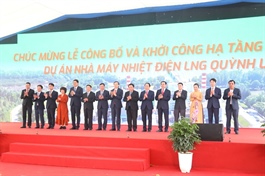
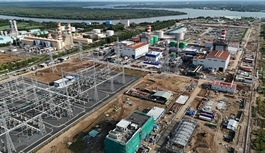
SK, for example, is actively expanding its energy business in Việt Nam, including participation in the Quynh Lap LNG power plant project valued at approximately $2.3 billion. Hyundai Rotem has also been selected to supply driverless train systems for Hồ Chí Minh City’s metro project, reflecting the growing scope of Korea–Việt Nam industrial cooperation.
I believe that when people continue to meet, communicate and build trust with one another, meaningful results and long-term partnerships naturally follow.
Looking towards the future of the Việt Nam–Korea partnership, what is your primary message for the Vietnamese business community, policymakers and the next generation of tech innovators?
Today, more than 11,000 Korean companies operate in Việt Nam, and nearly 200,000 Koreans are living and working across the country. The relationship between Korea and Việt Nam has become deeply connected not only economically, but also culturally and socially.
Many Vietnamese artists have achieved great success in Korea, while Korean football coach Kim Sang-sik has brought new energy and a winning spirit to Việt Nam’s national football team. These examples reflect the growing sense of familiarity, trust and connection between our two countries.
I believe Korea and Việt Nam now have the opportunity to move beyond economic cooperation alone and build a long-term partnership centred on shared growth and a shared future.
I hope this year’s Maekyung Global Forum will serve as another meaningful opportunity to reinforce that partnership and deepen cooperation between the two countries.
- 08:19 19/05/2026