Việt Nam eyes expanding role in global Halal economy
Việt Nam eyes expanding role in global Halal economy
For Việt Nam, the global Halal market presents numerous opportunities, particularly in strong sectors such as agriculture, food, and tourism.
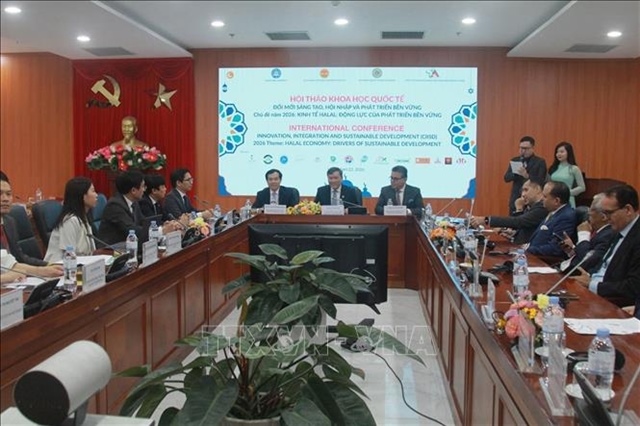
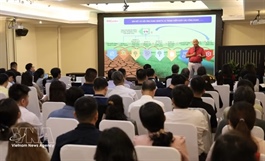
An international scientific conference themed “Halal Economy: Drivers of Sustainable Development” was held in Hà Nội on Monday. — VNA/VNS Photo |
An international scientific conference on the Halal economy held in Hà Nội on Wednesday discussed trends in economic development and opportunities for Việt Nam in the context of global integration.
In his opening remarks, Lê Văn Lợi, president of the Vietnam Academy of Social Sciences, emphasised that amid globalisation and rapid shifts in the world economy, innovation, international integration and sustainable development were becoming key pillars shaping national growth models.
Within this context, he said economic models associated with ethical standards, social responsibility and quality were gaining increasing attention, with the Halal economy considered a highly promising sector.
The Halal economy was no longer confined to a niche market for Muslim communities but is expanding globally, associated with values such as quality, safety, transparency and responsibility, said Lợi.
This required Việt Nam to proactively approach and seize opportunities while adopting appropriate strategies to effectively participate in the Halal value chain, he said.
Nguyễn Xuân Trung, director of the Institute for South Asian, West Asian and African Studies, said that the Halal economy originated from the principles of Shariah law but had evolved into a comprehensive system of standards.
It goes beyond religious requirements to encompass strict criteria on quality, safety and responsibility throughout production and supply processes.
He explained that a product must not only meet Halal requirements but also be wholesome and clean, from raw materials and processing to distribution.
This means that the entire supply chain must comply with stringent standards, ensuring clear origin, strict control and proper certification. Ethical factors are also essential, including honesty in production, appropriate working conditions and adherence to general business principles.
Today, the Halal economy has expanded into various sectors such as pharmaceuticals, cosmetics, tourism and services, forming a relatively comprehensive economic ecosystem.
For Việt Nam, Trung noted that the global Halal market presented numerous opportunities, particularly in strong sectors such as agriculture, food and tourism.
However, effective participation required further institutional improvements, development of clear standards and certification systems, enhanced business capacity and stronger connections with international partners, he said.
At the conference, delegates focused on practical issues in developing the Halal economy, ranging from certification standards and brand building to market access.
Many participants noted that although the Halal market was large and growing, effective participation depended on the ability to meet requirements related to quality, traceability and consistency in certification systems.
Differences in standards among countries remain a barrier, increasing costs and prolonging market entry time. Additionally, the capacity of domestic enterprises, particularly in meeting synchronised requirements from production to distribution, still needs to be strengthened.
Participants agreed that to fully tap into opportunities from the Halal market, Việt Nam should continue to improve its policy framework, enhance certification capacity, and strengthen connections with international partners, thereby gradually integrating more deeply into global supply chains.
- 10:45 23/04/2026