Urban law an opportunity for Ho Chi Minh City development
Urban law an opportunity for Ho Chi Minh City development
Developing a special urban law aims to establish a long-term institutional foundation for Ho Chi Minh City to fully leverage its role as the country’s economic locomotive and a driver of national growth, according to experts.
According to Prof. Vu Minh Khuong, lecturer at the Lee Kuan Yew School of Public Policy, the development of a Special Urban Law as a historic opportunity for Ho Chi Minh City for the economy as a whole.
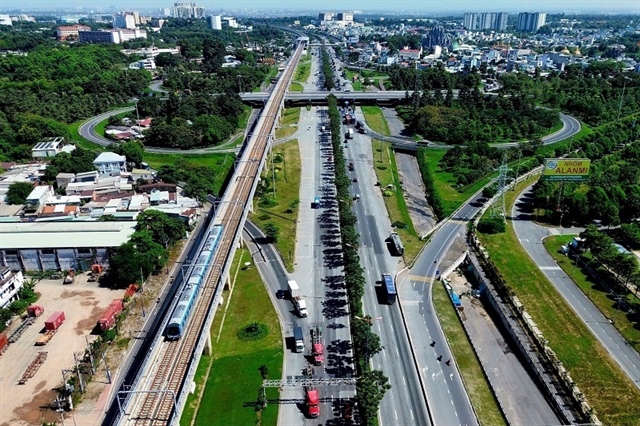
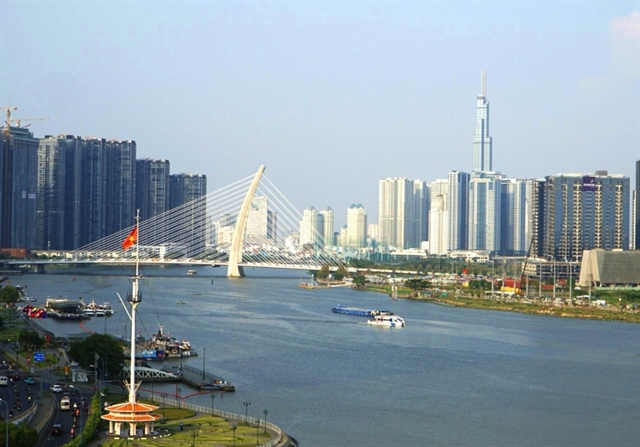
A Special Urban Law is expected to strengthen Ho Chi Minh City’s competitiveness and investment attractiveness. Photo: Le Toan |
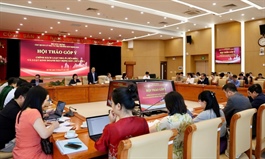
“The city must aim at several key objectives when building the Special Urban Law,” Khuong said at an expert consultation workshop jointly organised by Ho Chi Minh City People's Committee and Vietnam National University on April 4.
“To realise the vision, the law should focus on five key development drivers: positioning Ho Chi Minh City as a centre for AI, startups, and green finance; creating stronger regional development synergies; capturing land value increments for reinvestment; reallocating resources towards high-tech industries; and building the city into a symbol of innovation,” Khuong said.
He particularly stressed the need to grant Ho Chi Minh City maximum autonomy in policy experimentation, allowing the law to override overlapping regulations, establish accountability exemptions for those willing to take bold reform initiatives, and expand the city’s links with global technology networks.
Associate Prof. Do Phu Tran Tinh, director of the Institute for Policy Development under Vietnam National University Ho Chi Minh City, said that the law must begin with redefining Ho Chi Minh City’s role within both the national and global development architecture.
“The city should be designated as a coordinating centre for strategic resources at both regional and national levels, serving as a hub for the concentration and allocation of capital, technology, human resources, and knowledge in line with development priorities,” Tinh said.
At the same time, Ho Chi Minh City should become the nucleus of the knowledge economy, a national centre for science and technology, and a core innovation ecosystem, while also functioning as a gateway for international integration and connecting Vietnam to global value chains, Tinh added.
In addition, the city should be positioned as a centre for private sector and national enterprise development, a climate-resilient urban area, a people-centred city focused on quality of life, and a testing ground for pioneering institutional frameworks and governance models, he added.
Assoc. Prof. To Van Hoa, rector of Hanoi Law University, said that the law should be specially designed for Ho Chi Minh City to meet the city’s development needs, which in turn would also support the development of the wider region and the country as a whole. He therefore proposed that Ho Chi Minh City should be defined not merely as a standalone megacity, but as an urban centre with a critical role at both regional and national levels.
“In that context, the scope of the law should encompass a comprehensive policy ecosystem, with major components linked through a coherent development logic,” Hoa said.
Specifically, he stressed the need to clearly define and institutionalise the city’s development objectives in the context of a new era, such as becoming a regional competitive hub for finance, innovation, and international connectivity.
At the same time, he highlighted the importance of an overarching master plan and the legal status of planning itself. According to Hoa, the law should provide clear provisions for the formulation of a citywide master plan and ensure that such planning carries sufficient legal authority to genuinely steer development, rather than merely serving as a tool for spatial management
Associate Prof. Tran Hoang Ngan assessed Ho Chi Minh City’s first-quarter economic performance as a positive signal, as the city continues to implement merger and administrative consolidation measures while advancing special policy mechanisms.
“The city’s GDP expanded by 8.27 per cent in the first quarter, or 8.58 per cent excluding oil and gas, exceeding the national average. Ho Chi Minh City alone contributed more than two percentage points to the country’s overall growth of 7.83 per cent, underscoring its significant role and influence within the national economy,” Ngan said.
Ngan noted that over the years, the Politburo has issued a series of resolutions specifically for the city. However, although Ho Chi Minh City has made considerable efforts to unlock its potential and maintain its role as the country’s growth engine, it has yet to fully capitalise on its inherent strengths and advantages.
“What Ho Chi Minh City truly needs is a stable and long-term institutional framework, which is why a dedicated law for the city is necessary,” Ngan said.
Based on this practical context, he proposed three major directions for the Special Urban Law. First, the law should focus on addressing existing bottlenecks by reviewing the implementation of various resolutions in order to identify obstacles faced by departments and agencies.
Second, it should pave the way for new growth in drivers such as the marine economy, logistics, free trade zones, high technology, an international financial centre, and high-quality services.
"At the same time, the law should institutionalise major Politburo orientations on innovation, digital transformation, private sector development, the state economy, and cultural development, translating strategic priorities into a concrete legal framework," Ngan added.
- 10:51 06/04/2026