Affordability and sustainability to define new real estate cycle
Affordability and sustainability to define new real estate cycle
In the new real estate cycle, success will favour developers who prioritise genuine affordability and sustainable financial structures over short-term sales tactics, according to Jerry Nguyen, deputy general director of Investment and International Market Development at Hoa Binh Construction Group.
|

During periods of rapid real estate expansion, liquidity is often perceived as a sales and marketing issue. When speculative demand is strong, compelling narratives, large-scale launch events, and expectations of price appreciation can enable projects to sell quickly, even when prices far exceed average household incomes.
Following the market disruptions of recent years, however, a more fundamental reality has emerged: liquidity is no longer determined by marketing, but by actual purchasing power. The market has matured, and buyers are returning to basic financial calculations – income levels, interest rates, and monthly debt obligations.
In this context, the liquidity challenge of the 2026-2035 period is no longer a short-term sales problem. It has become a strategic issue of product design and financial structuring. This marks a clear dividing line between traditional project-led development and a more sustainable, urban-development-oriented approach.
At its core, housing affordability is determined by three variables: property price, loan interest rates and tenure, and the proportion of monthly income allocated to debt repayment.
When interest rates are low and credit is abundant, markets can temporarily absorb higher prices. Once financial conditions tighten, however, these variables quickly reveal their limits. If monthly repayments consume an excessive share of household income, purchasing decisions are postponed or abandoned altogether, regardless of how sophisticated the marketing campaign may be.
Market analyses of social housing and affordable commercial housing in Vietnam indicate that, at prevailing interest rates of 6-7 per cent per annum and loan tenures of 20–25 years, a VND 1 billion ($40,000) apartment generates monthly repayments of approximately VND6-7 million ($240-280). For many low- and middle-income households, this already exceeds comfortable affordability thresholds, even before accounting for other urban living costs.
This highlights a critical point: liquidity is not constrained by latent demand, but by the market’s ability to convert demand into completed transactions. That is where product strategy begins to replace sales strategy.
Demographic and labour data suggest that Vietnam’s primary housing demand is concentrated among middle- and lower-middle-income groups: skilled workers, office employees, young families, and migrant labour in major cities. These households have stable housing needs, but are highly sensitive to price and financing costs.
At the same time, the supply of affordable commercial housing remains limited due to regulatory constraints, land availability, rising development costs, and product designs misaligned with market affordability. This gap represents a social challenge and a strategic opportunity for developers capable of adjusting their development models.
Evidence from pioneering projects shows that products designed with realistic pricing, optimised unit sizes, essential amenities, and effective transport connectivity tend to maintain more stable absorption rates, even during market downturns. Their success does not stem from selling price appreciation stories, but from offering homes that people can realistically afford and live in.
Following the recent market correction, Vietnam is experiencing a clear shift in buyer behaviour. Short-term speculative sentiment has weakened, while demand for owner-occupied housing has increased. Buyers are paying closer attention to long-term considerations such as operating costs, property management quality, security, parking, schools, and access to public transport.
This transition mirrors patterns seen in more mature markets. After speculative phases subside, real estate reverts to its fundamental role as living and working space. In such environments, affordability and livability become the primary determinants of sustainable liquidity.
A critical shift in product development thinking is moving away from price-per-square-metre metrics towards monthly payment capacity. A product is not considered market-appropriate because it is the cheapest, but because it allows buyers to maintain manageable repayment levels throughout the loan life cycle, while still delivering acceptable living standards.
Achieving this balance requires developers to optimise multiple variables simultaneously: unit size, functional layout, construction materials, amenity scope, and – crucially – post-handover operating costs. Excessive service charges or maintenance expenses can significantly increase the financial burden on residents, undermining both purchasing decisions and long-term project reputation.
Long-term liquidity does not arise from a single product offering, but from the ability to construct a housing ladder aligned with household wealth accumulation over time. This typically includes smaller units for young buyers, mid-sized apartments for young families, larger homes for later life stages, and higher-end products for affluent segments.
Such a strategy enables developers to cultivate a loyal customer base that evolves with their product offerings, reducing dependence on speculative cycles and creating a more stable demand profile across economic conditions.
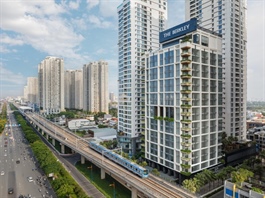
As cities expand, infrastructure connectivity is becoming an inseparable component of real estate value. Projects located further from city centres can still achieve stable liquidity if commuting times are reduced through metro systems, ring roads, or effective public transport networks. Conversely, poorly connected developments face persistent absorption challenges, regardless of initial pricing.
Equally important is post-handover operational quality. Property management, service fees, security, and the functionality of shared amenities directly shape residents’ living experience and asset value. Effective operations help preserve prices while generating positive word-of-mouth, arguably the most durable and credible form of marketing.
In the new real estate cycle, liquidity is no longer the outcome of short-term sales tactics. It is the result of products designed around real purchasing power, sound financial structures, and long-term operational quality.
Developers are not excluded from the market due to a lack of land, but because they fail to create products aligned with household affordability. When liquidity is understood as a design capability rather than a sales technique, developers gain greater control over cash flow, capital turnover, and strategic participation in the restructuring opportunities of the new cycle.
For the period 2026-2035, liquidity will belong to developers who design for real buyers, not for narratives that are steadily losing their effectiveness.
- 08:00 28/03/2026