Seafood trade loses pace in March amid market divergence
Seafood trade loses pace in March amid market divergence
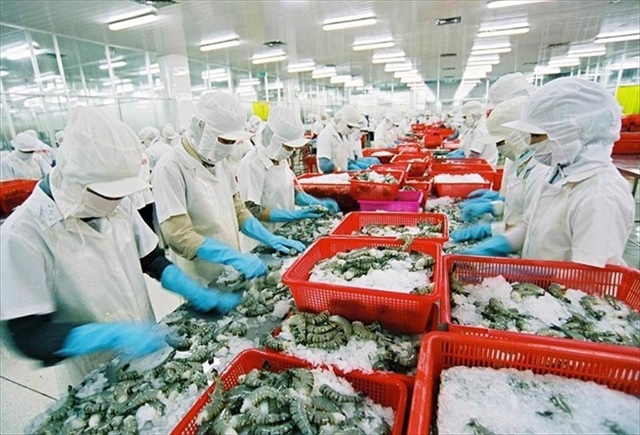
Vietnam’s seafood exports lost momentum in March as global demand remained uneven, with a sharp surge in China partially offsetting declines in major markets such as the United States and Japan.
According to the Vietnam Association of Seafood Exporters and Producers (VASEP), seafood exports in March approximated $927 million, up more than 5 per cent on-year.
|
This increase was significantly lower than the roughly 20 per cent growth in the first two months, indicating a slowdown and a growing reliance on a few key drivers.
In the first quarter (Q1) overall, seafood exports totalled $2.64 billion, up nearly 8 per cent. China and Hong Kong remained Vietnam’s largest market, with export turnover reaching approximately $764 million, up nearly 45 per cent compared to the same period last year. In March alone, exports to this market exceeded $250 million, rising more than 50 per cent.
According to VASEP, growth from China in Q1 was driven by three main factors.
First, seasonal demand linked to the Lunar New Year. In 2026, Lunar New Year fell in mid-February, driving strong import demand for seafood – particularly whole-form shrimp, live seafood, and premium consumption products – from late last year through the early part of Q1.
Second, underlying demand remained robust in the mid- to high-end segment. Import data show that China continued to increase shrimp imports in the first two months of the year, with growth of around 18 per cent.
Notably, in the live lobster segment, changes in tariffs and supply from Canada created a ‘market gap’, opening up clear opportunities for alternative suppliers, including Vietnam.
Third, geographical proximity and supply chain flexibility enabled Vietnamese firms to better capitalise on short-term demand spikes in this market, particularly during peak consumption periods.
In contrast to China, other key markets have yet to show clear signs of recovery.
Exports to the United States declined by more than 10 per cent in Q1, remaining the largest bottleneck due to both weak demand and technical barriers such as MMPA/COA regulations, as well as tariff-related obstacles including anti-dumping duties on shrimp. Meanwhile, exports to Japan and South Korea also fell by around 10 per cent, reflecting subdued consumption.
In the EU market, exports were largely flat, indicating stable but insufficient demand to drive growth. However, the bloc still presents opportunities in whitefish and products that meet sustainability standards.
On the positive side, markets such as ASEAN, Australia, Taiwan (China), and several emerging markets continued to expand, contributing to export diversification.
Heading into Q2, VASEP expects China and Hong Kong to remain the largest contributors to Vietnam’s seafood export growth. However, growth may slow compared to Q1 as seasonal factors fade.
As a result, growth will depend more heavily on underlying consumer demand and the ability of local exporters to maintain market share amid intensifying competition.
Product segments aligned with ‘reasonable price and comfort’ factors are likely to play a more important role than seasonal premium products.
For the industry as a whole, exports in Q2 are forecast to remain in positive territory but with clear divergence.
Accordingly, shrimp and pangasius (tra fish) will continue to serve as key pillars, China as the main growth driver, while the United States and some developed markets will remain constraining factors.
Markets benefiting from logistical advantages due to geographic proximity, along with preferential tariffs under free trade agreements, are expected to be prioritised by seafood exporters this year.
- 23:39 08/04/2026