Textile and garment industry bombarded with challenges due to Middle East conflict
Textile and garment industry bombarded with challenges due to Middle East conflict
Despite the efforts of Vietnamese textile and garment businesses, the ongoing Middle East conflict is posing serious challenges to their ability to secure and carry out overseas production orders.
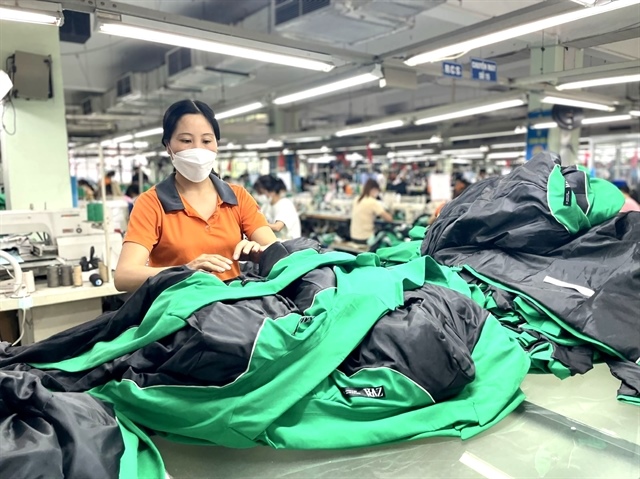
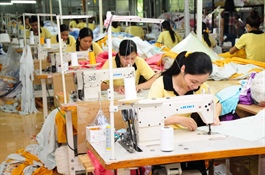
Rising fuel prices is affecting Việt Nam's textile and garment production. — VNS |
The Middle East conflict is hiking up the prices of fuel and subsequently production costs, greatly affecting Việt Nam’s textile industry, for which around 70 per cent of its production materials are imported.
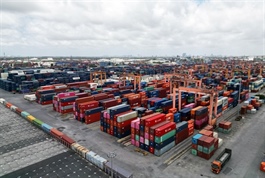
The blockade of the Red Sea forced cargo ships to divert around the Cape of Good Hope, extending delivery times by 14-20 days. This delay created significant difficulties for the fast fashion segment, which requires short product lifecycles.
Phạm Văn Việt, board chairman of Việt Thắng Jean Co. Ltd., said that transportation costs had increased by up to US$5,000 per container, but his company was struggling with increasing their own prices due to limited demand.
Textile and garment businesses have been coping with this new market challenge, by splitting up their orders, limiting their good deliveries via air, and seeking out new markets. However, many are still having to rely on core big markets such as the US and the EU.
With fluctuating production costs, businesses are finding it difficult to sign long-term contracts with export partners, who themselves are also operating more cautiously and opting for smaller orders, as global demand is growing slowly.
Some orders to the Middle East are also facing difficulties in international payments and letter of credit confirmation due to the banking system being affected by sanctions or security risks. Direct export orders to the Middle East (worth approximately US$200 million/year in export value) are at risk of being delayed or cancelled without compensation due to force majeure.
Vũ Đức Giang, chairman of Việt Nam Textile and Garment Association, said that the industry would continue to face geopolitical risks and high production costs throughout the rest of 2026.
Additionally, although Việt Nam was still one of the leading exporters in textile and garment, it was facing rising competition from markets in the region, such as Bangladesh, India and Indonesia, which have the advantages of cheap labour costs and local material sources.
Giang said that the industry would need to improve their resilience by investing in modern technologies, automation and digital transformation to reduce costs.
Experts say that Việt Nam still has the advantages of stable economy and highly-skilled workforce. Networking and exhibition events can help businesses find new partners, materials and technologies.
The industry will continue to diversify its markets, focusing on markets that are part of the Comprehensive and Progressive Agreement for Trans-Pacific Partnership, develop domestic material zones to limit reliance on imports, and invest in green production to satisfy international partners.
The Việt Nam Textile and Garment Association will carry out more trade promotion activities and help businesses secure orders in markets unaffected by the Middle East shipping route, such as Australia, New Zealand, Canada, and Southeast Asian countries.
- 09:08 08/04/2026