Rising material costs pressure budgets for key transport projects
Rising material costs pressure budgets for key transport projects
As the Government accelerates public investment to support economic growth, experts said ensuring stable material supply and transparent pricing will be key to keeping major infrastructure projects on schedule and maximising the efficiency of public spending.
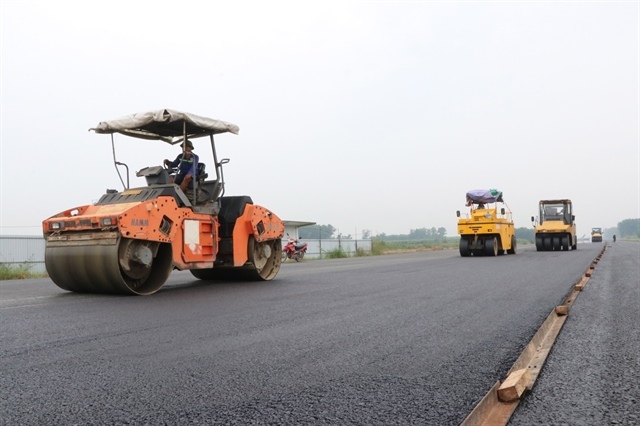
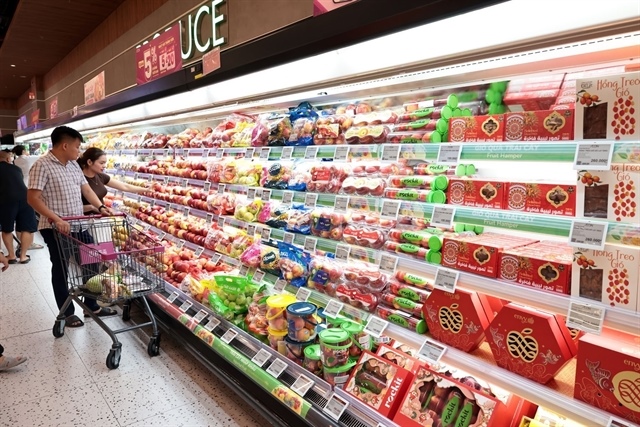
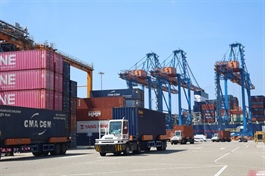
Contractors face mounting pressure as construction material prices rise in 2026. — VNA/VNS Photos |
Rising prices of construction materials, particularly sand, are increasing cost pressures on several key transport infrastructure projects, contractors and industry officials said.
Major contractor Truong Son Construction Corporation under the Ministry of National Defence is currently working on a range of national infrastructure projects, including airports, expressways, bridges and seaports.
The company said the sharp increase in the price of materials since the start of 2026 had become a major concern for project implementation.
Construction steel prices had risen by about VNĐ350,000 to VNĐ600,000 (US$13.7-$23.6) per tonne, reaching roughly VNĐ16.2 million per tonne, while construction stone prices had increased by 10-15 per cent to between VNĐ280,000 and VNĐ650,000 per cubic metre. Construction sand prices had climbed about 5-10 per cent compared with early 2026 levels.
A representative of the company who declined to be named said that ensuring stable supply and prices of materials remained the biggest challenge for contractors.
He cited the completion ahead of schedule of the Cần Thơ-Hậu Giang-Cà Mau Expressway by the end of 2025, which he said was made possible after authorities resolved supply issues for construction materials.
Any project that resolved the material supply problem could successfully reach completion, the representative said, noting that projects in the Cửu Long (Mekong) Delta region often face supply challenges.
According to Nguyễn Viết Hải, chairman of Son Hai Group in Quảng Trị Province, rising material prices were likely to affect overall investment costs for projects, though the exact impact would depend on price movements during construction.
Increased material prices would inevitably change the cost structure and the final price of projects, he said, adding that such fluctuations typically would occur throughout the construction period.
The Đồng Đăng-Trà Lĩnh Expressway, a 121-km project with total investment of about VNĐ25.55 trillion, is being developed in two phases. The first phase began construction in 2024 and is targeted for completion in 2026.
Contractor Deoca Group JSC in HCM City said that plans to reduce the construction time by about six months remain challenging due to material supply constraints and costs.
The company said it had adopted the New Austrian Tunneling Method (NATM) to improve efficiency in tunnel construction.
Economist Ngô Trí Long said higher material costs had a clear ripple effect on construction projects.
Materials would be a major input for construction. When their prices increase, total investment costs would be almost certain to rise, Long told the Voice of Vietnam (VOV).
He added that rising costs could reduce contractors’ profit margins, delay project progress, or lead to requests for contract price adjustments.
Alternatives sought amid shortages
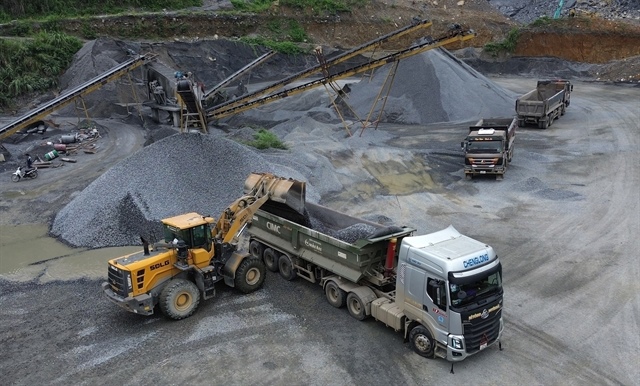
Contractors face mounting pressure as construction material prices rise in 2026. — VNA/VNS Photos |
Officials say the Government is exploring alternatives to address shortages and price increases.
Nguyễn Thế Minh, deputy director of the Department of Economics-Construction Investment Management under the Ministry of Construction, said the ministry was working with the Ministry of Agriculture and Environment to study the use of saline sand from river estuaries as an alternative material for embankment works in the Mekong Delta.
Initial assessments suggest the material could potentially replace river sand for certain infrastructure projects, he told VOV.
The Ministry of Science and Technology has been tasked with conducting further research to evaluate the technical feasibility and costs of the approach before it is submitted to authorities for consideration.
Local governments have also been instructed to prioritise construction material supplies for major infrastructure projects.
During a recent inspection of the HCM City-Trung Lương-Mỹ Thuận Expressway expansion, Minister of Construction Trần Hồng Minh urged local authorities to be more flexible in granting mining permits and expanding extraction capacity to ensure adequate supplies of construction materials for the project.
Tighter market oversight needed
Analysts say that better management of the construction materials market will also be needed.
Authorities should strengthen monitoring and regularly publish market price updates for construction materials, which could help investors and contractors adjust budgets and mitigate risks.
They also call for more systematic planning of mining areas and faster licensing in regions with suitable reserves to stabilise supply and reduce price pressure. At the same time, price adjustment mechanisms in construction contracts should be applied flexibly to help share risks between investors and contractors.
A longer-term solution could be expanding the use of alternative and environmentally friendly materials, experts note.
Many countries have promoted recycled materials, artificial sand and low-emission concrete to reduce pressure on natural resources and stabilise supply. In Việt Nam, alternatives such as crushed sand, fly ash from thermal power plants and recycled construction materials have been explored and tested.
However, wider adoption has been limited by a lack of technical standards, cautious market acceptance and insufficient incentives.
As the Government accelerates public investment to support economic growth, experts say ensuring stable material supply and transparent pricing will be key to keeping the progress of major infrastructure projects on schedule and maximising the efficiency of public spending.
- 08:12 09/04/2026