Enterprises face mounting pressure to innovate just for survival
Enterprises face mounting pressure to innovate just for survival
In a rapidly shifting global economic landscape, innovation is no longer a strategic option for businesses but a prerequisite for survival and growth.
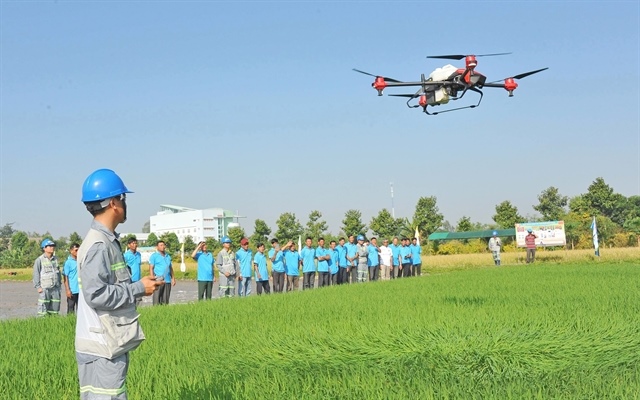
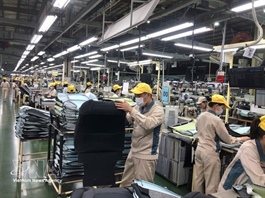
Applying science and technology in cultivation and production would help Vietnamese enterprises achieve breakthrough growth, experts say. — VNA/VNS Photo |
According to Võ Tân Thành, vice chairman of the Việt Nam Chamber of Commerce and Industry, this year is pivotal and will lay the groundwork for accelerating development ambitions in a new era.
After nearly four decades of reforms Việt Nam’s economy has seen significant achievements. The country’s GDP in 2025 was estimated at around US$514 billion, placing it among the world’s 32 largest economies, while its trade was worth some $930 billion to rank it among the top 20. But the global context is undergoing a profound transformation.
Supply chains are being restructured at an unprecedented pace, while advances in artificial intelligence and digital transformation are fundamentally reshaping production and business models.
At the same time green economy principles, sustainable development and ESG standards have become mandatory requirements for participation in international markets.
These are no longer emerging trends but a new set of rules.
As a result, the traditional advantage of low-cost labour is gradually losing significance and technological capability, innovation and governance are becoming decisive factors.
In recent years Vietnamese enterprises have begun shifting from merely participating in global value chains to actively creating value, with the rise of leading corporations such as FPT, Viettel, Vinamilk, VinFast, and TH True Milk.
Despite these positive developments, most Vietnamese businesses remain small and medium-sized, facing constraints in terms of finance, technology and human resources.
Labour productivity still lags behind regional peers, while high-quality human resources remain in short supply.
Weak linkages between enterprises have also hindered the formation of a robust ecosystem capable of deeper integration into global value chains.
Offering further insights, expert Đinh Thế Hiển noted that after more than two decades of World Trade Organisation membership, Việt Nam had emerged as one of the world’s leading exporters.
However, foreign companies continued to play a dominant role, while domestic enterprises were largely concentrated in low value-added segments, he said.
Bottlenecks remained in areas such as raw material autonomy, indigenisation rates in supporting industries, logistics, branding, and international distribution networks.
Without timely solutions, these limitations could erode the country’s long-term competitiveness, he warned.
Nguyễn Ngọc Hoà, chairman of the HCM City Business Association, said in the aftermath of the pandemic and amid ongoing geopolitical tensions, economic shocks had become faster, more widespread and less predictable.
Enterprises are now facing simultaneous pressures related to costs, cash flows, markets, and international standards, according to Hoà. Notably, the greatest challenge lies not in awareness but in execution. While most small and medium-sized enterprises recognise the need for transformation, they lack the resources to implement it.
If innovation is concentrated only among large corporations, there is a clear risk of imbalance across the business ecosystem.
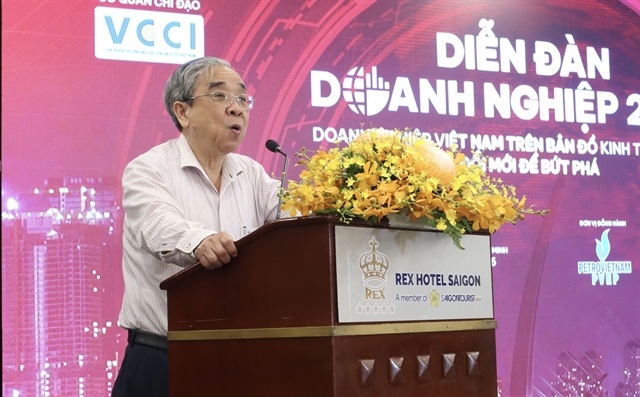
These issues were discussed at Business Forum 2026 held in HCM City on March 24 by the Việt Nam Chamber of Commerce and Industry and Business Forum magazine with the theme “Vietnamese enterprises on the global economic map – Innovating for breakthrough growth”.
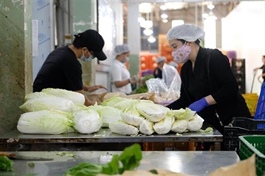
Applying science and technology in cultivation and production would help Vietnamese enterprises achieve breakthrough growth, experts say. — VNA/VNS Photo |
Positioning in global supply chains
Amid these multidimensional pressures, innovation is not only urgent but also the only viable path for enterprises to achieve breakthrough growth.
According to Thành of the Việt Nam Chamber of Commerce and Industry, businesses must make fundamental shifts, moving from outsourcing to value creation and ownership, from a domestic market mindset to a global one and from rapid growth to sustainable development.
At the same time they should capitalise on opportunities arising from digital transformation, artificial intelligence, green finance, and free trade agreements.
Drawing on practical experience, Phan Minh Thông, chairman of Phuc Sinh Corporation, said crises often came with opportunities.
Following the pandemic and global conflicts, food had become a strategic asset, with rising agricultural prices opening up major opportunities for Vietnamese enterprises, he said.
To seize these opportunities, businesses must remain adaptable, he said.
When exports to the Middle East, which account for around 11 per cent of total turnover, were disrupted by conflicts, companies proactively shifted to the US and European markets, he said, pointing out that a strategy that avoids dependence on a single market would help mitigate risks and sustain growth.
Another key factor is diversification also in product lines, enabling enterprises to build long-term competitiveness through technology, branding and distribution systems.
Alongside corporate efforts, institutional support plays a crucial role.
Participants at the forum highlighted the need for the Government to continue refining a modern market economy framework, removing barriers and facilitating access to capital, technology and markets.
At the same time, developing an innovation ecosystem and ensuring a transparent, stable and predictable business environment remain essential.
More importantly, support policies must be inclusive and implemented with clear roadmaps to ensure no enterprise is left behind in the transformation process.
Only when the entire business community moves forward together can innovation generate real momentum for the economy.
In an increasingly volatile world, Vietnamese enterprises have a unique opportunity to reposition themselves.
With innovation as an internal driving force and institutions acting as a lever, businesses can not only adapt but also advance, integrating more deeply and creating higher value within global supply chains.
- 14:37 07/04/2026