HCM City shifts toward multi-polar megacity model in master plan update
HCM City shifts toward multi-polar megacity model in master plan update
Việt Nam News reporter Nguyễn Diệp speaks with Võ Hoàng Ngân, director of the city Department of Planning and Architecture, on turning planning reform into a long-term development strategy.
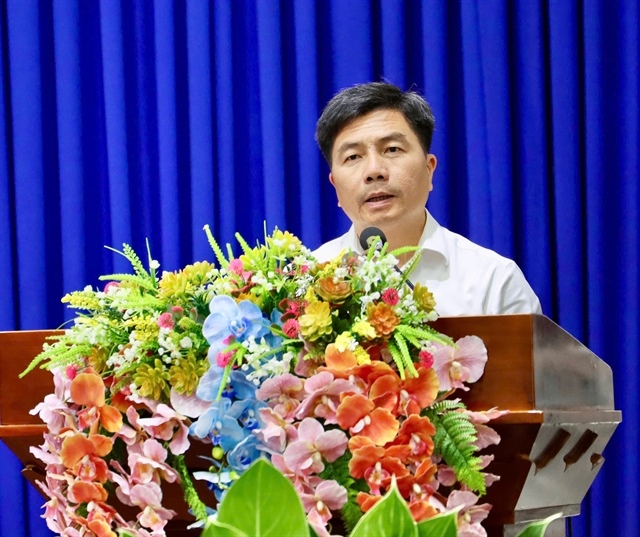
Võ Hoàng Ngân, director of the HCM City Department of Planning and Architecture, outlines the city’s urban strategy to 2040. |
Võ Hoàng Ngân, director of the HCM City Department of Planning and Architecture, outlines the city’s urban strategy to 2040.
Hồ Chí Minh City is accelerating revisions to its master plan to 2040, aiming to build an integrated, regionally connected urban framework. Việt Nam News reporter Nguyễn Diệp speaks with Võ Hoàng Ngân, director of the city Department of Planning and Architecture, on turning planning reform into a long-term development strategy
Could you provide an overview of the legal and structural foundation upon which this updated master plan is being built?
Prior to the current administrative restructuring, the master plans for enlarged HCM City (which last year included the two neighbouring provinces of Bình Dương and Bà Rịa-Vũng Tàu) had already been appraised by ministries and approved by the prime minister.
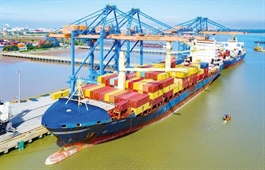
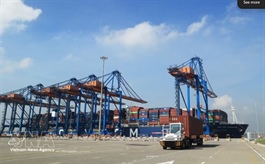
These documents initially established a regional role allocation: HCM City as the hub for high-quality services and finance, the former Bình Dương Province as a modern industrial centre and the former Bà Rịa-Vũng Tàu Province specialising in the marine economy and logistics.
However, practical implementation revealed a critical limitation: spatial development remained fragmented because planning was largely confined to administrative boundaries. This prevented us from fully optimising the advantages of regional connectivity.
How will the city restructure its development space to overcome these limitations?
The new requirement is not just to inherit existing plans but to fundamentally restructure development space towards integration and mutual complementarity. We are focusing on two key orientations.
Spatial functional specialisation: Each area will be clearly defined within the value chain. HCM City will solidify its role as a centre for international finance, high-end services and R&D. Meanwhile, we will support Bình Dương’s transition to high-tech innovation and Bà Rịa-Vũng Tàu’s leveraging of its deep-water ports and logistics.
Regional spatial restructuring: We are moving away from boundary-based development towards functionally integrated economic corridors. This involves forming industrial-service-logistics belts that operate as a single unified system.
How will this shift affect essential public services and the industrial landscape within the city?
For healthcare and education, we are reorganising networks to ensure balanced distribution and accessibility across the entire region, rather than concentrating in the city centre. Public land allocation will now be driven by scientific population data and real demand.
As for industry, the long-term goal is a comprehensive spatial restructuring of production.
Inner-city industrial zones will be transformed into high-tech, environmentally friendly models. Large-scale manufacturing will be strategically relocated to new-generation industrial parks in the Bình Dương area and industrial-port complexes in Bà Rịa–Vũng Tàu.
Infrastructure is often cited as the "backbone" of such plans. What are the priorities for transport in this update?
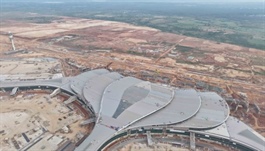
Transport must be multimodal and continuous. Our key development axes include Ring Roads 3 and 4, interregional expressways, and a comprehensive and integrated railway network with a particular emphasis on seamless connections to Long Thành International Airport. The goal is a unified infrastructure network in which HCM City serves as the central node for regional growth.
What is the timeline for adopting this master plan?
We are targeting the fourth quarter of 2026 for final submission and approval. The process involves finalising the framework, selecting international consultancy consortia and conducting extensive consultations with communities, businesses and experts.
Relevant agencies are currently coordinating closely to develop various development scenarios. This is a strategic task that requires the concerted participation of the entire political system to ensure the plan is both visionary and feasible.
Võ Hoàng Ngân, director of the HCM City Department of Planning and Architecture, outlines the city’s urban strategy to 2040. |
Ultimately, what kind of city will HCM City become once this plan is realised?
With this update, the city is not just expanding in scale; it is undergoing a comprehensive transformation of its development model. We are evolving from a single-centre city into a multi-polar megacity with strong regional linkages. Our ambition is for HCM City to emerge as a leading economic, financial and innovation hub, not just in Southeast Asia but globally.
Given the high population density, how will the ‘multi-polar’ model specifically address the current pressure on the city’s core?
The multi-polar model is our strategic response to over-concentration. Instead of everything gravitating towards the historic centre, we are developing satellite urban hubs that are self-sufficient in terms of jobs, education and healthcare.
A core component of this is the transit-oriented development (TOD) model. By concentrating high-density urban clusters around major transit nodes such as metro stations and Ring Road intersections we can reduce private vehicle use and shorten commute times. This creates a "city within a city" environment, where residents can access essential services within a 15-minute radius, significantly enhancing their quality of life.
Environmental challenges, particularly flooding, are a major concern for HCM City. How does the adjusted plan integrate climate resilience?
Resilience is no longer an "add-on"; it is a foundational element of the 2040 vision. We are shifting from a "fighting the water" mindset to one of "living with water".
The updated plan prioritises the preservation of natural drainage corridors and the expansion of "green-blue" spaces by integrating parks with detention basins. Furthermore, we are strictly regulating the elevation of new urban developments and enhancing underground drainage systems.
By aligning planning with regional water management efforts in the Đồng Nai and Sài Gòn river basins, the city aims to withstand increasing pressures from climate change and rising sea levels, ensuring long-term safety for more than 12 million residents.
- 08:13 30/04/2026