Building an IFC via global experience
Building an IFC via global experience
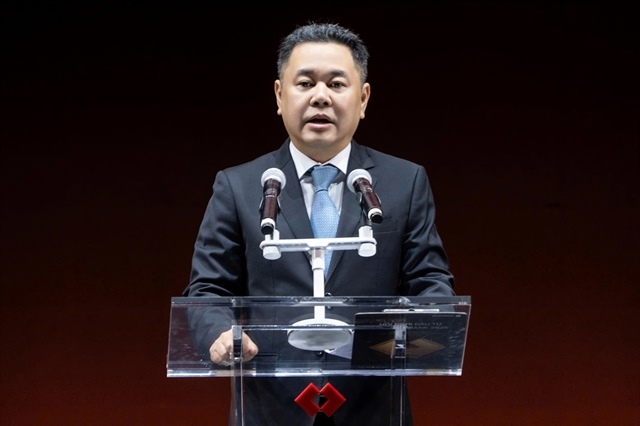
Angela Knight, chair of the Astana Financial Services Authority and former UK Economic Secretary to the Treasury, talked with VIR’s Thanh Dat about how to build hubs and offered insights from experience, including lessons from Astana and other global IFCs.
What are the critical foundations for Vietnam to build a successful IFC?

Angela Knight |
The first and most important step is clarity of purpose. Vietnam needs to decide what it wants its IFC to do. There are many possibilities – capital markets, asset management, fintech, commodities, derivatives – but it is not feasible to develop everything at once.
A phased approach is essential. By prioritising key sectors and developing them step by step over several years, Vietnam can ensure that its regulatory framework, market structure, and overall offering are well-designed and attractive to international investors. This also provides clarity and predictability for global financial institutions looking to enter the market.
What governance models work best for such a financial centre?
A strong governance structure is fundamental. From international experience, including Astana, an effective model combines independence with coordination.
Typically, the IFC operates under an independent authority responsible for day-to-day operations. Alongside this, key institutions such as the regulator and the court must have their own independent governance structures.
Above all of these sits a higher-level coordinating body, often chaired at the highest political level, to ensure alignment and strategic direction. The key is clarity: each institution must have clearly defined responsibilities and a strong understanding of how they interact with one another.
How can Vietnam attract global capital while maintaining regulatory credibility?
Legal and regulatory frameworks are absolutely critical. International investors expect familiar and trusted systems. Vietnam’s move towards adopting English common law principles is a strong and positive signal.
However, law alone is not enough – regulation must go hand in hand with it. A predictable, transparent, and independent regulatory regime is essential. In particular, the independence of the financial regulator plays a crucial role in building investor confidence.
Ultimately, global capital flows to environments where rules are clear, consistent, and aligned with international standards.
Can green finance become a core pillar of Vietnam’s IFC?
Yes, absolutely. Vietnam has significant potential to position green finance as a core pillar of its IFC. The country’s development needs – whether in energy transition, infrastructure, or supply chains – naturally align with green financing opportunities. Instruments such as green bonds and other similar finance products can draw in substantial international interest.
The key challenge is structuring these opportunities effectively - linking projects, financing mechanisms, and returns within a clear and investable framework.
How can Vietnam balance innovation in areas like fintech with strong governance and risk management?
This is a challenge faced by all IFCs. A very effective solution is the use of a regulatory sandbox. A sandbox allows new financial products and innovations to be tested in a controlled environment under close supervision. If something goes wrong, the risks are contained and do not affect the wider financial system.
Once these innovations prove successful, they can be gradually expanded – first within the centre, and then more broadly. This staged approach allows regulators to better understand risks while supporting innovation, particularly in fast-moving sectors like fintech.
What short-term and long-term roadmap should Vietnam consider?
In the short term – over the next 12 to 18 months – the priorities should be establishing strong governance structures; setting up an independent regulator and legal framework; defining priority sectors such as green finance or asset management; and ensuring clarity in language, law, and regulation.
In the medium to long term of 10 years and beyond, Vietnam should expand gradually based on its initial successes, building a broader and more sophisticated financial ecosystem.
What lessons can Vietnam learn from the Astana IFC, and what other advice could you offer in this endeavour?
Astana provides a useful reference point. One key lesson is that building a hub takes time, often longer than expected. The most important takeaway is to get the fundamentals right from the beginning, namely clear purpose, strong governance structures, defined roles between institutions, and a realistic long-term vision.
Another shared challenge that must be faced is balancing innovation and risk – something both Kazakhstan and Vietnam have had to carefully manage.
In terms of advice, Vietnam should always balance domestic priorities with international expectations. It is natural to focus on national development goals, but attracting international finance requires understanding what global investors are looking for – standards, transparency, and predictability.
The good news is that Vietnam already has strong fundamentals: solid economic growth, diverse opportunities, and increasing recognition as an emerging market. These are powerful advantages. With the right strategy and execution, Vietnam has every opportunity to build a highly attractive IFC.
- 14:00 01/04/2026