Ministry proposes data, cash flow-driven lending to ease SMEs’ credit crunch
Ministry proposes data, cash flow-driven lending to ease SMEs’ credit crunch
Draft amendments to the Law on Support for Small- and Medium-Sized Enterprises aim to reduce SMEs’ dependence on collateral-backed borrowing and encourage banks to assess borrowers based on business performance, transaction data, cash flow and value chains.

Food production at Hà Giang Import- Export and Trading Company Limited. The Ministry of Finance has proposed a regulatory sandbox for lending based on data and cashflow with an aim to improve access to credit for SMEs. — VNA/VNS Photo Minh Tâm |
The Ministry of Finance is proposing sweeping changes to the Law on Support for Small- and Medium-Sized Enterprises (SMEs), including a regulatory sandbox for data and cash flow-based lending, as part of efforts to improve access to credit for a sector that accounts for about 95 per cent of businesses nationwide.
The draft amendments, expected to be submitted to the National Assembly in October, aim to reduce SMEs’ reliance on collateral-based borrowing and encourage banks to assess borrowers using business performance, transaction data, cash flow and value chains.
The ministry said current lending practices remained heavily dependent on traditional collateral requirements, limiting access to finance for many SMEs despite viable business plans and market potential.
It cited statistics showing outstanding loans to SMEs account for only around 19–20 per cent of total credit in the economy, a level many experts say is not aligned with the sector’s contribution to jobs and economic growth.
Under the draft amendments, the ministry has proposed piloting a sandbox mechanism that would allow lenders to test new credit models based on enterprise data and cash flow. The proposal also includes preferential loans for technology investment, digital transformation, green transition, export financing and value chain financing.
The draft also seeks to overhaul the operations of the credit guarantee fund and the SME development fund to unlock more resources for the sector.
Another option under consideration would be to amend regulations to encourage commercial banks to lend based on data, cash flow and value chains while also studying the establishment of a central credit guarantee fund for SMEs and improving the operation of the SME development fund.
However, the Ministry of Finance has opted for the first option, saying lending to SMEs has so far failed to make a breakthrough, with banks still relying mainly on traditional appraisal methods tied to collateral pledged by borrowers.
“The sandbox mechanism for lending based on data and cash flow both supports the Politburo’s direction on data sharing in state management and promotes the development of a modern financial and credit market, as well as fintech,” the ministry said.
The ministry added that introducing innovative financial instruments such as blended finance, co-financing and co-investment would help tailor support policies to different SME groups and business sectors.
Welcomed proposal

Food production at Hà Giang Import- Export and Trading Company Limited. The Ministry of Finance has proposed a regulatory sandbox for lending based on data and cashflow with an aim to improve access to credit for SMEs. — VNA/VNS Photo Minh Tâm |
Business associations and experts broadly welcomed the proposals but cautioned that implementation would require stronger data infrastructure and greater financial transparency among SMEs.
Nguyễn Hữu Huân, Deputy Chairman of the Vietnam International Financial Centre – HCM City Executive Board, backed the proposed sandbox mechanism for SME lending.
Huân said advances in technology had made it significantly easier to monitor cash flow and evaluate business operations in real time, creating conditions for lenders to gradually expand unsecured lending.
Data-driven lending would help unlock credit for many start-ups, technology firms and service companies that lack real estate assets to pledge as collateral but have strong growth potential, he said.
The sandbox mechanism would provide greater opportunities for SMEs to access capital, while regulators could better assess risks before finalising policies, Huân said.
Lê Anh Văn, director of the Legal Support and Human Resource Development Centre under the Vietnam Association of SMEs, said most SMEs faced difficulties accessing credit because they lacked collateral, failed to meet financial documentation requirements or could not adequately demonstrate project feasibility and cash flow.
He called for broader lending mechanisms based on cash flow, business plans, enterprise data and creditworthiness rather than excessive dependence on collateral.
Văn also urged lawmakers to clarify criteria for identifying priority SME groups to avoid unfocused and overlapping support policies, adding that many support measures relating to finance, accounting and land access still faced implementation bottlenecks due to inconsistencies among different laws and regulations.
A representative of the State Bank of Vietnam said it was necessary to ensure support measures are better aligned with the urgent needs of SMEs, particularly in areas such as interest-rate support and credit guarantees.
Banks would be willing to expand unsecured lending to SMEs if they had access to comprehensive, transparent and reliable enterprise databases, he said, adding that such databases should include information on revenue, profits, actual cash flow, tax obligations, social insurance payments, salaries and service payments.
With standardised and effectively shared data, banks would have a stronger basis to assess enterprises’ financial capacity and debt repayment ability, thereby gradually reducing dependence on collateral, he added.
Hoàng Văn Cường, vice chairman of the Vietnam Economic Association, said mechanisms would be needed to enable banks to adopt more flexible methods of evaluating businesses and increase the use of technology to analyse real-time cash flow rather than relying solely on historical financial statements.
Challenges remain
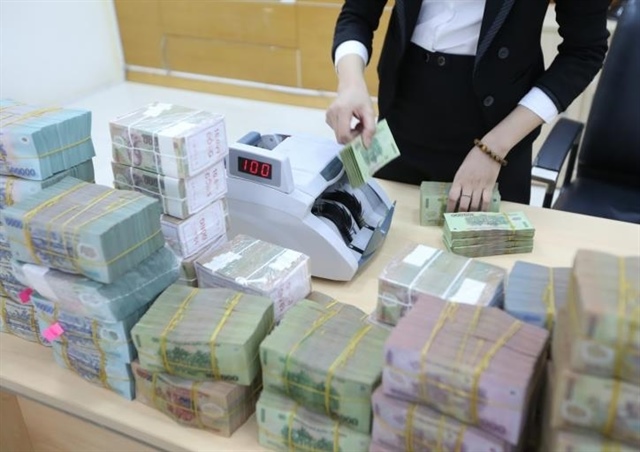
Food production at Hà Giang Import- Export and Trading Company Limited. The Ministry of Finance has proposed a regulatory sandbox for lending based on data and cashflow with an aim to improve access to credit for SMEs. — VNA/VNS Photo Minh Tâm |
Some experts, however, warned that cash flow-based lending could be difficult to implement on a large scale.
Nguyễn Đức Độ, former deputy director of the Institute of Economics and Finance, said SMEs generally had weaker financial stability and higher credit risk than larger firms.
Limited financial transparency among SMEs remained a major obstacle to bank lending, he said, urging SMEs to improve financial transparency and develop feasible business plans in order to access funding more easily.
Bùi Văn Thành, an arbitrator at the Vietnam International Arbitration Centre, also questioned whether the proposal would be feasible under the current commercial banking system.
Citing Taiwan’s experience in developing SMEs, Thành said Việt Nam should strengthen the role of credit guarantee funds, possibly through a central guarantee fund that would directly absorb lending risks on behalf of SMEs.
The Vietnam Association of SMEs also proposed expanding lending mechanisms based on business plans, market expansion strategies and credit ratings.
The association said credit institutions and guarantee funds should clearly guide enterprises that fail to meet lending requirements and called for regulations recognising intangible assets, property rights and future-generated assets as acceptable collateral. It also urged greater digitalisation of loan procedures.
The State Bank of Vietnam’s data showed that total outstanding credit in the economy exceeded VNĐ19.4 quadrillion (US$760.8 billion) by the end of April, up more than 18 per cent from a year earlier. Of that, lending to SMEs accounted for nearly VNĐ3.8 quadrillion, or around 20 per cent of total outstanding loans.
- 08:44 25/05/2026