Women face growing workforce gap as AI reshapes industries
Women face growing workforce gap as AI reshapes industries
As the AI revolution reshapes global economies, Oanh Tran, head of People at HSBC Vietnam, reflects on a paradox emerging this International Women's Day.
|
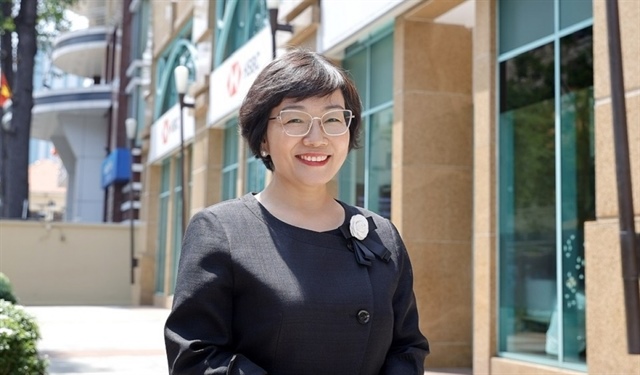
We are standing at a digital crossroads where AI is reshaping how we work and live. Statistics tell a story of efficiency, but as a woman navigating this space, I see a different narrative: a widening gender gap where the roles traditionally held by women are the most vulnerable to automation, while the architects of this new intelligence remain overwhelmingly male.
At the current pace, achieving global gender parity will take 123 years (roughly five generations) with the Asia-Pacific region falling even further behind when it comes to women leading businesses and participating in the economy. It’s a sobering reality, but we have a massive opportunity on the horizon. As AI begins to fundamentally change how we work, bringing with it an estimated 78 million new jobs by 2030, we have a choice to make. If we’re intentional about fairness, we can use this technology to finally build a truly inclusive workforce. However, if we aren't careful about how we roll it out, we might just end up making the gender gap even worse than it is today.
A new study by NINEby9, a non-profit group focused on gender advocacy, warns that while AI is boosting productivity and changing the way we work, its uneven adoption could actively worsen gender inequality unless firms step up right now to make sure women aren't left behind. This means being intentional about bringing women into new AI-driven roles and ensuring they have the same access to the reskilling programmes needed to thrive in this new era.
It’s exciting to see high-growth fields like AI engineering, data science, and product management taking off, especially since these roles come with better remuneration, more influence, and great career paths. However, women currently occupy less than one third of AI related positions worldwide, remaining significantly underrepresented in these roles. At the same time, many of the administrative and support roles where women have traditionally been more represented are precisely the ones being most affected by AI automation. So, while we’re seeing some remarkable efficiency gains, the pressure of this transition isn’t being felt equally across the workforce. It’s a bit of an uneven shift that we really need to keep our eyes on.
The bitter truth is that the fastest-growing sectors are precisely those where women are most underrepresented, creating a really unequal situation where women are more vulnerable to job changes but have fewer paths into the best new opportunities. This imbalance carries long-term consequences: excluding women from high-growth digital roles threatens to widen the wealth gap and block their path to leadership in tech-heavy industries.
Furthermore, as AI increasingly shape decisions in hiring, performance, finance, and healthcare, the absence of women in design and oversight roles significantly raises the risk of unintentional bias. Ensuring gender inclusion in AI is not merely a matter of workforce equality, it is fundamental to the credibility and integrity of the systems themselves. For businesses, failing to act means both a sacrifice in potential productivity and a widening between workers.
With fewer women entering the STEM workforce, few transition into technology leadership roles. In 2024, women held 24.4 per cent of managerial positions globally and a mere 12.2 per cent of C-suite positions in STEM-related areas such as technology and digital transformation, according to World Economic Forum. This shows a clear 'leaky pipeline' where women are increasingly filtered out as they move towards the top.
Past research emphasises that the leadership gap for women often starts right at the beginning of their careers. According to McKinsey, fewer women successfully transition from individual roles into their first management positions – a problem frequently called the 'broken rung' of the career ladder. The data shows an obvious disparity: for every 100 men promoted to a manager role, only 81 women achieve the same step up.
This long-standing barrier is now colliding with the AI-driven workplace transformation, creating a concerning new trend: women are significantly less likely than men to transition into the high-potential roles that AI is currently boosting. As technology redefines professional success, this shift threatens to leave women behind in the very positions where the most growth and opportunity are concentrated.
Close the gap
For organisations, this isn't just a diversity issue, it’s a direct risk to the talent pipeline and overall productivity. Any AI strategy that leaves half the workforce behind effectively miss the opportunity for innovation and growth. Ensuring fair access to the benefits of AI is essential for reaching gender parity and capturing the performance gains that only diverse teams can deliver.
Solving these challenges requires a structured and proactive plan. Companies must transparently monitor gender representation in AI roles and training to spot where gaps are forming. Targeted reskilling initiatives should support employees in roles most at risk from automation, helping them move into digital growth areas. Furthermore, clear internal mobility paths are necessary to ensure existing talent can reach new opportunities rather than being bypassed by outside hiring. Most importantly, businesses need to set clear, measurable goals for women’s participation in AI training, career movement, and new role development.
Currently, women’s share of emerging AI roles is shrinking just as these positions are becoming the primary gateways to future leadership. If we fail to act, this gap will turn into a permanent inequality, with men designing the future while women remain stuck in vulnerable roles with no path upward. Ultimately, it is systemic barriers, not a lack of ambition or talent, that are holding women back.
Organisations must now view gender representation in AI as a strategic performance metric. It is essential to track who is involved in AI projects and reskilling, while building leadership pathways and offering the flexibility needed to succeed. This makes the AI transformation fairer and more resilient.
We’re standing at a crossroads that our mothers and grandmothers couldn't have imagined. This AI boom is moving faster than any of us, and while the data tells a tough story, its ending hasn’t been written yet.
To all the women in the workplace: please don't wait for permission to be a pioneer. Don't wait for a perfect policy to start experimenting with these new tools. Your diligence and your accuracy are your strengths, but today, I’m asking you to also embrace the 'messy' phase of learning. Take up space in those AI projects, raise your hand for that data training, and make your voice heard in the rooms where these systems are being built. You have the ambition and the capability, don't let a 'broken rung' or a new algorithm hold you back.
And to business leaders: the choice is clear, treat AI inclusion as a core business priority or risk building a future that is fundamentally broken and less productive. Let’s use AI to fix – not fuel – the gender gap.
- 11:55 07/03/2026