Tây Ninh targets sustainable growth for cassava industry
Tây Ninh targets sustainable growth for cassava industry
Tây Ninh is strengthening its position as the country’s leading cassava hub, as the province moves to upgrade its value chain and expand exports amid deeper international integration.
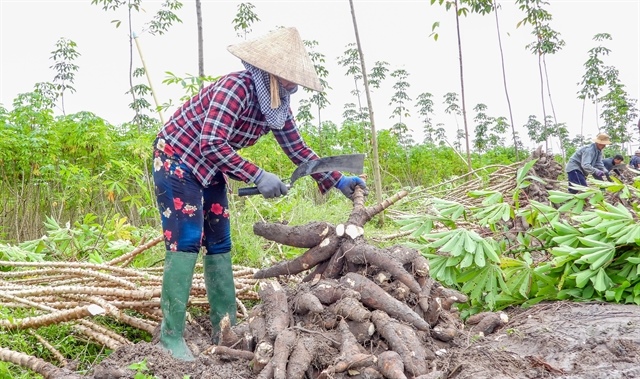
Farmers in Tây Ninh Province harvest cassava. — VNA/VNS Photo |
As the southern province pushes ahead with agricultural restructuring linked to processing industries and export expansion, cassava is taking on a more prominent role in the local economy.
The cassava industry now supports the livelihoods of tens of thousands of workers and contributes strongly to export earnings.
The province planted about 62,000ha of cassava last year, ranking second nationwide.
Average yield reached 33.3 tonnes per hectare, 62 per cent higher than the national average.
Annual output exceeded two million tonnes of fresh roots, accounting for nearly 19.5 per cent of the country’s total cassava production.
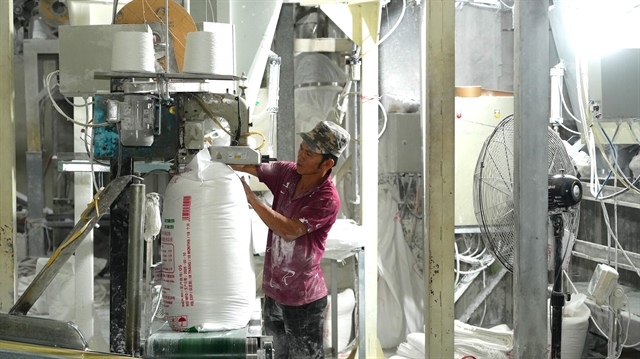
The province has more than 60 processing plants, out of around 142 facilities nationwide.
Each year, these factories consume over ten million tonnes of fresh cassava roots and produce more than three million tonnes of starch.
This represents about 60–65 per cent of national cassava starch output.
According to Lê Hữu Hùng, deputy chairman of the Việt Nam Cassava Association and chairman of the Tây Ninh Cassava Starch Production Association, the sector has recorded total export value of more than US$1 billion while serving many markets around the world.
The cassava starch industry has become one of the province’s pillars of agro-processing, making an important contribution to economic growth, he said.
It provides stable jobs for more than 20,000 direct workers and tens of thousands of indirect workers, helping to ensure social welfare across the province, he said.
According to the General Department of Customs, Việt Nam exported more than 3.9 million tonnes of cassava and cassava-based products worth $1.26 billion to 77 markets worldwide last year. China accounted for over 94 per cent of total export volume.
Tây Ninh alone earned $501.6 million from cassava exports, equal to 36.5 per cent of the country’s total cassava export value. The province shipped products to 42 markets.
Nguyễn Hồng Thanh, deputy chairman of the provincial People’s Committee, said: “Cassava is one of the province’s key agricultural commodities.
“It is closely linked to rural livelihoods, creates jobs, supplies raw materials for processing industries and contributes significantly to the economic growth of the country in general and Tây Ninh in particular.”
Farmers in Tây Ninh Province harvest cassava. — VNA/VNS Photo |
Diversified products
Beyond starch, cassava is used to produce a wide range of higher value-added products, including noodles, rice paper, confectionery, malt, processed foods, pharmaceuticals, animal feed and bioenergy.
However, rapid growth has also brought challenges. Processing capacity has expanded quickly, while local raw material supply has not fully met demand. As a result, the sector relies heavily on imported cassava, especially from Cambodia.
At the same time, deeper international integration and stricter requirements for environmental protection and product quality have increased pressure on the industry to reorganise its value chain.
The Tây Ninh Cassava Starch Production Association has worked proactively with partners in Cambodia. The two sides have signed a co-operation agreement to purchase 45 million tonnes of fresh cassava over five years, with an estimated total value of about $4 billion.
Under the province’s cassava industry development plan to 2030, with a vision to 2050, issued on January 21, 2026, Tây Ninh has set clear targets for the coming years.
By 2030, output is expected to reach between 2–2.2 million tonnes. Average starch content is targeted at over 27 per cent.
The rate of mechanisation and application of science and technology in cassava production is expected to exceed 80 per cent.
Certified varieties are set to account for 75–90 per cent of planted area. More than 70 per cent of the area will apply sustainable farming processes.
About 92 per cent of total output will be used for deep processing.
Cassava planting area will be stabilised at 55,000–60,000ha, with average yield of around 36 tonnes per hectare.
Total processing capacity is projected at 4–4.5 million tonnes of fresh roots per year, using materials from within the province, neighbouring localities and imports.
Huỳnh Văn Sơn, deputy chairman of the provincial People’s Committee, said: “The province will reorganise production towards forming concentrated and large-scale production zones and fields, applying synchronised mechanisation from land preparation, planting and care to harvesting.”
The province will encourage enterprises to renew technology, invest in deep processing, make use of by-products, strengthen environmental management and expand international co-operation with organisations such as the International Center for Tropical Agriculture (CIAT) and the International Institute of Tropical Agriculture (IITA) in seed research and trade promotion, he said.
- 10:16 16/03/2026