Livestock sector aims for sustainable growth, targets $1 billion in exports
Livestock sector aims for sustainable growth, targets $1 billion in exports
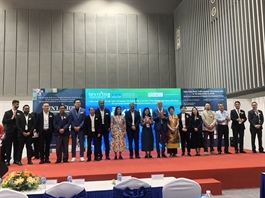
The Ministry of Agriculture and Environment (MAE) held a conference on disease prevention and sustainable livestock development on Thursday.
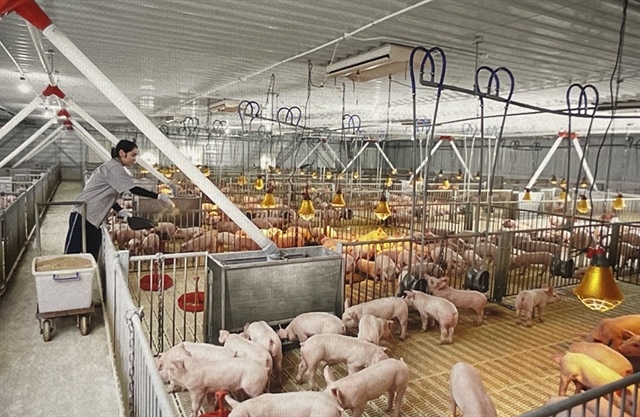
Pigs are raised in a modern, biosecure farming environment. — VNA/VNS Photo |
Việt Nam’s livestock sector is aiming to reach US$1 billion in export value in the coming years, as rising production, stronger domestic consumption and expanding international markets drive the industry toward a more sustainable and competitive future.
The Ministry of Agriculture and Environment (MAE) held a conference on disease prevention and sustainable livestock development on Thursday.
The country’s livestock industry maintained relatively stable growth during the 2021–2024 period, according to a report from the Department of Livestock Production and Animal Health.
Output of all types of live meat increased from 6.85 million tonnes in 2021 to 8.3 million tonnes in 2024, equivalent to an average annual growth rate of about 5.3 per cent.
Production was estimated to reach around 8.66 million tonnes last year.
Alongside production growth, domestic consumption of livestock products has also risen significantly. Average per capita meat consumption increased from 69.6kg in 2021 to about 87.6kg last year.
In the consumption structure, pork continues to account for the largest share, with consumption rising from 45.7kg to 54.9kg per person per year.
Poultry meat ranks second, increasing from 21.9kg to 25.8kg per person annually. Meanwhile, consumption of buffalo and beef remains relatively stable at around 6.3kg per person per year.
For other livestock products, poultry egg consumption has risen from 178.9 eggs to around 212 eggs per person per year. Average fresh milk consumption has also increased from 10.8 litres to nearly 12.95 litres per person annually.
Currently, the livestock sector supplies more than 20 million tonnes of food each year, meeting the consumption demand of nearly 100 million people while gradually expanding export markets.
During the 2024–2025 period, inspection and quarantine of animals and animal products continued to be strictly implemented, helping to control diseases, ensure food safety and facilitate international trade.
Exports of several livestock product groups recorded positive results. Export volumes of animal feed and feed ingredients increased from about 388 million kg in 2024 to nearly 420 million kg last year, representing growth of more than 8 per cent.
Exports of meat and meat products remained stable at about 15.4–15.6 million kg annually. Meanwhile, exports of live animals declined sharply from more than 308,000 head in 2024 to around 70,000 head last year, mainly due to fluctuations in market demand and increasingly stringent disease control requirements from importing countries.
On the import side, raw materials for production remain at a high level. Imports of animal feed ingredients reached approximately 1.29 billion kg last year.
Imports of breeding stock also increased to about 7.54 million head, contributing to improvements in the quality of domestic livestock herds.
Notably, exports of livestock products reached approximately $141 million in the first two months of this year, up 84 per cent year on year.
If this growth momentum continues, Việt Nam’s livestock industry could move toward achieving its $1 billion export target around 2027.
Speaking at the conference, Deputy Minister of Agriculture and Environment Phùng Đức Tiến said the livestock sector currently accounted for about 26 per cent of the total agricultural production value, playing an important role in ensuring food security and supporting economic growth.
As global livestock production trends shift strongly toward large-scale, high-tech and sustainable models, Việt Nam’s livestock industry needs to move beyond the goal of increasing output toward developing complete value chains, he said.
In the coming period, the sector will focus on improving breeding quality, strengthening domestic feed supply, enhancing disease prevention, establishing disease-free livestock zones and promoting deep processing to expand export markets.
According to forecasts from the International Monetary Fund, global meat supply will remain abundant this year while competition in prices, technical standards, environmental requirements and emissions will become increasingly intense.
This requires Việt Nam’s livestock industry to improve productivity, reduce production costs and develop sustainable value chains to adapt to the global economic landscape, the deputy minister noted.
- 19:02 12/03/2026