Agricultural exporters rush to comply with China’s new import rules
Agricultural exporters rush to comply with China’s new import rules
Vietnamese agricultural exporters are racing to update registrations and comply with China’s stricter Decree 280, which will take effect on June 1.
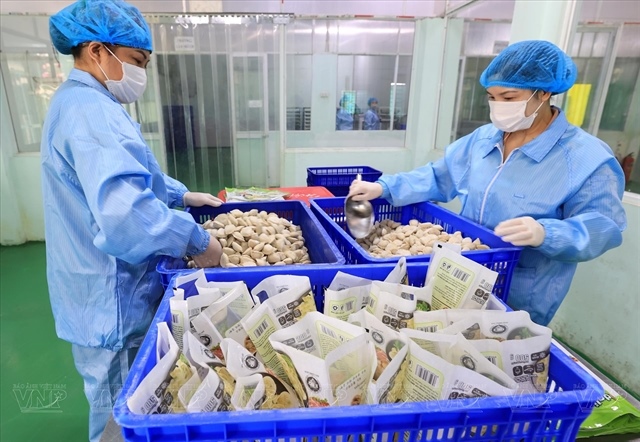
Processed food products are packaged at Videli Food JSC. According to the Vietnam SPS Office, 2,589 product groups fall under China’s special management list. — VNA/VNS Photo |
Vietnamese agricultural exporters are rushing to update registrations and compliance documents as China prepares to introduce stricter import rules for foreign food suppliers from June 1.
The Ministry of Agriculture and Environment on March 13 briefed businesses and industry groups on Decree 280, a regulation issued by the General Administration of Customs of China (GACC) that tightens oversight of overseas companies exporting food products into the Chinese market.
The new rule replaces parts of GACC Decree 248, which has governed the registration of foreign food exporters since 2022. Many Vietnamese firms are now approaching the end of their first five-year registration cycle and must renew their approvals under the updated framework.
Officials said the regulation expands the scope of products subject to registration and strengthens requirements related to documentation and food safety management.
According to the Vietnam Sanitary and Phytosanitary (SPS) Office, 2,589 product groups fall under China’s special management list. Exporters of these products must register through Vietnamese authorities before receiving approval from Chinese customs, while other products can be registered directly through China Import Food Enterprise Registration (CIFER), the online platform used by GACC to manage foreign exporters.
With the new rules set to enter into force on June 1, businesses have roughly two and a half months to complete the required procedures.
Nguyễn Quý Dương, Deputy Director of the Department of Crop Production and Plant Protection, warned that exporters should review their records carefully to avoid disruptions.
“If companies fail to update their information in time, exports to China could face disruptions,” he said.

Processed food products are packaged at Videli Food JSC. According to the Vietnam SPS Office, 2,589 product groups fall under China’s special management list. — VNA/VNS Photo |
China remains one of Việt Nam’s largest agricultural export markets, particularly for products such as fruits, pepper, cashew nuts and coffee. Regulatory changes in the market therefore have a significant impact on Vietnamese exporters.
Industry representatives said businesses are facing several practical challenges while updating their registrations.
Some companies have encountered inconsistencies between information stored in China’s registration system and updated company records following administrative adjustments in Việt Nam. In other cases, exporters are unsure how pending applications submitted under the previous regulation will be handled once the new decree becomes effective.
Lê Việt Anh, General Secretary of the Vietnam Pepper and Spice Association, said some exporters are facing customs delays because their CIFER registration still shows old administrative addresses that no longer match updated business records following adjustments to provincial and district boundaries in Việt Nam.
Ngô Xuân Nam, Deputy Head of the Vietnam SPS Office, also warned exporters to ensure that company information remains consistent across all documentation, including registration records, customs declarations, and product labels.
Mismatched details can lead to delays or rejection of shipments during customs clearance, he said.
Authorities also noted that several common mistakes often cause registration applications to be rejected. These include incomplete food safety management systems such as HACCP, incorrect HS or CIQ codes, and missing documents uploaded to the CIFER platform.
Businesses were therefore advised to review their dossiers carefully before submission to avoid repeated revisions and delays.
Industry associations representing key export products such as pepper, cashew nuts, coffee, and fruits were encouraged to collect feedback from exporters and report difficulties to regulators so that issues can be raised with Chinese authorities in a timely manner.
Officials said updates related to China’s new regulations will continue to be published on the website of the Vietnam SPS Office, and exporters are advised to follow official guidance closely to ensure compliance before the new rules come into effect.
- 22:14 13/03/2026