Opportunities for Vietnamese businesses to promote exports to African markets
Opportunities for Vietnamese businesses to promote exports to African markets
Vietnamese exporters were advised to seek partners through reputable channels and to use secure payment methods, such as irrevocable letters of credit confirmed by trusted European or American banks, or documentary collection with a deposit of at least 20 per cent of the contract value. Deferred payment arrangements should be avoided.
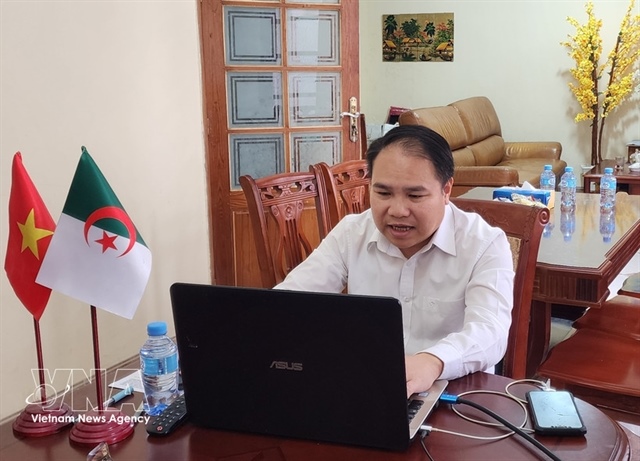
Trade Counsellor Hoàng Đức Nhuận of the Vietnam Trade Office in Algeria speaks at the online export consultancy session on the markets of Algeria, Senegal and Tunisia for more than 40 Vietnamese agencies and enterprises on Thursday. — VNA/VNS Photo |
The Vietnam Trade Office in Algeria, which is also in charge of Senegal and Tunisia, on Thursday organised an export consultancy session on these three markets for more than 40 Vietnamese agencies and enterprises. The event formed part of regular efforts to provide updated information on promising markets in Africa.
At the session, Trade Counsellor Hoàng Đức Nhuận noted that Vietnamese goods enjoy favourable conditions for export to Algeria, thanks to the country’s strong import demand and population of over 48 million. The two nations have maintained longstanding positive political ties, which were upgraded to a strategic partnership last year, while businesses of both countries are showing increasing interest in each other’s markets. Vietnamese products are widely regarded as competitive in terms of both quality and prices.
Algeria imports around 130,000 tonnes of coffee annually, mainly unprocessed robusta beans. Vietnam accounts for more than half of this market, approximately 70,000 tonnes, with an average turnover of about US$100 million per year. Coffee is expected to remain a key export in the coming period.
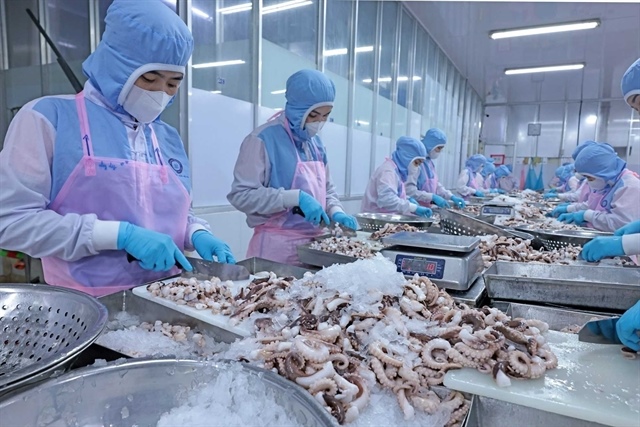
Other Vietnamese agricultural products with strong demand include cashew nuts, desiccated coconut and spices such as pepper, cinnamon and star anise. Seafood also ranks among the top five Vietnamese exports to Algeria, generating $9-10 million annually. Industrial goods, including automobiles, spare parts, textiles, sports footwear, raw materials and chemicals, likewise show considerable export potential.
Nhuan said although Senegal has a relatively small population of about 19 million, its economy is among the more open and integrated in Africa. The country benefits from political stability, relatively well-developed infrastructure, an international airport and seaports, and serves as a transit hub for landlocked neighbouring states. Việt Nam’s principal exports to Senegal include rice, pepper and fruits and vegetables. Senegal imports between 900,000 and one million tonnes of rice each year, predominantly 100 per cent broken rice.
A sizeable Vietnamese and wider Asian community in Senegal, including numerous Vietnamese restaurants, offers additional opportunities for Vietnamese goods, particularly dry food products such as rice paper, traditional crackers and fish sauce, to gain a stronger foothold in the market.
He went on talking about Tunisia and noted that though small, it is considered one of the most dynamic and competitive economies in the Africa–Arab region, with deep international integration and a strategic location just 140 kilometres from Europe. The country is also among the early implementers of the African Continental Free Trade Area (AfCFTA), which comprises 54 member states.
Tunisia can therefore serve as a gateway for goods from Vietnam and other countries into the Africa–Arab market. Each year, it imports roughly 30,000 tonnes of raw coffee, mainly robusta, as well as 30,000 tonnes of rice and 360,000 tonnes of sugar.
Nhuận said despite the significant export potential, import tariffs in several African countries remain relatively high. In Algeria, for example, import duties can reach 30 per cent, in addition to value-added tax of 19 per cent, a 2 per cent withholding tax and a 3 per cent solidarity tax. Safeguard duties ranging from 30 per cent to 200 per cent may also apply, depending on the product.
He advised Vietnamese exporters to seek partners through reputable channels and to use secure payment methods, such as irrevocable letters of credit confirmed by trusted European or American banks, or documentary collection with a deposit of at least 20 per cent of the contract value. Deferred payment arrangements should be avoided.
Nhuan also emphasised the importance of understanding consumer preferences and cultural practices in Muslim-majority countries, particularly the requirement for Halal certification for food products derived from livestock or poultry or containing meat.
- 15:54 27/03/2026