MoIT rolls out new push for rice exports, market stability
MoIT rolls out new push for rice exports, market stability
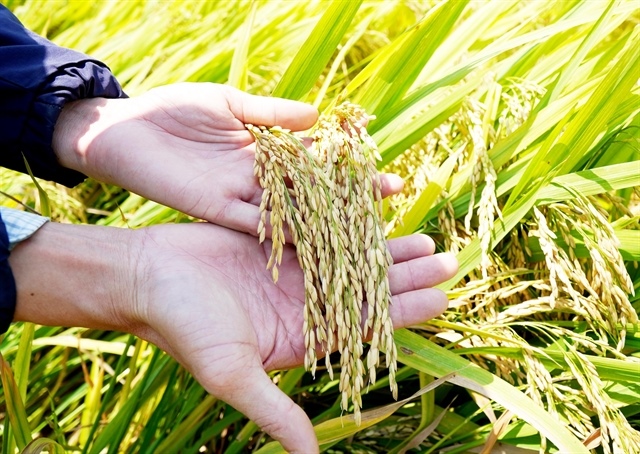
The Ministry of Industry and Trade is stepping up promotion of Vietnamese rice to expand markets, while closely tracking supply–demand trends, prices, and import policies in key destinations.
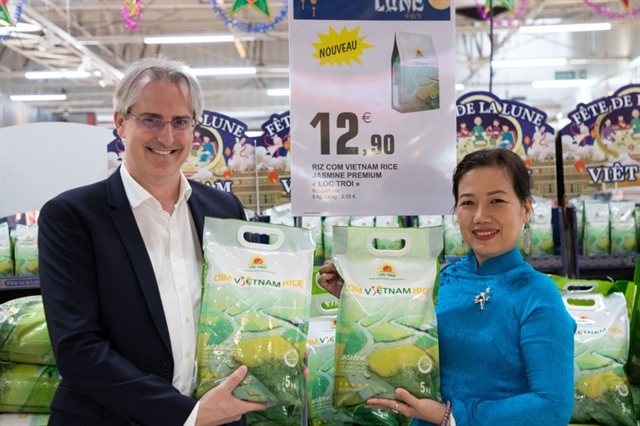
Lộc Trời rice on display at a supermarket in France. — Photo courtesy of Loc Troi Group |
The Ministry of Industry and Trade has ordered stronger measures to boost rice exports and ensure domestic market stability amidst evolving conditions.
The directive, dated March 19, calls for closer coordination across ministries, local authorities, and businesses to ensure food security, maintain supply–demand balance, and align rice exports with domestic market stability while promoting sustainable growth of the sector.
Authorities were instructed to expand export markets, reduce reliance on traditional buyers, and take advantage of free trade agreements, including the EU–Vietnam Free Trade Agreement (FTA) and the UK–Vietnam Free Trade Agreement.
The directive assigns the Multilateral Trade Policy Department to advance work on integrating rice into FTA support programmes and to push negotiations with the EU and UK to expand tariff quotas for higher-value exports.
Trade offices abroad are tasked with closely monitoring policy changes in importing countries and providing timely updates to exporters. They are also required to support businesses in managing risks linked to geopolitical tensions and logistics disruptions.
The Vietnam Trade Promotion Agency will ramp up overseas marketing of Vietnamese rice, while the Agency of Foreign Trade will steer the 2030 export plan and track market movements to keep exports in line with domestic demand.
At home, regulators must step up market surveillance to prevent speculation, price manipulation, and illegal trading. Measures are also required to stabilise domestic prices and ensure smooth distribution.
Rice exporters are encouraged to improve product quality, diversify product lines, and strengthen branding, particularly in high-value segments. They are also advised to adopt financial and logistics risk management tools amidst rising global uncertainties.
The Trade Remedies Authority of Vietnam and the National Competition Commission will track and act on competition and trade remedy cases to maintain a fair and transparent business environment for rice producers and exporters.
Local authorities were asked to guide farmers towards high-quality rice varieties and support production aligned with market demand while improving storage, transport and logistics systems.
Exporters are advised to tighten contract terms, add force majeure clauses for conflict and shipping risks, and prepare backup logistics plans, including rerouting via the Cape of Good Hope or airlifting high-value cargo.
The ministry said the measures aim to keep Việt Nam’s rice exports stable and competitive while safeguarding domestic supply and consumer interests.
According to the National Statistics Office, rice exports in January–February reached 1.281 million tonnes worth US$594 million, up 4.1 per cent in volume but down 11.9 per cent in value due to lower prices.
- 19:02 20/03/2026