Indonesian expert offers ideas for Việt Nam’s energy security
Indonesian expert offers ideas for Việt Nam’s energy security
Senior Coordinator at Indonesia’s Institute for Defence and Strategic Studies (LESPERSSI) Beni Sukadis has detailed how Jakarta is responding to energy supply shocks amid geopolitical tensions in the Middle East, and offered policy suggestions to Việt Nam.
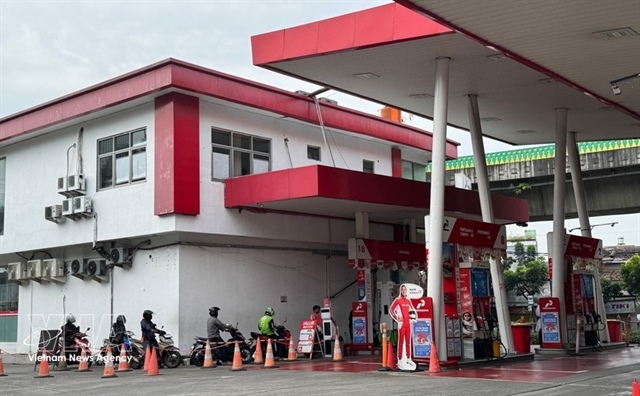
A petrol station in Indonesia. — VNA/VNS Photo |
Senior Coordinator at Indonesia’s Institute for Defence and Strategic Studies (LESPERSSI) Beni Sukadis has detailed how Jakarta is responding to energy supply shocks amid geopolitical tensions in the Middle East, and offered policy suggestions to Việt Nam during an interview recently granted to the Vietnam News Agency.
Facing extreme international price swings triggered by the Middle East conflict, Sukadis said President Prabowo Subianto’s administration has deployed a sharply defined “three-layer” energy policy: short-term stabilisation, medium-term diversification, and long-term structural reform.
In the short term, Jakarta’s overriding priority is preventing any disruption to domestic fuel supply. Its approach is more preventive than responsive. Instead of waiting until market shortages before making adjustments, Jakarta proactively developed risk scenarios, prepared alternative import plans, and coordinated closely between ministries and agencies to maintain domestic market stability. This is considered a necessary step in the context of volatile global oil prices and market sentiment easily influenced by geopolitical factors.
For the medium term, the country is hustling to line up new oil and gas partners beyond traditional players such as Nigeria and Saudi Arabia, adding African producers like Angola and Gabon, plus Australia. It is also accelerating its B35 biodiesel blending programme and aiming for B40, leveraging its advantage as the world's largest palm oil producer. Simultaneously, plans are underway to develop bioethanol, capitalise on the geothermal potential, and promote hydropower and solar power projects to diversify generation sources.
Overall, Sukadis said, Indonesia’s big-picture goals remain unchanged, focusing on diversification, green transition, and higher domestic added value, but the pace of action has been accelerated and made more pragmatic.
Turning to Việt Nam, Sukadis praised Hà Nội’s strategy as relatively effective, blending short-term stabilisation with long-term restructuring. In the short term, Việt Nam has tweaked taxes and fuel pricing mechanisms to blunt inflationary spikes from volatile global oil prices, while diversifying oil and liquefied natural gas (LNG) imports to cut reliance on any single source.
According to him, this approach is similar to Indonesia’s focus on safeguarding macroeconomic stability and preserving household purchasing power.
Over the longer horizon, Việt Nam is ramping up renewable energy under its latest power development plan, with priority given to offshore wind and solar power. Blessed with an extensive coastline and ideal natural conditions, the country is sitting on huge wind potential. Gradually phasing out coal will not only deliver environmental gains but also minimise financial risks as global emissions standards become increasingly stringent.
Sukadis also spotlighted Việt Nam’s nuclear power plan for 2030–35. If launched systematically, nuclear power can provide a stable baseload capacity to offset the intermittency of weather-dependent renewables, helping the economy balance fast growth with sustainable development.
Việt Nam is shifting from a mindset of “ensuring sufficient energy supply” toward a framework of “safe, self-reliant, and sustainable energy”, he said.
In an increasingly unpredictable global fossil fuel market, he added, the winning formula boils down to diversifying supplies, increasing reserves, rolling out cleaner technology, and building up homegrown capacity – the surest path to sustaining high growth while guaranteeing long-term national energy security.
- 10:34 31/03/2026