Gia Lai looks to unlock 'sea–highlands axis' to drive sustainable tourism growth
Gia Lai looks to unlock 'sea–highlands axis' to drive sustainable tourism growth
The milestone offers what officials described as a 'golden opportunity' to reposition Gia Lai’s image and strengthen its role within increasingly deep regional linkages.
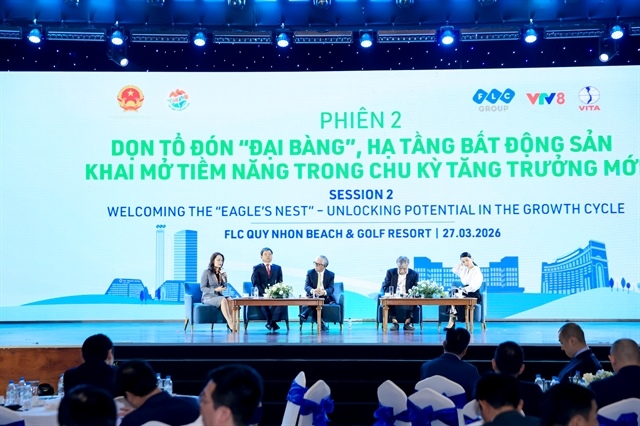
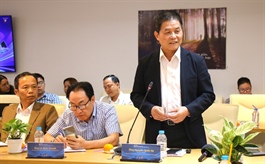
Experts discussed solutions to fully tap into the province’s potential and create new development space. —Photo courtesy of FLC |
A strategic push to develop a “'sea–highlands axis' is expected to open a new chapter for Gia Lai’s tourism sector, as the province looks to position itself as an emerging destination on both national and international maps.
The direction was highlighted at the 'Gia Lai 2026: Unlocking the Sea–Highlands Axis' conference held on March 27 at FLC Quy Nhơn Beach & Golf Resort, marking a key step towards the opening week of the National Tourism Year 2026.
The event was co-organised by the provincial People’s Committee, the Vietnam Tourism Association, FLC Group and VTV8, bringing together hundreds of experts, policymakers, local leaders, airlines, travel firms and investors.
Hosting the National Tourism Year 2026 under the theme 'Gia Lai – Highlands Embracing the Sea' is widely seen as a pivotal milestone for the province. Authorities plan to organise 244 cultural, sports and tourism events throughout the year, targeting 15 million visitors – an increase of more than 21 per cent compared to 2025 – and projected tourism revenue of around VNĐ35 trillion (approximately US$1.4 billion).
The milestone offers what officials described as a 'golden opportunity' to reposition Gia Lai’s image and strengthen its role within increasingly deep regional linkages.
Opening the conference, Phạm Anh Tuấn, Chairman of the provincial People’s Committee, called on experts and stakeholders to identify the province’s natural advantages and propose practical solutions to unlock development bottlenecks.
“Through this conference, we hope to receive recommendations to address institutional and infrastructure constraints, thereby attracting major investors to fully tap into the province’s potential and create new development space,” he said, expressing confidence that Gia Lai could emerge as a dynamic tourism and economic destination.
A key pillar discussed at the conference was aviation infrastructure, seen as critical to opening tourism markets and attracting invest – Phù Cát Airport and Pleiku Airport – placing it among a limited number of localities with such an advantage.
Phù Cát Airport is planned to be upgraded into an international airport with a capacity of five million passengers annually by 2030, increasing to seven million by 2050. Meanwhile, Pleiku Airport is expected to handle four million passengers per year by 2030 and five million by 2050, with total investment estimated at VNĐ12.6 trillion, laying a foundation for tourism growth in the Central Highlands.
Participants also discussed the role of real estate and large-scale tourism infrastructure under the theme 'Preparing the nest to welcome eagles', stressing that alongside favourable policies, the involvement of experienced investors would be essential to driving sustainable growth.
Hương Trần Kiều Dung, Standing Vice Chairwoman of FLC Group, emphasised the importance of proactive development strategies.
“Successful destinations do not wait for perfect conditions. They create the conditions for development. Potential alone does not generate value – only determination and timely action can create breakthroughs,” she said, affirming the group’s long-term commitment to accompanying Gia Lai in implementing large-scale projects while preserving local identity.
The conference also examined global tourism trends, particularly the shift towards multi-experience travel. Under the concept 'one flight, two destinations', Gia Lai aims to connect coastal Quy Nhon with the highland city of Pleiku, offering visitors a more diverse and immersive journey.
Experts noted that modern travellers no longer seek to 'visit a place' but rather to experience a journey – engaging with destinations through culture, nature and personal memories. With its combination of coastal and highland landscapes, Gia Lai is well positioned to become a distinctive part of such journeys, provided its story is effectively communicated to international markets.
Proposals at the conference focused on building inter-regional tourism value chains, improving transport connectivity, upgrading accommodation quality and diversifying tourism products linked to agriculture, culture and ecology. Stakeholders agreed that stronger coordination between authorities, businesses and local communities would be key to turning ideas into concrete initiatives.
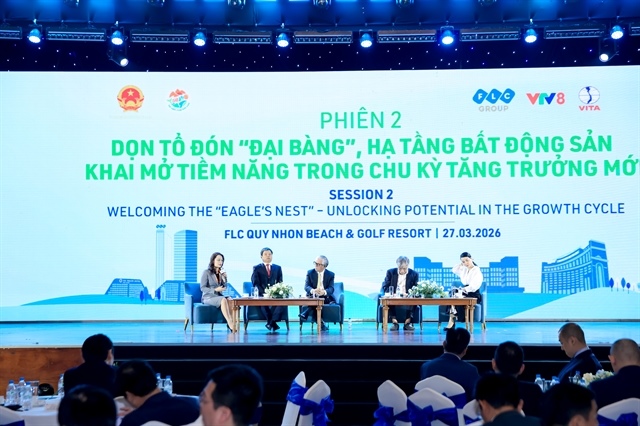
Experts discussed solutions to fully tap into the province’s potential and create new development space. —Photo courtesy of FLC |
Sharing further insights, Trịnh Văn Quyết, Chairman of FLC Group, stressed the need for close coordination between aviation and tourism development.
“Resort real estate and aviation must go hand in hand to achieve sustainable growth,” he said, adding that investors must prioritise accessibility and encourage longer visitor stays to increase local spending.
Drawing on experience in Quy Nhơn, he noted that FLC has spent more than a decade developing an integrated resort ecosystem, rather than relying solely on natural beach resources. Facilities such as entertainment complexes, golf courses and large-scale convention centres have been key to attracting diverse visitor segments.
For Pleiku, he said FLC is developing new products tailored to the unique characteristics of the highlands.
“After experiencing the sea, visitors need something different in the highlands. We are designing products that reflect that distinction and hope to work closely with the province to create truly unique offerings,” he said.
As Việt Nam’s tourism sector moves towards greener and more interconnected development models, Gia Lai’s 'sea–highlands axis' strategy is emerging as a promising pathway. With improved infrastructure, stronger investment flows and coordinated planning, the province is aiming to turn its natural advantages into a sustainable competitive edge.
- 16:46 27/03/2026