Night-time economy untapped, potential growth driver for HCM City: seminar
Night-time economy untapped, potential growth driver for HCM City: seminar
The nighttime economy could become a new growth driver for HCM City if it is developed as a complete ecosystem rather than through fragmented efforts, experts and policymakers have agreed.
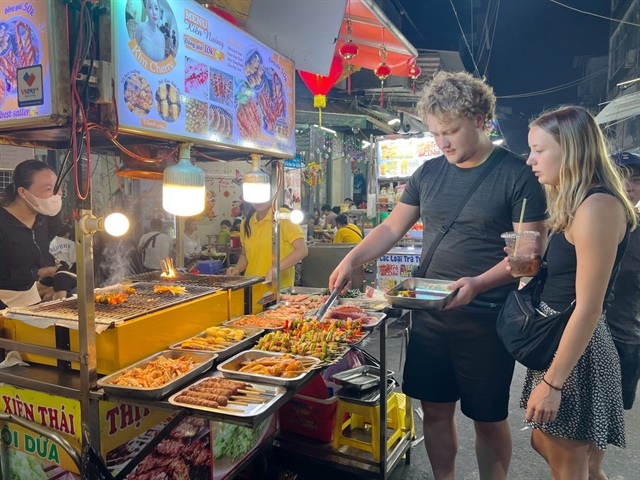
Visitors explore night-time activities in HCM City. The night-time economy could become a new growth driver for the city if it is developed as a comprehensive ecosystem. — VNA/VNS Photo |
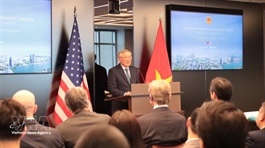
Speaking at a seminar on “Night-time Economy: A Driver for HCM City’s Economic Growth,” held on Wednesday by Tuổi Trẻ (Youth) newspaper and the HCM City Food and Beverage Association, where this was the consensus, Associate Professor Dr. Đinh Tiến Minh, head of the marketing faculty at the School of Business, University of Economics HCM City, said the night-time economy should not be viewed merely as shops staying open late to sell more.
Instead, it must be approached as a comprehensive urban experience ecosystem, encompassing spatial planning, night-time transportation, public security, environmental management, cultural activities, and brand appeal, he said.
If developed systematically, this could extend tourists’ length of stay, increase their spending, attract investment, generate employment, and optimise the use of existing infrastructure, he noted.
Despite being the country’s most dynamic economic and service hub, with strong purchasing power and high demand for entertainment, HCM City’s night-time economy remains largely unplanned and without cross-sector linkages, he said.
“Currently, night-time products remain monotonous and lack distinct identity, failing to attract tourists, … resulting in significant potential that has yet to be fully realised.
“Moreover, the development of the nighttime economy lacks a coordinating authority, while the development mindset remains limited, making it difficult to achieve breakthroughs and unlock creativity in nighttime offerings.”
Võ Việt Hòa, director of international travel at travel giant Saigontourist, pointed to strong demand for nighttime experiences among international visitors, particularly business, MICE (Meetings, Incentives, Conferences, and Exhibitions) and leisure travellers.
However, the market requires a well-organised ecosystem that is safe, convenient, distinctive and professionally managed, with stable operating hours, transparent pricing, sufficient capacity for large groups, and seamless integration into tour programmes, he said.
While Saigontourist has piloted several night tours, including dining and walking experiences, safety remains a key concern, he warned.
“Ensuring security for overnight tours is still a challenge. We hope the city’s planning will prioritise safety alongside well-designed transport systems to facilitate movement between attractions, enabling the development of complete tourism products.”
He also recommended shifting from standalone services to integrated “all-in-one” experience packages, and developing clusters such as river tourism, culture–cuisine and entertainment–shopping to create seamless value chains.
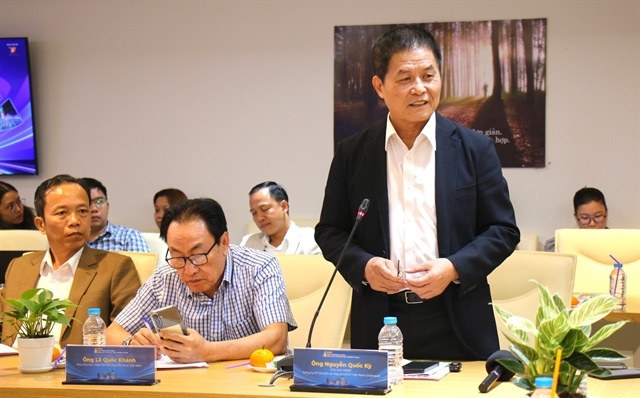
Visitors explore night-time activities in HCM City. The night-time economy could become a new growth driver for the city if it is developed as a comprehensive ecosystem. — VNA/VNS Photo |
Nguyễn Quốc Kỳ, chairman of Vietravel Holdings and the Vietnam Culinary Culture Association, identified the shortage of night-time products as a major bottleneck for tourism development.
He said most tourism services currently operate between 7am and 5pm, generating only around 30 per cent of total revenues, while the period from 6pm to 2am, which could account for the remaining 70 per cent, remains underutilised.
He said though the concept of the night-time economy has been discussed for many years, it remains relatively new in HCM City.
If properly leveraged and developed, the sector could open up new growth for the city, but for this, the city should place culture at the core of its competitive advantage, clearly identify development zones and corridors, and define distinctive values to enhance its appeal to tourists, he added.
Delegates also called for a more structured development strategy by planning dedicated zones that integrate commerce, cuisine, culture, and entertainment, and by piloting extended operating hours in key areas.
Investment in night-time transport infrastructure, improved public lighting and strengthened security, public order and sanitation are also critical factors, they said.
From a regulatory standpoint, Nguyễn Nguyên Phương, deputy director of the city’s Department of Industry and Trade, said that while strategies for developing the night-time economy are in place from central to local levels, implementation remains a challenge.
No single agency has been clearly tasked with coordinating night-time economic activities citywide, resulting in fragmented execution, he said.
The legal framework for daytime and night-time operations overlaps, with sectors such as food services, entertainment and alcohol-related businesses still governed by regulations designed primarily for daytime activities, limiting growth, he said.
“Developing the night-time economy is one of the key solutions for stimulating consumption and advancing the city’s goal of achieving double-digit growth.”
“We will continue to review challenges and propose appropriate measures to remove bottlenecks and unlock the sector’s full potential.“
As the country’s largest economic and tourism hub, HCM City is expected to develop signature night-time offerings and transform the sector into a new growth engine – provided existing bottlenecks are effectively addressed, delegates agreed.
- 15:02 26/03/2026