Conference discusses new growth model with tech at core
Conference discusses new growth model with tech at core
The Vietnam Economic Forum 2026 in Hà Nội gathered policy makers and researchers to discuss the urgency of reshaping the country’s development strategy amid fast-changing global and domestic conditions.

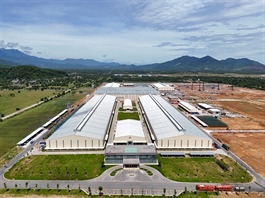
A Vietnam Post sorting and warehouse centre in Hà Nội. Việt Nam needs to develop mechanisms to encourage investment in research and development. — VNA/VNS Photo Hoàng Hiếu |
Việt Nam needs a new approach to national development, with science and technology, innovation and digital transformation as core pillars to achieve rapid and sustainable growth in the next few years, attendees heard at a conference in Hà Nội on Wednesday.
The Vietnam Economic Forum 2026 in Hà Nội, organised by the Institute of Vietnam and World Economy under the Vietnam Academy of Social Sciences, gathered policy makers and researchers to discuss the urgency of reshaping the country’s development strategy amid fast-changing global and domestic conditions.
Experts said that Việt Nam’s new development model should be built on key pillars including modern institutions, advanced science and technology, a dynamic innovation ecosystem, skilled workers and integrated digital infrastructure supported by unified, shared data that is accurate and up to date.
Vice President of the Vietnam Academy of Social Sciences Nguyễn Đức Minh said the world is witnessing rapid advances in science, technology, innovation and digital transformation, which have become decisive factors for competitiveness and development.
“Economies that quickly seize and harness technological advances have made strong breakthroughs, while those that are slow to adapt risk falling behind,” Minh said, adding that Việt Nam has clearly defined a development orientation based on science, technology, innovation and digital transformation in its policy framework.
However, Minh stressed that the key challenge lies not only in choosing the right development model, but in implementing a comprehensive fundamental transformation across all sectors.
A data-driven economy
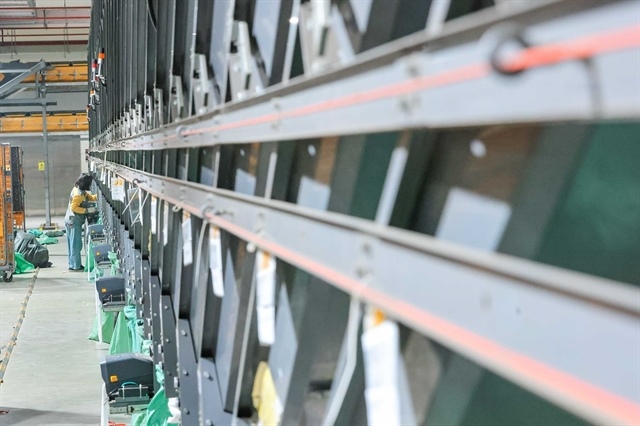
A Vietnam Post sorting and warehouse centre in Hà Nội. Việt Nam needs to develop mechanisms to encourage investment in research and development. — VNA/VNS Photo Hoàng Hiếu |
A Vietnam Post sorting and warehouse centre in Hà Nội. Việt Nam needs to develop mechanisms to encourage investment in research and development. — VNA/VNS Photo Hoàng Hiếu
At the conference, experts highlighted the need to establish a data market at an early stage to support the development of a data economy.
Also needed is a clear and strategic approach to prioritising investment in critical technologies linked to key industries and manufacturing sectors, with the aim of achieving double-digit growth and ensuring technological self-reliance.
According to the Institute of Vietnam and World Economy, data is increasingly recognised as a strategic resource and a key factor of production alongside land, labour, capital and technology.
Global data markets are expanding rapidly and are expected to reach US$11.27 billion by 2034, while competition over data is emerging as a new frontier.
The institute cited statistics showing that in Việt Nam, the digital economy was valued at $36 billion in 2024 and is expected to contribute 30 per cent of gross domestic product (GDP) by 2030, underscoring the growing role of data and digital technologies in driving growth.
It will be critical for Việt Nam to build a unified, high-quality data infrastructure and to establish a data market to unlock the full potential of the data economy, the institute said, emphasising that data and artificial intelligence (AI) are two core factors in a unified digital ecosystem.
According to Trần Thị Vân Hoa from the National Economics University Hà Nội, to achieve double-digit growth, Việt Nam needs to increase total factor productivity to above 55 per cent.
She used Israel as an example of a country with a population of just nine million but where research and development (R&D) spending exceeds 5 per cent of GDP. Hoa called for Việt Nam's R&D spending to increase to 2 per cent of GDP by 2030, with the private sector playing a leading role.
The expert also highlighted the need to reform funding mechanisms, expand public-private partnerships and develop new growth drivers such as AI, big data, semiconductors and green technologies.
Việt Nam needs to focus on building a national innovation ecosystem linking businesses, universities, research institutes and the Government under the 'Triple Helix' model, she added.
President of Hanoi University of Science and Technology Huỳnh Quyết Thắng said enhancing the role of State-owned enterprises in R&D, innovation, data use, technological productivity, digitalisation and digital governance efficiency is necessary.
He also called for more flexible investment mechanisms for R&D and pilot programmes for new technologies and innovation, along with the development of a skilled, tech-savvy workforce.
For the private sector, Thắng said stronger and more practical incentives are needed to encourage investment in R&D, innovation and digital transformation, adding that regulatory sandboxes should be expanded to encourage and develop new business models.
Vũ Sỹ Cường from the Academy of Finance said Việt Nam should create mechanisms to encourage private enterprises to invest in R&D and technology, such as funding initiatives in which the State covers 30-70 per cent of project costs, as well as reviewing the Government’s procurement mechanisms for innovative products.
- 07:00 26/03/2026