Firms face rising pressure from fuel prices
Firms face rising pressure from fuel prices
Recent fuel price increases triggered by escalating Middle East tensions are placing fresh pressure on production and business as costs rise significantly.
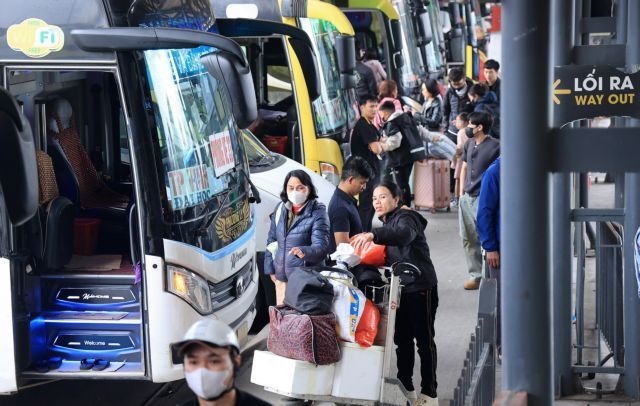
Chu Lai International Port. When oil prices increase, logistics costs also rise immediately. — VNA/VNS Photo Hoàng Hiếu |
Rising fuel prices driven by escalating tensions in the Middle East are putting fresh pressure on businesses across Việt Nam, with the transport sector feeling the strain as operators grapple with sharply higher operating costs.
Domestic retail fuel prices have surged following three adjustments within a week. The price of RON95 gasoline and diesel have climbed by around VNĐ10,000 per litre in total in the past seven days to VNĐ29,120 and VNĐ30,710, respectively.
Transportation under pressure
Several transport operators have announced or are considering fare adjustments in response to the rising fuel bill.
Lê Văn Khuyến, head of Vinh Market bus station in Nghệ An Province, said a number of transport companies had begun weighing fare increases or fuel surcharges to offset higher operating costs.
Besides rising costs, transport companies were also concerned about fuel supply, Khuyến said, adding that any disruption could affect operations.
Hoàng Thị Quý, chief financial officer of passenger transport company Văn Minh, which operates nearly 100 buses, said the sharp rise in diesel prices in recent days had placed significant pressure on operating costs.
She added that the company was reviewing its operational plans and might slightly increase ticket prices in the coming period to offset additional expenses.
Taxi operators are facing similar pressure.
Lê An, director of Hoàn Kiếm Taxi, said taxi firms were closely monitoring developments in the fuel market.
He said that in the short term companies were focusing on optimising operations, cutting costs and improving service quality to maintain competitiveness.
“If fuel prices remain high for a longer period, taxi firms must consider appropriate adjustments to ensure a balance between the interests of companies and customers,” An said.
In HCM City, transport authorities said several companies had submitted notices of fare increases on inter-provincial routes, with adjustments ranging from 5 to 36 per cent depending on route distance and vehicle type.
Vietnam Railway also raised passenger ticket prices by 10 per cent and freight charges by 15 per cent from March 8 to offset higher operating costs.
According to Nguyễn Công Hùng, vice chairman of the Vietnam Automobile Transportation Association, the transport industry is among the hardest hit as fuel currently accounts for around 35–40 per cent of total operating costs.
Any fluctuation in fuel prices may have a significant impact on transport operations.
However, Hùng noted that the situation also presented an opportunity for transport firms to review operational processes, improve cost management and increase the use of technology in management.
Production costs climb
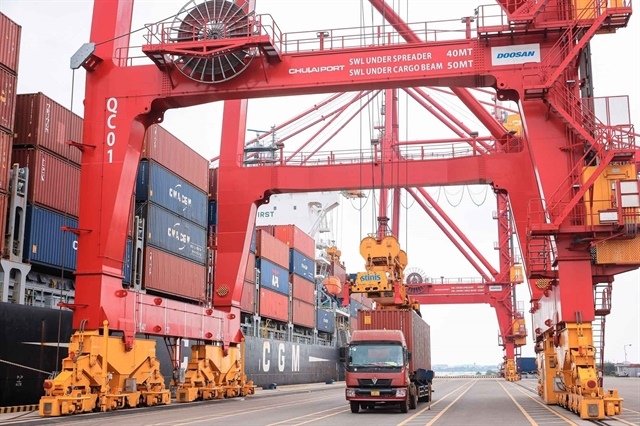
Chu Lai International Port. When oil prices increase, logistics costs also rise immediately. — VNA/VNS Photo Hoàng Hiếu |
The manufacturing industry is also feeling the impact of higher fuel prices.
Trần Văn Lĩnh, general director of Thuận Phước Seafood and Trading JSC, said that when oil prices increased logistics costs across the seafood supply chain from transport to cold storage rose immediately.
Road transport costs for refrigerated containers from factories to ports had increased by around 8–12 per cent while shipping lines had begun adjusting fuel surcharges, pushing maritime freight rates up by about US$2,000–4,000 per container on several export routes.
Exchange rate movements also weigh on manufacturers.
According to the Vietnam Feed Association, the country’s livestock feed industry depends heavily on imported raw materials such as corn, soybean meal and wheat which account for 60–70 per cent of total inputs.
When the US dollar strengthens, import costs for these materials increase immediately. At the same time, higher fuel prices push up transportation costs from ports to factories and farms.
Nguyễn Thường Lạng from the National Economics University said businesses needed to proactively develop response scenarios, step up energy-saving measures and optimise production costs.
He also urged flexible government policies to stabilise the market, stressing that reasonable adjustments to fuel-related taxes and fees could help ease cost pressures on production, business and consumption.
Lạng said the effective use of the fuel price stabilisation fund was also seen as a tool to help limit sharp fluctuations in fuel prices in the short term. Statistics show that as of September 30, 2025, the fund had a balance of about VNĐ5.617 trillion.
A representative of the Vietnam Petroleum Association said diversifying fuel supply sources by expanding imports from regions that have trade agreements with Việt Nam would increase market flexibility and help stabilise supply.
Response
Chu Lai International Port. When oil prices increase, logistics costs also rise immediately. — VNA/VNS Photo Hoàng Hiếu |
Global oil prices have already risen about 20 per cent since the start of the year and could surge to $120–140 per barrel if supply disruptions through the strategic shipping route, the Strait of Hormuz, continue.
In response, the Vietnamese Government has taken steps to strengthen energy security.
On March 4, the Prime Minister signed a decision establishing a task force, led by Deputy Prime Minister Bùi Thanh Sơn, to ensure national energy security amid the escalating conflict in the Middle East.
The Ministry of Industry and Trade has also developed contingency plans to stabilise the domestic fuel market.
Authorities have asked refineries and the entire petroleum supply chain from wholesalers and distributors to retailers to maintain stable operations, secure additional supply sources and ensure uninterrupted fuel distribution.
The ministry has required major fuel traders and distributors to strictly follow import and stockpiling plans and ensure continuous supply to the domestic market. Companies have also been warned not to hoard fuel in anticipation of price increases.
On the latest fuel price adjustment late Tuesday, regulators decided to use the petrol price stabilisation fund for the first time in more than three years to cushion the increases, at the rate of VNĐ4,000 per litre or kg for RON95-III gasoline, kerosene and mazut, and VNĐ5,000 per litre for diesel.
The ministry has also urged both households and businesses to use fuel more efficiently.
The Government on March 9 issued Decree No. 72/2026/NĐ-CP temporarily cutting MFN import tariffs on gasoline, diesel, jet fuel and several fuel production inputs to 0 per cent until April 30 to help stabilise domestic fuel supply and prices.
- 14:25 11/03/2026