Banks to see new wave of recruitments for digital skills
Banks to see new wave of recruitments for digital skills
The banking sector is expected to see a new wave of recruitment this year after major layoffs in 2025 as lenders brace for strong credit growth while accelerating digital transformation.
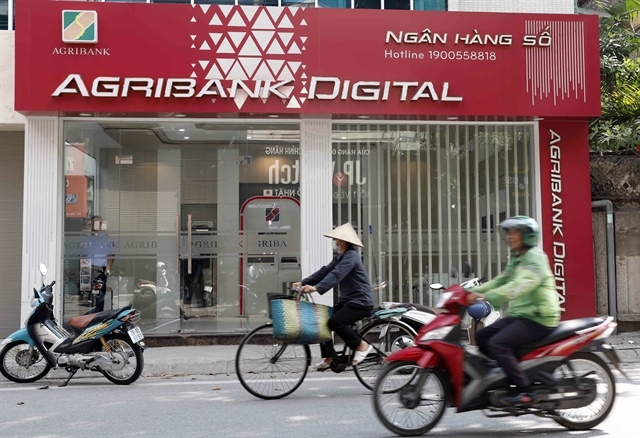
Agribank Digital. Technology is not only reducing costs but reshaping banks’ entire operating models towards higher-quality banking workforce. — VNA/VNS Photo Trần Việt |
After a year of deep job cuts driven by artificial intelligence (AI) and restructuring, Việt Nam’s banking sector is preparing for a fresh, more selective wave of recruitment as lenders gear up for strong credit growth and an accelerated shift towards digital operations.
In 2025, amid the rapid adoption of AI, 15 of the 27 listed banks cut nearly 7,500 jobs in the first nine months of the year, according to their financial reports. That retrenchment, however, appears to be easing.
A recent survey by the State Bank of Vietnam (SBV) showed that about 50 per cent of credit institutions plan to recruit additional staff in the first quarter of this year and through 2026 to support business expansion.
From the fourth quarter of 2025, banks had already begun stepping up hiring to cope with heavier workloads towards year-end. Even so, 23 per cent of lenders reported labour shortages during that period, the survey found.
The renewed recruitment drive does not signal a return to mass hiring. Instead, banks are expected to be far more selective as the sector enters a new phase of development, shaped by high credit growth aimed at supporting double-digit economic expansion and by digital transformation in which AI, data and automation have become key benchmarks.
The SBV has set planned credit growth at around 15 per cent in 2026, noting that adjustments may be made to suit actual conditions, curb inflation, maintain macroeconomic stability and support overall economic growth.
Restructuring

Agribank Digital. Technology is not only reducing costs but reshaping banks’ entire operating models towards higher-quality banking workforce. — VNA/VNS Photo Trần Việt |
The changes reflect a structural shift in labour demand across the banking sector, as AI and automation gradually replace manual work, Nguyễn Quang Huy from Nguyễn Trãi University said.
Many lenders have scaled back traditional branch networks, accelerated digital banking, automated internal processes and deployed AI in areas such as loan processing, customer identification, fraud prevention and data analytics. Repetitive tasks, including data entry, manual processing and basic transactions, are increasingly handled by software.
Technology is not only cutting costs but also reshaping banks’ operating models towards a higher-quality workforce. Recruitment demand is tilting strongly towards AI, cybersecurity, data analytics, risk management, compliance and digital customer development, rather than traditional teller or purely operational roles, experts said.
The banking sector is also entering an accelerated phase of digital transformation, with targets for 60 per cent of credit institutions to generate more than 30 per cent of revenue from digital channels and for 45 per cent of financial transactions to be conducted entirely on digital platforms.
AI is now deeply embedded in bank operations and is directly reshaping job structures and labour demand. From chatbots and virtual assistants to eKYC, optical character recognition, fraud detection, credit scoring and personalised financial products, AI is steadily replacing labour-intensive, repetitive tasks.
This transition is placing growing pressure on the banking labour market. Traditional roles are at risk of being scaled back or eliminated through automation while banks face a shortage of technology talent, creating a dual challenge.
According to Phan Thanh Đức from the Banking Academy of Việt Nam, the country is estimated to face a shortage of 150,000 to 200,000 technology workers, with AI specialists the most severely constrained. Demand for AI-related talent could rise by up to 74 per cent in the 2025–30 period.
Nguyễn Thị Thu Hà, director of the Agribank Staff Training School, noted that while banks receive a large number of job applications, they still struggle to find candidates who meet digital and technological requirements. The market lacks people who meet the standards of the digital era, she said.
Hà urged the SBV to develop a common digital competency framework for the banking sector alongside the establishment of funds to support AI and technology training.
She also called for mechanisms to attract foreign experts, including appropriate visa and personal income tax policies.
AI, as a new technology, inevitably carries risks but without experimentation those risks cannot be properly identified and mitigated, Trần Công Quỳnh Lân, deputy director general of VietinBank, said.
In a sensitive sector such as finance and banking, AI adoption must proceed cautiously, with strong risk governance and a clear legal framework, he stressed.
Phạm Thị Hoàng Anh, deputy director of the Banking Academy of Việt Nam, said education and training programmes for banking staff must be integrated with digital technology, data and AI.
She added that routine jobs will continue to shrink while high-quality digital application roles will remain in strong demand, underlining the sector’s shortage of skilled labour.
- 08:29 02/03/2026