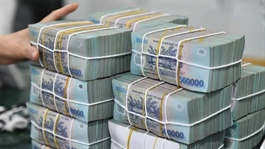
Reduction in mandatory reserve ratio helps banks’ liquidity, lending
Reduction in mandatory reserve ratio helps banks’ liquidity, lending
Việt Nam’s largest banks prepare for a 50% reserve cut, freeing liquidity, boosting lending capacity, and supporting business, payments, and investment amid tight interbank conditions.

Four large banks, including HDBank, are preparing to have their mandatory reserve ratios reduced by 50 per cent after they joined in the restructuring of weak banks last year. — Photo cafef.vn |
With the country’s largest banks having used up their credit quotas for the first quarter of 2026, a 50 per cent reduction in the mandatory reserve ratio is expected to support liquidity and expand lending capacity, experts say.
According to a recent report from MB Securities Company (MBS), Vietcombank, MB, VPBank and HDBank are preparing for a 50 per cent reduction in their reserve ratios after participating in the restructuring of weak banks last year.
Commenting on the move, MBS described it as positive and timely given tight liquidity, evidenced by significant fluctuations in interbank interest rates. The report noted that by the end of 2025, total customer deposits at the four banks that received mandatory transfers from weak banks reached approximately VNĐ3.78 quadrillion (US$143.72 billion).
With the reserve requirement cut, from 3 per cent to 1.5 per cent for non-term deposits and from 1 per cent to 0.5 per cent for deposits with terms over 12 months, the banks could provide roughly VNĐ54.5 trillion in additional loans. The actual increase will depend on each bank’s capital adequacy ratio and loan-to-deposit ratio.
MBS said the reduction would help banks increase capital to meet interbank liquidity needs, facilitate payments during the Lunar New Year holiday, and support taxpayers, especially as state-owned commercial banks have already used their allowed credit quotas for the quarter.
Previously, in August 2025, the State Bank of Vietnam issued a circular amending Circular No. 30/2019/TT-NHNN on mandatory reserves. Banks acquiring weak banks benefit from preferential policies, including a 50 per cent cut in reserve ratios. The circular has been in effect since October 2025.
Experts note that lowering the reserve requirement frees capital deposited with the State Bank of Vietnam, increasing resources for operations, lending and investment. In the context of high interest rates and strong competition for capital mobilisation, the policy is expected to reduce costs and improve profit margins for banks involved in the restructuring of weak institutions.
- 08:10 23/02/2026