Priorities for building credibility and momentum within Vietnamese IFCs
Priorities for building credibility and momentum within Vietnamese IFCs
In practice, sequencing and prioritisation are fundamental to the successful development of an international financial centre (IFC).
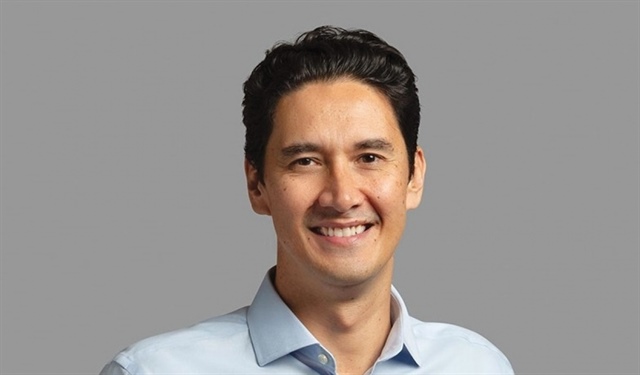
Damian Hickey |
Experience from other IFCs shows that building a credible regulatory and institutional framework is a multi-year process, and in many cases, the centre itself only becomes operational months or years after the initial legal foundations are laid. IFC development is therefore inherently complex and must be approached sequentially, with each stage informing and enabling the next.
The process begins with a clear political mandate and commitment at the highest level, which establishes the vision, strategic direction, and value proposition of the IFC. Such top-level endorsement is essential to signal credibility, align institutions, and sustain momentum over time.
This political mandate must then be translated into a robust regulatory framework. The first step is typically an IFC law or resolution, which sets out the high-level regulatory model, institutional architecture, and the roles and responsibilities of the various IFC authorities. This foundational legal framework provides clarity and coherence for subsequent policy and regulatory development.
Building on this, a second layer of more detailed regulations is required to operationalise the IFC. These regulations cover institutional arrangements, the establishment and functioning of a specialised court and dispute resolution mechanisms, the scope of permitted financial activities, company incorporation processes, and other rules that differentiate the IFC from the broader national regulatory framework.
In Vietnam, these elements were reflected in the eight guiding decrees for the IFC and the IFC court law adopted in December. While these steps are necessary to make the IFC legally operational, they are only the beginning. The IFC must then be supported by detailed guidelines, often consolidated in a rulebook, which specify licensing requirements, regulatory obligations, incentives, and supervisory arrangements for different sectors, such as banking, insurance, fintech, exchanges, and other financial services.
At the same time, not all activities need to follow a strict linear sequence. Strategic communications, branding, and investment promotion should proceed in parallel. Investor engagement should begin as soon as there is clear political intent, rather than waiting for all operational rules to be finalised. Early and continuous dialogue with prospective investors can also provide valuable feedback that helps shape the design and implementation of the framework.
Underlying all stages of IFC development are the core factors that build investor confidence and trust: a strong rule of law; clarity and predictability in rules and procedures; ease of doing business; effective enforcement of commercial contracts and regulations; and the presence of capable, professional institutions and personnel to operate and supervise it.
Talent attraction is a cornerstone of development, as the success of a financial centre ultimately depends on the depth and quality of its human capital. A fundamental reality is that talent flows to opportunity. This explains why leading financial hubs such as New York, London, Dubai, Singapore, and Hong Kong have been able to attract and retain top global professionals: they offer dynamic business environments and are open to innovation in financial products and services.
Each of these centres has developed distinctive strengths aligned with emerging opportunities. London has positioned itself at the forefront of advanced technologies, including AI; Dubai has established a relatively progressive and supportive regulatory framework for digital assets and crypto-related activities; and Singapore has built a strong ecosystem for fintech startups through enabling and adaptive policies. By fostering innovation and market depth, these centres create conditions that naturally attract global talent.
Beyond encouraging new products and business models, successful IFCs also pursue proactive talent attraction strategies in sectors of strategic importance. These include targeted incentives for multinational corporations and skilled professionals, such as competitive corporate and personal income tax regimes, long-term visas and work permits and streamlined business and regulatory procedures.
Quality-of-life considerations also play a critical role in attracting and retaining global talent. World-class infrastructure and services, such as housing, education, healthcare, arts and cultural amenities, and recreational facilities, are increasingly important differentiators among competing financial centres.
In addition, international connectivity is a key enabling factor. For Vietnam’s ambitions, improving direct air links between Ho Chi Minh City and Danang and other major global business and financial hubs will be essential to facilitate the movement of executives, professionals and specialists.
Many international financial centres initially relied on a niche positioning rather than attempting to compete head-on with established hubs. However, Vietnam neither can nor should seek to compete head-on with long-established international financial centres. Instead, it should focus on carving out distinctive niches grounded in its inherent strengths, emerging market opportunities, and long-term development trajectory.
With the exception of newer centres such as Dubai, Abu Dhabi, and Astana, most global financial hubs have evolved over decades. As a result, they are often constrained by legacy physical and digital infrastructure, as well as entrenched business models that can be difficult to adapt to rapid technological change.
By contrast, Vietnam has the advantage of entering the IFC club at a moment when financial technologies are advancing at an exponential pace. This creates a strategic opportunity to design a future-oriented financial centre from the outset, leveraging modern digital infrastructure and regulatory frameworks that are better suited to innovation. In particular, Vietnam can position itself as a hub focused on new and emerging areas such as fintech, blockchain, digital assets and other technology-enabled financial services.
At the same time, the development of financial services and products within the IFC must be firmly anchored in the needs of the real economy and aligned with Vietnam’s broader socioeconomic development objectives. This includes expanding access to capital for priority areas such as infrastructure investment, including sustainable infrastructure, while also supporting the growth of domestic ecosystems in fintech, AI, digital assets and blockchain.
By aligning innovation-driven niche positioning with national development priorities, Vietnam can build an IFC that is both globally relevant and domestically transformative.
- 14:29 20/02/2026