People's high savings rate considered important potential capital source for growth
People's high savings rate considered important potential capital source for growth
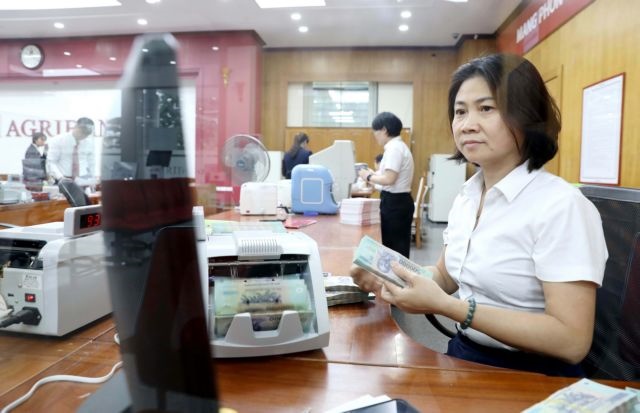
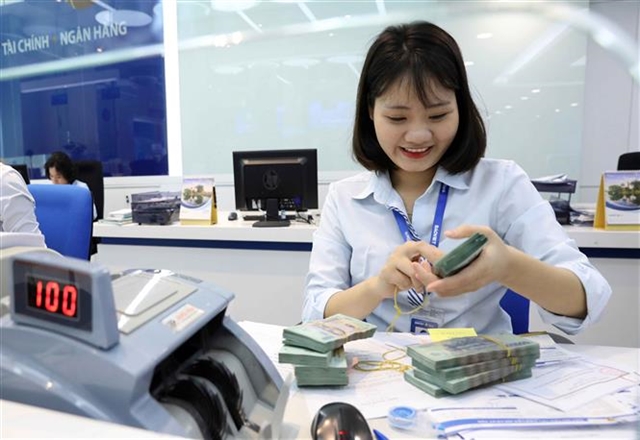
With Việt Nam’s household savings rate standing at as much as 37 per cent of GDP, experts say the country is sitting on a vast pool of idle capital that could be better harnessed to drive economic growth.

To sustain double-digit GDP growth over the next five years as planned, Việt Nam will need an enormous volume of total social investment capital.
According to Dr Cấn Văn Lực, a member of the Prime Minister’s Policy Advisory Group, the economy is expected to grow by about 11 per cent during the 2026–30 period, before gradually slowing to around 8.5 per cent in 2031–45 as its size expands. To achieve these growth rates, total investment capital would need to reach about 39–40 per cent of GDP in 2026–30 and around 37 per cent in 2031–45.
Economies that have recorded high growth rates, such as mainland China, South Korea, and Taiwan, required annual investment growth of 13–15 per cent, Lực said.
With Việt Nam’s GDP now exceeding US$500 billion, total investment needs over the next five years are estimated at around $260 billion, a massive sum that must be mobilised from multiple sources.
At present, more than half of investment capital comes from credit. To reduce risks in the financial system, Lực said credit should account for no more than 40 per cent, while the capital market’s share should rise to around 25–27 per cent. Reducing reliance on bank loans makes it essential to mobilise savings from the population, though unlocking this resource remains challenging.
Calculations show that Việt Nam has significant savings potential, but the rate at which savings are converted into investment remains low.
According to the BIDV Training and Research Institute, Việt Nam’s savings rate is about 37 per cent of GDP, high by regional standards but still below China’s 46 per cent.
“Although savings are very high, investment remains negligible,” Lực said, attributing this to two main factors: slow money circulation caused by liquidity bottlenecks and an investment environment that is not yet sufficiently open, encouraging hoarding and speculative behaviour.
If these constraints are removed, savings could become a critical driver of growth, he said. Việt Nam shares similarities with China, where a strong culture of saving has created a large pool of readily available capital. In China, savings equivalent to 46 per cent of GDP can be mobilised quickly to stimulate demand, supporting rapid growth.
This presents an opportunity for Việt Nam, which needs a strong domestic capital base to improve resilience at a time when external capital flows are increasingly vulnerable to global uncertainty.
Lực said a more favourable investment and business environment would ease defensive and anxious attitudes, encouraging people to channel savings into production and business rather than speculative assets such as foreign currency, gold, and real estate.
“To unlock this huge capital resource, the important thing is how to build confidence so that money flows into the economy instead of sitting idle in speculative assets,” he said.
- 09:25 20/02/2026