Infrastructure orientations suitable for a new chapter
Infrastructure orientations suitable for a new chapter
Vietnam is entering the first year of implementing the 2026-2030 Socioeconomic Development Plan, with big tasks for the construction sector to develop modern infrastructure. Tran Hong Minh, Minister of Construction, shared with VIR’s Minh Tung the orientation and strategy for the next growth period.
With significant institutional breakthroughs in 2025, could you share the highlights and future direction to further facilitate citizens and businesses?
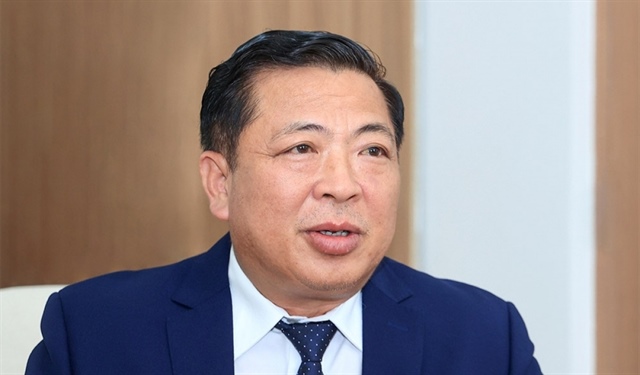
Tran Hong Minh |
Last year was a special milestone for the Ministry of Construction (MoC) when the former Ministry of Transport was incorporated, with an expanded scope of state management. This merger is not only a change in organisational structure, but also requires a high level of innovation in management thinking, streamlining the organisation, eliminating overlaps, ensuring unified and consistent management, and preventing legal gaps.
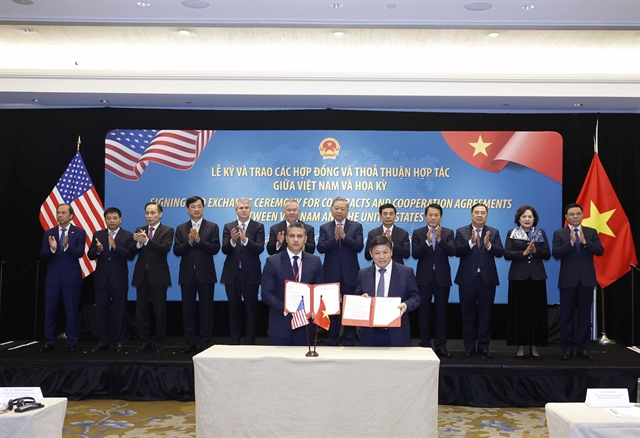
During the year, the ministry completed a big volume of legal document drafting, with 134 legal documents. In addition, the National Assembly (NA) passed five resolutions on investment policies for five projects; while the government approved 10 other important schemes, notably the investment policy and special investment mechanism for the high-speed railway on the North-South axis, and the commencement of component 1 of the Lao Cai-Haiphong railway.
The legal documents have reduced administrative procedures by more than 30 per cent and investment and business conditions by 35 per cent, exceeding the targets.
In addition, adoption of important laws on railways, construction, civil aviation, and urban and rural planning have created a more open, transparent, and effective legal framework for the development of national infrastructure. This not only helps accelerate the progress of key projects but also improves the quality of investment, making a significant contribution to the sustainable socioeconomic development of the country.
In 2025, the MoC was ranked first among ministries and agencies in terms of the quality of public service delivery.
What is the sector’s role and contribution in accelerating key projects for socioeconomic infrastructure development?
The entire country simultaneously held three groundbreaking and inauguration ceremonies for over 560 projects last year, with a total investment exceeding VND5 trillion ($200 billion). This is vivid evidence of the Party and state’s determination to encourage investment, considering infrastructure development as the foundation for rapid and sustainable growth.
Notably, the private sector accounted for nearly 75 per cent of the total investment capital, demonstrating business confidence in the investment environment and the leading role of the state. The projects are all strategic in nature, creating new development opportunities, ensuring national defence and security, and directly improving lives.
The MoC coordinated with ministries, sectors, and localities to review the project list; develop a comprehensive plan; and advise the prime minister on directing and managing the projects, clearly assigning responsibilities.
During implementation, the ministry regularly inspected the sites, resolved obstacles related to land, materials, and capital; and required investors and contractors to work diligently, ensuring progress, quality, and safety.
The effective implementation of social housing policies plays a crucial role in economic growth and ensuring social security. What are the results and key measures that the sector will implement to effectively carry out this policy?
Addressing housing needs for the people has always been a priority for the Party and the state. The development of social housing is of great and practical significance, ensuring social security while contributing to the stability of the real estate market and boosting sustainable growth.
Relevant authorities have issued many decisive directives and implemented comprehensive solutions to address obstacles in the development of social housing, enabling the implementation of the scheme on constructing at least one million social housing units by 2028.
In 2025, the NA approved Resolution No.201/2025/QH15 on piloting a special mechanism for social housing development, promptly removing institutional obstructions, creating a more open legal framework, providing practical incentives, and reducing administrative procedures, thereby attracting more businesses to participate in building social housing. As a result, in 2025, the country built more than 102,000 social housing units, achieving 102 per cent of the plan. By the end of 2025, there were almost 700 projects with a total number of nearly 657,400 units.
In addition, the housing support programme for people with meritorious services to the revolution was completed before August 2025 for more than 34,750 households, about four months ahead the plan; the housing support programme for poor households was also completed four months ahead of schedule with nearly 85,900 households.
The MoC will continue to review and improve the institutional framework and legal policies on housing and real estate to make them synchronised; establish a national housing fund to receive capital, invest, and manage rental housing; research a state-managed real estate transaction centre; and require localities to allocate budgets for compensation and land clearance to have clean land in convenient locations with complete technical infrastructure for social housing projects.
With Vietnam aiming to advance infrastructure development, what areas will the construction sector focus on in 2026 and beyond to concretise growth goals?
The MoC has identified its key task as continuing to improve socioeconomic infrastructure, in which transport infrastructure plays a crucial role.
Looking back, the construction sector has achieved many remarkable results. The sector’s growth reached over 9 per cent, contributing around 17 per cent to GDP. The efficiency of infrastructure investment has significantly improved.
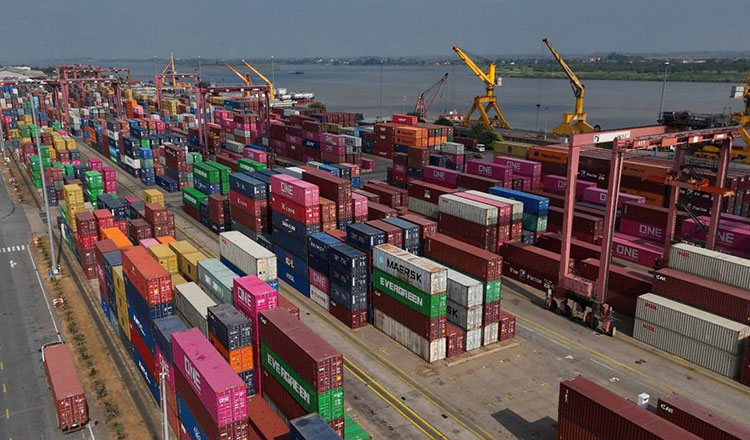
In particular, the national transport infrastructure system has strongly developed. By the end of 2025, the country completed 3,345km of main expressways and 458km of interchanges and access roads, exceeding the target of 3,000km of expressways set in the 2021-2025 plan. In addition, it completed almost 1,600km of national highways and more than 1,700km of coastal roads. The capacity of the seaport system has increased by nearly 1.3 times; and the capacity of the airport system has increased by more than 1.6 times compared to 2020.
These results have significantly contributed to reducing logistics costs from 21 per cent of GDP in 2018 to the current approximately 17-18 per cent, enhancing the competitiveness of the economy.
The sector has begun to lay the foundation for green infrastructure, digital infrastructure, climate change adaptation infrastructure, with models of smart cities, smart transportation, green buildings, and green materials.
The new context presents new demands, and we must frankly acknowledge that infrastructure development still faces limitations and shortcomings: low connectivity in regional synchronisation, congestion and infrastructure overload in large cities, scattered investment resources, digital transformation and green transformation in infrastructure management and development lagging behind new requirements, and others.
Science, technology, and AI is fundamentally changing the way infrastructure being invested in, built, and operated. Infrastructure development in the new era cannot simply stop at concretisation, but must strongly shift towards smartification and greening, with overall efficiency, sustainable development, and improving the quality of life for the people as the overarching goal.
In that spirit, when developing the socioeconomic development plan and the medium-term public investment plan for the period 2026-2030, the leadership of the MoC identified the overarching focus as developing a modern and smart national infrastructure system, concentrating central resources on strategic infrastructure projects and key national ones, and simultaneously strongly reforming the mechanisms for mobilising and utilising social resources.
Accordingly, the ministry will focus on perfecting the legal framework and policies; strengthening decentralisation of power associated with the two-tiered local government model; improving discipline and order in construction investment management; and accelerating digital transformation to improve project management and construction quality management, not compromising the quality, safety, and long-term effectiveness of projects for the sake of deadlines.
The MoC prioritises strategic, widespread, and inter-regional infrastructure, focusing on forming a synchronous and modern national infrastructure framework. The focus is on completing and improving the efficiency of the North-South expressway system and other important national transportation arteries; while coordinating, guiding, and supporting localities in investing in regional connecting routes and major urban ring roads in line with approved plans.
The MoC continues to propose policies to diversify and effectively mobilise investment resources, harmoniously combining the state budget with public-private partnerships, official development assistance funds, preferential loans, and other social resources.
With a synchronised approach encompassing institutional improvement, focused investment, effective resource mobilisation and utilisation, and enhanced management quality, the MoC is determined to work with all other ministries, sectors, and localities to realise the goal of infrastructure development, thereby creating momentum for growth and enhancing the competitiveness of the economy.
- 08:15 19/02/2026