Sustained growth can translate into income gains
Sustained growth can translate into income gains
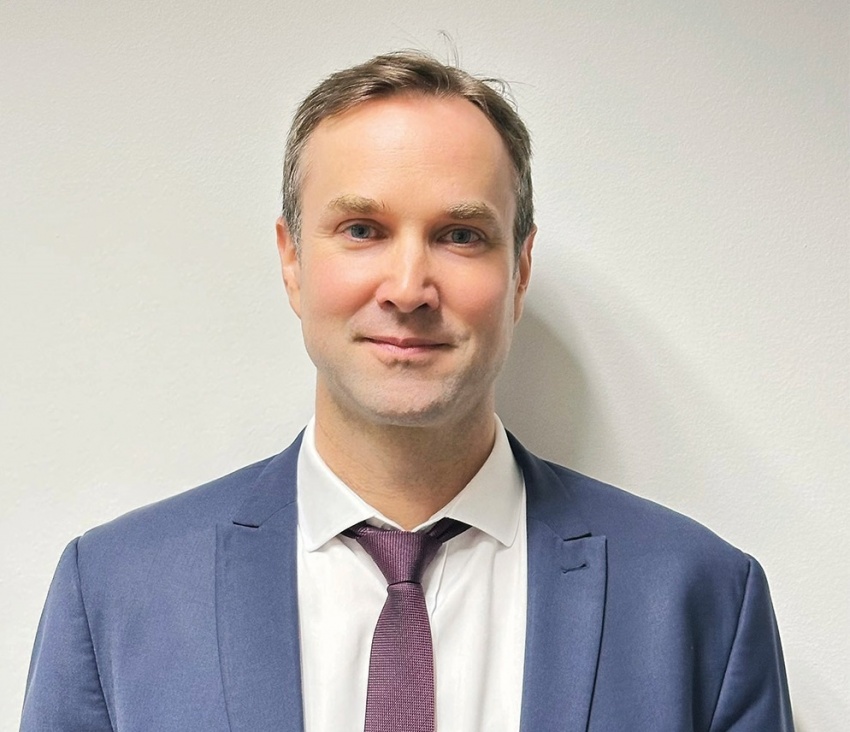
The Vietnamese economy achieved positive growth in 2025 and is expecting more going forward. Jochen Schmittmann, regional resident representative for the International Monetary Fund in Vietnam, Cambodia, and Laos, talked with VIR’s Thanh Tung about how the country has performed, and offered some recommendations.
Do you have an assessment of the economy’s overall growth quality in the past year?
A growth rate of 8.02 per cent is a strong outcome, particularly in a global environment marked by heightened uncertainty, geopolitical tensions, and uneven growth across major economies. It reflects Vietnam’s continued strengths, including its high degree of openness, a resilient manufacturing base, recovery in tourism, and sustained investment activity, as well as strong policy support.
Beyond the headline figure, the quality of growth is an important consideration. Vietnam has made impressive progress in raising incomes and reducing poverty over time, but sustaining rapid growth will increasingly depend on productivity improvements and the efficient use of resources. International Monetary Fund (IMF) analysis points to remaining challenges related to skills mismatches, differences in productivity across firms, and the allocation of capital and labour.
Addressing these issues through continued reforms can help ensure that strong growth is sustained and translates into durable income gains and broad-based improvements in living standards.
In particular, maintaining macroeconomic stability, improving the business environment, strengthening human capital, and fostering stronger linkages between foreign-invested and domestic firms will be key to sustaining high-quality growth over time. The experience of other fast-growing economies suggests that combining strong growth with stability and reform is what ultimately delivers lasting economic success.
In 2025, Vietnam’s monetary and fiscal policies focused on balancing growth with stability. Did this stance match the IMF’s recommendations?
The overall policy mix in 2025 was broadly consistent with the IMF’s main recommendations. It had advised that fiscal policy should take the lead in supporting economic activity, given that Vietnam still has fiscal space, particularly for quality public investment and targeted social support. The scope for monetary easing was assessed to be very limited, reflecting emerging exchange rate pressures, rapid credit growth, and the need to remain vigilant about inflation risks.
Against this backdrop, the use of supportive fiscal measures, including one-off government spending and a focus on infrastructure investment, was in line with the IMF’s view that fiscal policy was the more appropriate tool to sustain demand in an uncertain global environment. Inflation remained low, but the accelerating credit growth underscores the importance of a cautious monetary policy stance focused on preserving macroeconomic and financial stability.
Do you think that Vietnam’s top-line growth goals for 2026 be realised, and what are the most important factors to achieve it?
A growth target of around 10 per cent is very ambitious. From a historical and cross-country perspective, sustaining growth at that pace is exceptional, particularly for an economy of Vietnam’s current size and level of development.
International experience suggests that very few countries have been able to maintain double-digit growth for extended periods without running into macroeconomic or financial strains, especially in an environment of slower global trade growth and heightened uncertainty.
In this context, the more important issue is not whether a specific numerical target is reached in a given year, but whether growth remains high-quality, resilient, and sustainable. For Vietnam, sustaining strong growth increasingly depends on productivity improvements rather than simply adding more investment or credit. This places a premium on continued structural reforms, including improving the business environment, strengthening governance, upgrading skills, and fostering a dynamic domestic private sector.
Well-executed public investment can support growth, particularly by easing infrastructure bottlenecks. However, its effectiveness depends critically on project quality, implementation capacity, and strong coordination across institutions. Given the considerable volume of planned investments, careful attention will be needed to manage macroeconomic implications and safeguard fiscal sustainability, even though Vietnam starts from a relatively low public debt ratio. A credible and sustainable financing strategy and a more robust medium-term fiscal framework will be essential to safeguard fiscal sustainability over time.
From a macroeconomic policy perspective, this underscores the importance of a well-coordinated policy mix. Fiscal policy can play a supportive role, especially through high-quality public investment, while the scope for monetary policy to support growth is limited, given rapid credit growth and ongoing external sector pressures notwithstanding the Vietnam’s sizeable trade surplus.
Policies will therefore need to remain nimble and data-dependent to manage external shocks and domestic risks, while avoiding the build-up of macroeconomic and financial vulnerabilities.
Key strategies for national development include accelerating public investment disbursement, reforming state-owned enterprises, and boosting capital market development. How do you envision the impacts of these strategies to affect economic growth?
If implemented effectively, these strategies can provide meaningful support to economic growth in 2026, both by sustaining demand in the near term and by strengthening the foundations for medium-term growth.
Faster public investment disbursement can help maintain economic momentum, particularly through infrastructure projects that ease obstructions in transport, energy, and logistics. However, the growth impact will depend less on the volume of spending and more on its quality, including project selection, procurement, coordination across agencies, and overall implementation capacity.
Reforms of state-owned enterprises can further enhance growth by improving efficiency and competition in key sectors of the economy. Strengthening corporate governance, clarifying commercial objectives, and reducing distortions can help ensure that resources are allocated to their most productive uses and create more space for private sector activity.
It is also important to recognise the government’s ambitious and wide-ranging institutional reform agenda, which reflects a strong commitment to modernising economic governance. Continued progress in areas such as regulatory reform, public administration, and transparency can strengthen policy credibility and improve the overall business environment. As with all institutional reforms, careful sequencing, capacity building, and consistent implementation across levels of government will be critical to realising their full benefits.
At the same time, financial sector and capital market reforms will be important to support this agenda. Further development of the government bond market can help broaden the investor base, which is particularly relevant in a context of scaled-up infrastructure investment. Deeper and more transparent bond and equity markets can also help mobilise long-term financing for infrastructure and other priority investments, diversify funding sources beyond the banking system, and improve risk pricing across the economy.
Taken together, these reforms can reinforce each other and support higher and more balanced growth in 2026 and beyond. As with other reform agendas, the scale and durability of the growth impact will ultimately depend on consistent implementation, strong institutions, and the preservation of macroeconomic and financial stability.
This year the government will apply a more market-based monetary policy to support digital transformation, infrastructure while managing interest rates and debt cautiously. What are your recommendations for these themes?
A shift towards a more market-based monetary policy framework is important and appropriate as Vietnam’s economy becomes more complex and more deeply integrated into the global economy, including through trade, global value chains, and cross-border capital flows.
In this context, the IMF has consistently recommended moving away from administrative instruments such as credit growth targets and towards greater reliance on market-based tools and interest rate transmission. Such reforms can strengthen policy effectiveness, improve transparency, and support a more efficient allocation of credit towards productive investment, including in higher value-added and innovative sectors.
The transition needs to be carefully calibrated. Strong liquidity management, clear communication, and a well-functioning interest rate framework are essential to preserve confidence. Allowing the exchange rate to play a greater role as a shock absorber, while maintaining orderly market conditions and adequate buffers, can further enhance resilience, particularly given Vietnam’s exposure to external shocks.
Throughout this process, robust financial sector oversight remains critical. As monetary policy relies more on market signals, strong supervision, macroprudential policies, and sound risk management are needed to contain financial risks. Close coordination with fiscal policy is also essential, especially considering large infrastructure investments, to ensure that overall macroeconomic conditions remain consistent with sustainable growth and financial stability.
- 10:08 20/02/2026