PM issues directive to ensure power supply in 2026–30, focusing on speeding up major projects
PM issues directive to ensure power supply in 2026–30, focusing on speeding up major projects
In 2026 as rising power demand and weather risks continue to strain the power system, the focus must be on removing bottlenecks for operations of the power system and the electricity market while accelerating power projects to ensure they come online on schedule.
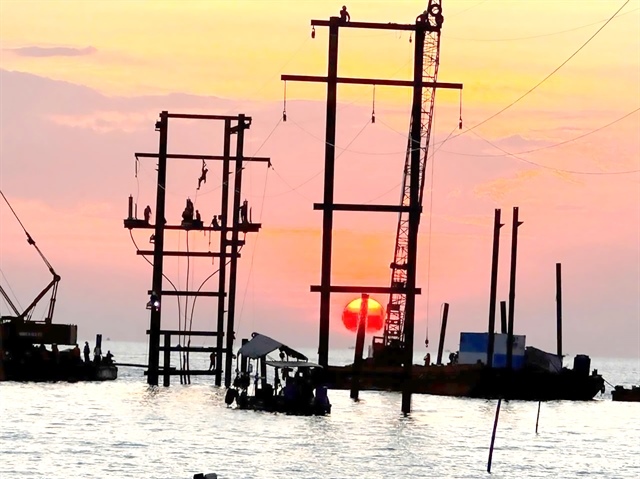
Hà Tiên - Phú Quốc 110kV transmission line recently put into operation. — VNA/VNS Photo |
Prime Minister Phạm Minh Chính has issued a directive urging efforts to ensure adequate electricity supply for production, business activities and daily life during peak periods in 2026 and through 2030, stressing that power shortages must not be allowed under any circumstances.
Under Directive No 01/CT-TTg dated January 18, the PM emphasised that ensuring adequate power supply would be critical as 2026 marks the first year of implementing resolutions of the 14th National Party Congress and the 2026–30 socio-economic development plan. The year would also see major political events, including the 14th National Party Congress and elections for the 16th National Assembly.
“Sufficient power supply is mandatory, with no exceptions,” the PM said, assigning full responsibility to ministers, provincial leaders and major state-owned energy groups, including Vietnam Electricity (EVN), Vietnam National Industry-Energy Group (PVN) Vietnam Coal and Mineral Industrial Group (TKV), and Đông Bắc Corporation.
“Ensuring adequate electricity supply to support socio-economic development in the 2026–30 period, while safeguarding national energy security in the new era of digital transformation and high-tech development, is a particularly important political task,” the directive stated.
Authorities have been requested to mobilise all available resources, speed up power generation and transmission projects and prevent delays caused by administrative procedures.
In 2026 as rising power demand and weather risks continue to strain the power system, the focus must be on removing bottlenecks for operations of the power system and the electricity market while accelerating power projects to ensure they come online on schedule.
Priority must be given to strengthening electricity supply in the northern region, including expanding key substations and transmission lines, boosting power imports from Laos and China, and bringing several hydropower and thermal power plants into operation during the year.
The directive also calls for electricity-saving measures to be stepped up together with closer supervision of fuel supplies for thermal power plants, and tighter coordination with the National System and Market Operator to forecast demand and secure adequate supplies of coal, gas and oil for power generation during the period.
To ensure power supply for 2027-30 period, the government plans to push ahead with major power projects, including LNG-fired power plants, hydropower expansion and offshore wind developments with the aim of bringing some projects online one to two years ahead of schedule.
Of note, preparations for the Ninh Thuận nuclear power plants will be sped up, focusing on removing administrative and legal bottlenecks.
Competitive and transparent market: long-term solution
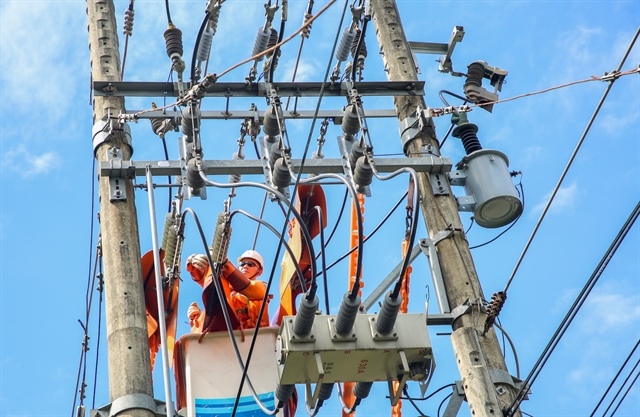
Hà Tiên - Phú Quốc 110kV transmission line recently put into operation. — VNA/VNS Photo |
Developing a competitive and transparent power market is critical for Việt Nam to ensure the national energy security and supports green transition goals.
To support the goal of GDP growth of 10 per cent or more in the 2026-30 period, it is estimated that electricity demand will increase by at least 12-13 per cent in the 2026-30 period, or even by above 15 per cent when digitalisation and artificial intelligence which are energy-intensive are promoted, putting heavy pressure on the power system.
According to Nguyễn Quang Huân, Member of the National Assembly’s Committee on Science, Technology and Environment, a lack of transparency and effective competition would undermine investment, efficiency and long-term energy security.
It is also necessary to develop a pricing mechanism that ensures electricity prices to fully reflect costs together with the effort to promote the development of a truly competitive power market, according to Nguyễn Quốc Lập, President of Vietnam Petroleum Association.
Lập also pointed out that policy delays and an unstable legal framework were among the biggest bottlenecks facing Việt Nam’s energy market, making it difficult for companies to commit to long-term investments.
Hồ Đình Thám, an adviser at the Electricity Authority of Vietnam under the Ministry of Industry and Trade, said the electricity market must become the central pillar of the energy supply chain, linking planning and investment with operation, generation and retail supply to end-users.
He called for the early development of a multi-buyer, multi-seller power market in line with the Law on Electricity, greater participation by power buyers and generators, and a gradual move toward a pricing mechanism based on supply and demand.
- 14:24 20/01/2026