EVN secures financing for Quang Trach II LNG power plant
EVN secures financing for Quang Trach II LNG power plant
Vietnam Electricity has secured major domestic financing for the Quang Trach II liquefied natural gas (LNG)-fired power plant, a key addition to the country’s power generation capacity.
|
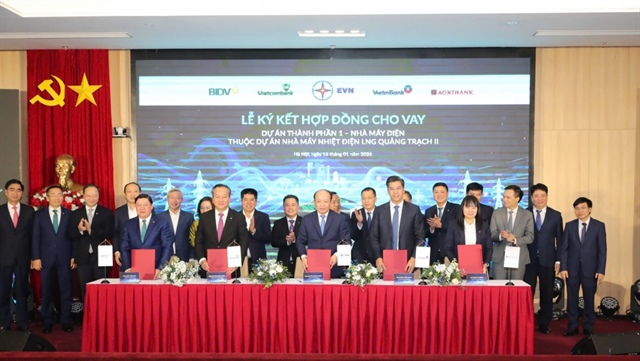
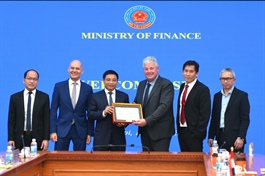
Vietnam Electricity (EVN) signed a loan agreement on January 16 for the electricity plant component of the Quang Trach II LNG-fired power plant with four state-owned commercial banks – Vietcombank, VietinBank, BIDV, and Agribank – covering a 1,500MW facility comprising two 750MW units using combined-cycle gas turbine technology and located in Hon La Economic Zone, Phu Trach commune, Quang Tri province.
The development has an investment value of about VND52 trillion ($1.98 billion), with 20 per cent financed by equity and 80 per cent through loans. It includes two main components: an electricity plant worth VND40 trillion ($1.52 billion) and an LNG storage and port facility valued at around VND12 trillion ($460 million).
For the first component, EVN will build a power generation plant with capacity of about 1,500MW, comprising combined-cycle gas turbine units and supporting systems, including water supply and treatment, wastewater treatment, electrical infrastructure, and integrated monitoring and control systems.
To implement the project, EVN has undertaken extensive preparatory work, including capital mobilisation. The first component requires loans of nearly VND29.6 trillion ($1.13 billion), which have been arranged by four state-owned banks in compliance with regulations and with a focus on coherence, prudence, and efficiency. The timely mobilisation of credit financing provides a solid basis for EVN to proceed on schedule while maintaining strict quality standards.
The Quang Trach II LNG-fired power plant is among the key developments under the National Power Development Plan VIII, designed to supply electricity to the national grid while enhancing system reliability. The facility also aims to reduce emissions and limit environmental impacts.
Commercial operation is scheduled to begin in the 2028–2029 period, with full completion expected by 2030.
- 15:55 17/01/2026