Decree opens incentives for green urban development
Decree opens incentives for green urban development
New regulations are set to unlock financial and land-related incentives for projects that meet green growth standards in urban development.
Under Decree No.35/2026/NĐ-CP issued by the government on January 22, which details provisions of Resolution No.111/2025/UBTVQH15 on urban classification, businesses and investors developing green growth cities will be eligible for a range of incentives, including preferential access to finance and land resources.
Specifically, urban construction projects that meet the decree’s green growth criteria, based on their purpose and nature, may qualify for state credit guarantees to secure investment capital, supporting project implementation in line with national green development goals.
They will also be eligible for preferential loans from the environmental protection fund and other funds related to green growth and adaptation to climate change according to the funds’ regulations and legal provisions.
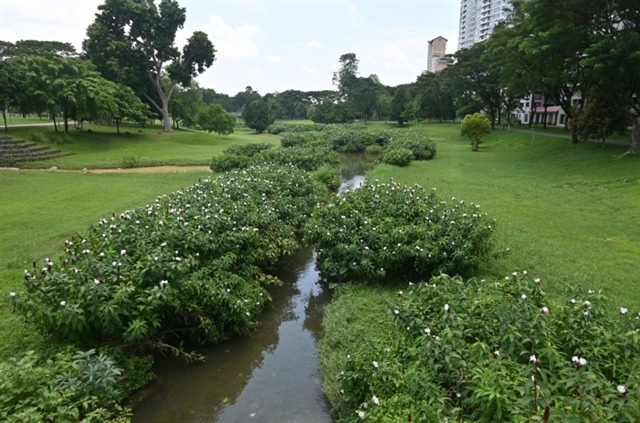
Photo: EuroCham |
Investors will be entitled to tax refunds, tax deductions, or tax exemptions and reductions when investing in green infrastructure, green buildings, energy-saving projects, wastewater treatment, and waste management projects as stipulated by law.
The decree also provides incentives related to land allocation and capacity-building in green urban development and climate change adaptation. Municipal and provincial people’s committees are encouraged to prioritise cleared land, in line with approved planning, for investment in green infrastructure and clean-energy public works.
At the same time, provincial- and commune-level authorities are tasked with allocating local budgets to support training and professional development for urban management officials, strengthening capacity in green urban governance and climate resilience.
According to the decree, there are three groups of criteria for green growth urban development.
Firstly, the criteria for green infrastructure in urban areas include the proportion of public passenger transport; the proportion of buses using green energy; the proportion of private vehicles with reduced emissions; dedicated bicycle lanes; the proportion of urban roads using energy-saving equipment and technologies or using renewable energy for lighting; the proportion of the population supplied with clean water through a centralised water supply system; and the average area of public green space per person.
Secondly, the group of environmental criteria in urban areas includes air quality index; the percentage of household solid waste collected, transported, and treated according to technical standards and regulations; the percentage of domestic wastewater collected and treated according to technical standards and regulations; and the percentage of days in the year when the concentration of ultrafine and fine dust in the air exceeds the permissible environmental technical standards.
Thirdly, the group of criteria for energy and emission reduction in urban areas includes: the proportion of renewable energy used in total urban energy consumption; the proportion of households using self-sufficient rooftop solar power; and the number of green buildings.
- 11:18 24/01/2026