Women entrepreneurs are key to Vietnam’s economic growth
Women entrepreneurs are key to Vietnam’s economic growth
Women-led micro and small enterprises underpin Vietnam’s local economies and value chains. As economic transformation accelerates, improving their financial health is increasingly critical to inclusive growth, writes Tran Thi Minh Nguyet, Women’s Entrepreneurship and Financial Inclusion Manager at CARE Vietnam.
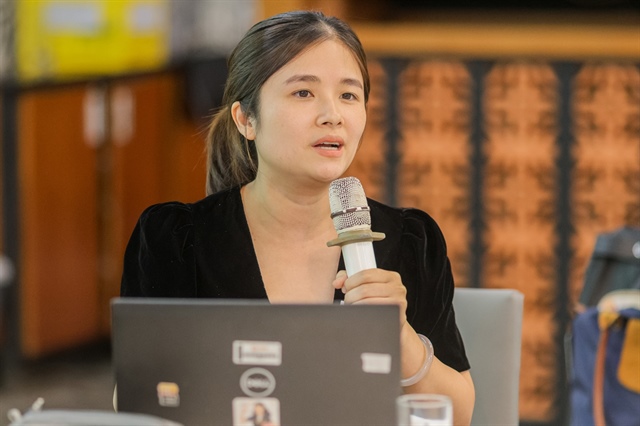
Photo: CARE Vietnam |
Recent baseline findings from the Strive Women programme implemented by CARE and partners, with support from the Mastercard Centre for Inclusive Growth, offer one of the most comprehensive assessments to date of the financial health of women entrepreneurs in Vietnam.
The study, 'Measuring Women Entrepreneurs’ Financial Health', draws from a robust sample of women-led micro and small businesses across several regions, providing insights into financial practices, business performance, digital readiness, and household dynamics.
The data reveals a segment with strong entrepreneurial capacity. Around 75 per cent of surveyed women reported holding final decision-making authority in their businesses, reflecting confidence, role clarity, and a willingness to take calculated risks. Many have operated their enterprises for several years, often starting from informal or home-based activities before gradually building customer networks through trust and consistency.
Regarding the financial health of women entrepreneurs, savings is the first step in creating a safety net. In Vietnam, 83 per cent interviewed women entrepreneurs save money specifically for their business. Globally, in line with common financial recommendations, an ideal savings buffer is between 3–6 months of income.
Around half of all women surveyed (48 per cent) estimate that in the event of a shock, they would have enough capital to run their business for 3–6 months. However, this differs by context: respondents in Vietnam (68 per cent), the group with the highest uptake of formal financial services - are most likely to meet this rule.
However, the research also highlights structural barriers that limit women’s ability to translate effort into sustained growth. These constraints, rooted in time, technology, and finance, continue to affect business resilience and the capacity to seize opportunities in an increasingly digital and competitive marketplace.
One of the most persistent challenges is time poverty, driven largely by caregiving and household responsibilities. On average, women entrepreneurs spend significantly more hours on unpaid care work than men, reducing the time available for business development. Many report having to decline training opportunities, shorten business hours, or postpone expansion plans due to a lack of reliable childcare or support in redistributing household tasks.
The study shows a clear link between time availability and business outcomes. Women facing lower caregiving burdens tend to report higher revenues, stronger growth expectations, and better financial health indicators. Yet for many, business management must still be squeezed into the margins of an already full day, underscoring the need to treat caregiving support as an economic enabler rather than a social add-on.

Photo: CARE Vietnam |
A second major barrier lies in digital capability. While more than 90 per cent of surveyed women own smartphones and use them for communication or basic social media marketing, far fewer apply digital tools to core business management functions such as record-keeping, inventory tracking, or e-commerce. Cash remains the dominant transaction method, and regular use of digital financial services for payments or savings is still limited.
This gap is not driven by lack of interest. Many women expressed strong motivation to adopt digital tools but cited limited skills, low confidence, and concerns about errors or online fraud. As online sales, delivery services, and digital supply chains become more prevalent, these constraints increasingly limit women entrepreneurs’ competitiveness.
Access to appropriate finance remains another challenge, despite women demonstrating strong repayment records and financial discipline. Many rely on small, short-term loans to manage cashflow rather than to invest in growth. High collateral requirements, complex application processes, and loan terms misaligned with business cycles continue to deter larger investments in equipment or inventory.
Women surveyed highlighted the need for credit products with more flexible terms, simpler procedures, and loan sizes aligned with genuine business ambitions. These needs vary by context: growth-oriented businesses in urban and peri-urban areas often require larger unsecured loans, while rural microentrepreneurs benefit more from smaller, flexible credit combined with financial literacy support.
In response, Strive Women in Vietnam is implementing targeted interventions based on a women-centred design approach, ensuring solutions are tailored to women’s lived realities and tested for feasibility before scaling. The scheme aims to support more than 90,000 women entrepreneurs across different market segments.
A core focus is expanding financial inclusion through partnerships with both commercial banks and microfinance institutions. With VPBankSME, Strive Women is co-designing and scaling the WE Leverage initiative, offering higher unsecured loan limits, preferential credit features, and bundled digital tools to reduce operating costs. VPBankSME has also worked with CARE to deliver practical digital and AI-focused business training, strengthening digital readiness among women entrepreneurs.
In parallel, CARE collaborates with Thanh Hoa MFI to reach women in rural and low-income communities through microloans, savings products, and training delivered in accessible, community-based formats. These interventions are designed to stabilise businesses and reduce financial vulnerability. Across partners, the initiative is also researching on inclusive insurance products which can protect women from business and household shocks, an essential element of long-term financial health.
Household engagement forms another key pillar. Facilitated discussions with couples and family members highlight the economic value of shared responsibilities and support for women’s businesses. Early results suggest improvements in women’s confidence, sense of control, and ability to make business decisions without conflict or guilt.
Digital capacity-building follows a phased approach. Initial support focuses on improving social media use for customer engagement and sales, before introducing digital record-keeping, inventory management, and online sales platforms. Peer learning groups and local mentors reinforce these skills, enabling women to apply new tools directly within their enterprises.
Taken together, the findings and early outcomes deliver a clear message: strengthening women entrepreneurs’ financial health is both achievable and economically meaningful. Financial institutions can refine products to better reflect women’s cashflow patterns and growth paths. Policymakers can support caregiving solutions and digital infrastructure, while businesses can expand supply-chain linkages and invest in targeted digital upskilling.
Vietnam’s women-led enterprises already make a substantial contribution to the economy. With the right support, grounded in evidence, designed for real-world constraints, and delivered through coordinated partnerships, they can play an even greater role in driving sustainable and inclusive growth.
- 08:00 29/12/2025