Vietnam targets higher value chains as global production reshapes
Vietnam targets higher value chains as global production reshapes
Experts have noted that the strong restructuring of global supply chains is creating new growth opportunities for Vietnam's supporting industries. At the same time, this poses the need for upgrading production standards, enhancing sustainable development, and deepening integration into international value chains.
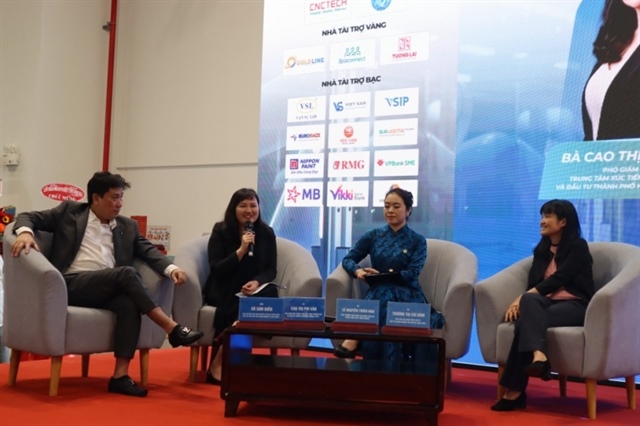
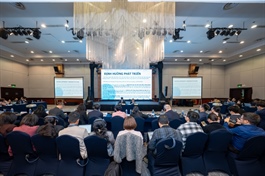
Experts discuss Vietnam's supporting industries in the global supply chain |
According to the Vietnam Association for Supporting Industries (VASI), the revenue of more than 420 member enterprises exceeded $4.58 billion in 2024, concentrated mainly in Hanoi, Danang, and Ho Chi Minh City. The sector's structure is diverse, with metal processing accounting for the largest share (55 per cent), followed by plastics and rubber (25 per cent), and electrical-electronics (10 per cent).
Domestic supporting industries have already mastered complex production processes, from automotive components supplied to Toyota, VinFast, and Hyundai, to printed circuit board assembly.
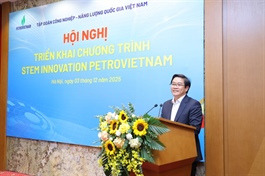
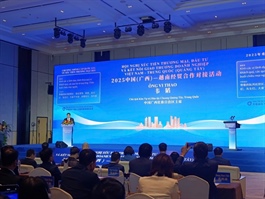
Speaking at the Forum on Promoting the Development of Vietnam's Supporting Industries in the Global Supply Chain on December 4, hosted by the Ho Chi Minh City Investment and Trade Promotion Centre (ITPC), Truong Thi Chi Binh, vice chair and secretary-general of VASI, noted that most enterprises still produce single parts, focus mainly on the domestic market, and face challenges in expanding exports.
She emphasised, "Opportunities now outweigh challenges, especially as global supply chains shift from globalisation to regionalisation under the China +1 strategy."
This trend is driving increased demand for relocating production from major markets such as the US, Japan, and South Korea to Vietnam. It opens significant opportunities for domestic enterprises to become tier-2 and tier-3 suppliers to multinational corporations, thereby strengthening Vietnam's position in global value chains.
To seize this massive opportunity, the supporting industry must break through its current limitations. Businesses must shift from producing single components to forming clusters and assembling finished modules to move up to the original equipment manufacturer (OEM) level, improve profitability, and integrate deeper into global value chains. The QCD principles, quality, cost, and delivery, remain the foundational requirements.
Binh stressed that this is a pivotal moment for qualitative transformation in supporting industries. “To join the 'big game', enterprises must think big, strengthening linkages with each other, forming deeper connections with foreign-invested companies and international buyers, investing anew, and seeking support from both the government and local authorities.”
The ITPC reaffirmed that supporting industries are a core industrial sector for the city. Cao Thi Phi Van, deputy director of the centre, said, "The agency will strengthen connections between domestic enterprises and major international corporations and buyers through investment promotions and supply–demand matchmaking activities."
THACO Group is implementing a next-generation industrial manufacturing strategy. A major highlight is a specialised mechanical industrial park, formerly in Binh Duong province, expected to break ground at the end of 2025. Covering 786 hectares with total investment exceeding VND75 trillion ($3 billion), the project will focus on high-tech products and fully integrated supporting industry chains. It will also establish a Joint Venture Collaboration Centre within the industrial park to actively encourage domestic enterprises to join the supply chain.
Representatives from SMC Phu My Precision Engineering (SMC Precision) noted that Vietnamese enterprises must meet stringent standards to capture new global opportunities. Sharing practical experience, they said that enterprises must build six capability pillars: production and technology capability; international quality management systems; data management and digitalisation; price stability and financial transparency; research and development capability; and compliance with social and environmental standards. Thanks to this proactive approach, SMC Precision has become a tier-1 supplier for Samsung.
Dinh Hong Ky, chairman of the Ho Chi Minh City Green Business Association, said that the most critical factor for enterprises today is no longer capital or technology, but the ability to build a green supply chain.
“All Vietnamese products, whether for domestic consumption or export, must comply with green criteria, carbon regulations, and strict product-certification standards. Therefore, major corporations investing in Vietnam require a supply chain ecosystem that meets green requirements,” he said.
At the forum, alongside challenges such as logistics costs, quality control, and workforce development, delegates proposed multiple solutions to develop an ecosystem of strong linkages among enterprises, universities and research institutes, industry associations, and regulatory bodies to shape a strategic national direction.
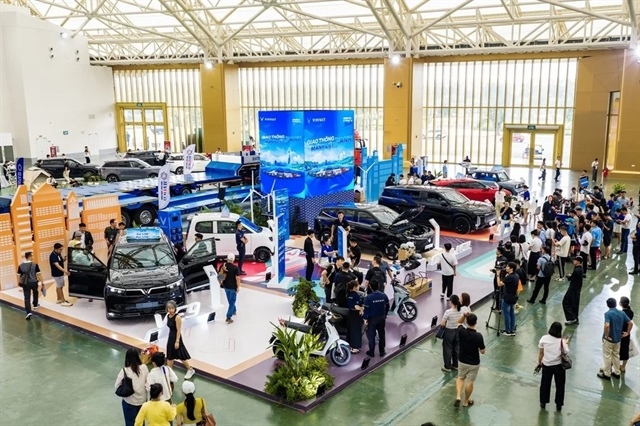
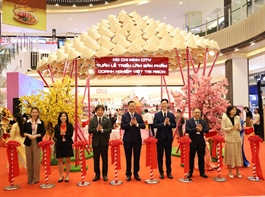
On this occasion, the 2025 Supporting Industries Exhibition and Supply Chain Linkage Conference also opened, attracting more than 200 booths from enterprises across the sector.
Enterprises operate under OEM, ODM (original design manufacturer), and OBM (original brand manufacturer) models, supplying key industries such as automotive, electronics, semiconductors, renewable energy, medical devices, and aerospace. Exports to North America and Japan are growing by 50-60 per cent, China 40-50 per cent, and ASEAN 35-40 per cent, reflecting the strong market expansion capacity of Vietnamese firms.
As they participate more deeply in global supply chains, VASI enterprises have standardised many automotive quality management systems, including ISO 9001, IATF 16949, AS 9100D, and environmental-social standards such as ISO 14001, SA 8000, and ISO 50001. Many have supplied complex components and mastered PCBA assembly processes, from engineering and prototyping to assembly and testing.
- 13:54 05/12/2025