Women take leading role in agriculture and food systems
Women take leading role in agriculture and food systems
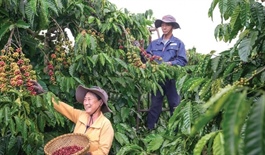
Accounting for nearly half of the workforce and playing a pivotal role across multiple production sectors, women are taking a leading role in driving innovation, green initiatives, and sustainable development.
|
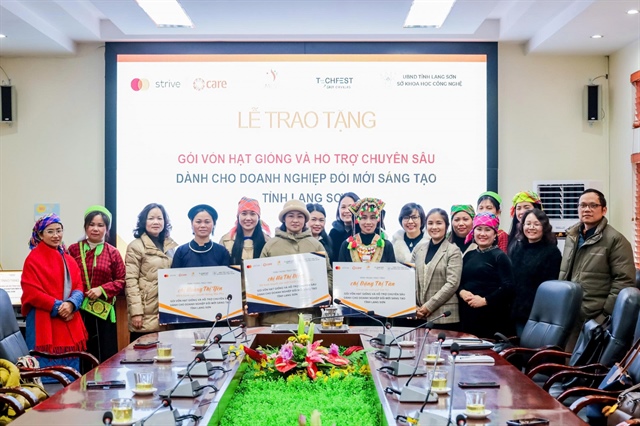
On November 7, Cao Bang Department of Science and Technology, in collaboration with CARE International in Vietnam, launched the Women for Agriculture initiative (We4Ag) to help women adopt climate-resilient and sustainable agricultural practices.
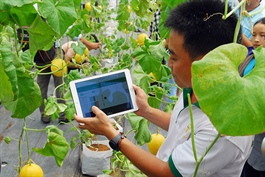
Funded by the EU, We4Ag will be implemented in Tuyen Quang and Cao Bang provinces through February 2028. The project aims to strengthen women’s capacity in agricultural production and agribusiness, promote greener practices, and encourage the use of digital technologies.
The project has a total budget of nearly $184,000 and focuses on three key areas. First, it aims to enhance sustainable agricultural production skills for 10,000 women through both in-person and online training on green, circular, and low-emission practices.
Second, it will help 4,000 women improve their preliminary and food processing skills to reduce losses and increase product value. Third, the project seeks to expand market access for 1,000 women by developing online booths and connecting them with distribution channels within and beyond the provinces.
"The We4Ag project is the next step in our efforts to accompany rural women, helping them become a pioneering force in Vietnam’s green agricultural transition," said Vuong Thai Nga, programme director, representing CARE International in Vietnam. "We believe that enhancing women’s economic empowerment is one of the core solutions for building sustainable communities that are resilient to climate change."
Nong Thanh Than, deputy director of Cao Bang Department of Science and Technology, said, “We4Ag provides financial and technical support and creates a platform for women to lead green production, reduce emissions, protect the environment, and encourage sustainable, eco-friendly agriculture.”
|
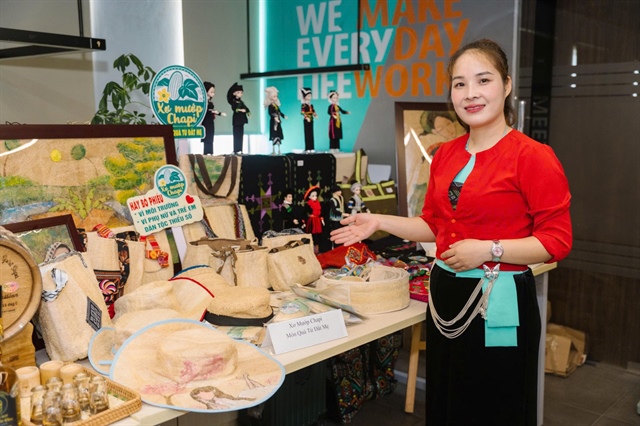
According to the General Statistics Office, women make up nearly 63 per cent of the national labour force, over 47 per cent of workers in agriculture, and almost 80 per cent within cooperatives. They also hold growing leadership roles, with around 28 per cent serving as directors, business owners, or cooperative managers.
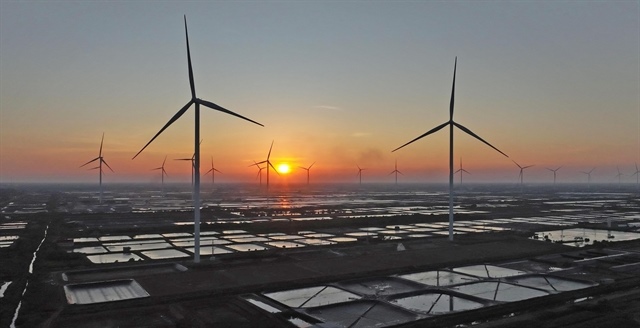
Their contributions increasingly support the government’s green and sustainable development goals. The national strategy for green growth for 2021–2030, with a vision to 2050, highlights key tasks such as reducing greenhouse gas emissions, promoting clean and renewable energy, greening production, fostering sustainable lifestyles, and encouraging sustainable consumption.
A standout example of female-led green innovation is Tran Thi My Hai, who won first prize at the 2024 Women Entrepreneur Award for her project turning pineapple leaves into textile fibres and yarns.
Drawing on her experience in the garment and textile industry, Hai transformed agricultural waste into sustainable materials now used to produce items such as ao dai, scarves, and socks. A key feature of her work is a waterless pineapple-fibre extraction technology that reduces costs and environmental impact. The fibre-processing machine she and her team developed is also designed to suit the physical capacities of female workers, a rare consideration in the industry.
Hai aims to apply the model across Vietnam’s 52,000 hectares of pineapple farms, creating jobs for an estimated 16,500 women. “I hope Vietnamese agriculture will produce green products while also encouraging rural women to stay in their communities and build sustainable livelihoods at home,” she said.
Tran Lan Phuong, vice president of Vietnam Women’s Union (VWU), stated that the union has rolled out multiple initiatives to strengthen women’s participation in the green economy.
Flagship initiatives include Women’s Startup Day, Women Entrepreneurs Elevating 'One Commune, One Product' Brands, and the Women’s Entrepreneurship, Innovation, and Green Transformation initiative. They encourage women’s participation nationwide, particularly among vulnerable groups, and support the growth of a green startup ecosystem.
The VWU and its partners have helped women develop circular economic models connected to sustainable agriculture, with many localities adopting solar-powered livelihoods and projects using recycled materials. “The VWU will continue turning green-economy policies into action,” Phuong said. “We will raise women’s awareness and skills, promote green employment, strengthen gender mainstreaming, and support access to finance, credit, and green technologies.”
|
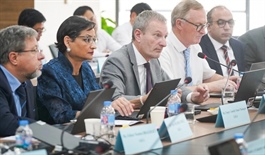
Rémi Nono Womdim FAO highly values the increasingly important role of women in Vietnam’s agricultural sector. With women accounting for 47.4 per cent of the agricultural workforce, and an impressive 80 per cent in cooperatives, they are key contributors in production and across other stages of the agri-food system while taking on a growing role in management and leadership. The growing number of women taking on leadership roles in general and specifically in managing cooperatives or running agricultural enterprises, represents a significant step forward in boosting gender equality and sustainable development, particularly within the agricultural sector. FAO emphasises that women’s economic empowerment helps improve agricultural productivity and product quality, while also contributing to the stability of food supply chains and nutritional security. Ensuring that women and men have equal opportunities to voice their opinions and participate in decision-making within rural organisations and associations is one of the four key objectives in FAO’s gender-equality policy. However, women working in agriculture continue to face numerous challenges, including limited access to and control over land, capital, technology, and training. FAO recommends that supportive policies and activities be further strengthened to enable women to fully realise their potential, thereby contributing to the development of a more modern, sustainable, inclusive, and equitable agricultural sector. |
- 19:04 03/12/2025