Việt Nam cracks down on 23,000 market violations in 2025
Việt Nam cracks down on 23,000 market violations in 2025
Counterfeit goods and e-commerce fraud dominate enforcement actions
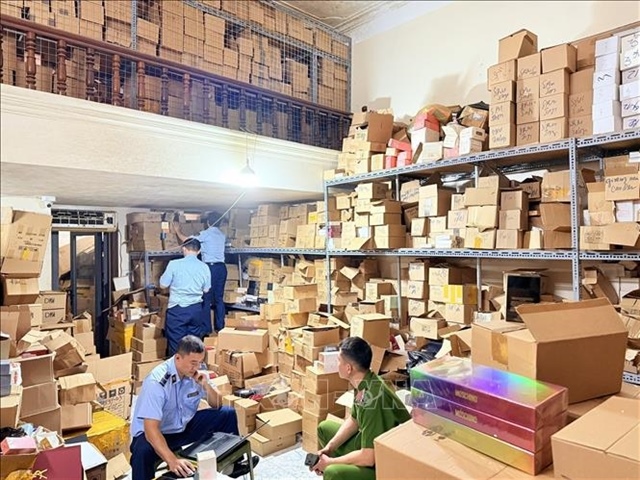
Thousands of perfumes and cosmetic products of unknown origin are seized by Hà Nôi's authorities. — VNA/VNS Photo |
Market inspectors uncovered more than 23,000 violations across Việt Nam in 2025, collecting VNĐ372 billion (US$14.3 million) in fines as authorities intensified enforcement against counterfeit products and online fraud.
The Ministry of Industry and Trade's Domestic Markets Department reported that market management forces conducted 27,540 inspections throughout the year, detecting violations worth nearly VNĐ290 billion – a 31.8 per cent decrease from 2024.
Most infractions involved goods without clear origin, counterfeit products, intellectual property violations, price manipulation and food safety breaches. Seized items ranged from frozen foods and confectionery to alcohol, tobacco, cosmetics, clothing, footwear, agricultural supplies and electronics.
Notable cases included the seizure of 35,000 counterfeit clothing items bearing fake brand labels in Hà Nội, 123,000 kilogrammes of smuggled tobacco materials in Cao Bằng and raids on fashion retailers at Sài Gòn Square.
Authorities also confiscated over 100 tonnes of fabric rolls of unknown origin at Truong Vinh Vina Company, 15 tonnes of smuggled sugar in HCM City and more than 18 tonnes of undocumented frozen chicken meat in Hà Nội.
E-commerce violations proved particularly challenging. Livestream sellers exploited social media platforms to peddle fake or substandard food products, using inflated advertising claims and labels like 'hand-carried', 'regional specialty', 'homemade' or '100 per cent clean'.
Some vendors recruited influencers to build consumer trust while posting false information or using expired or forged quality certificates.
Market inspectors responded by increasing warehouse and production facility inspections, monitoring online advertising and coordinating with police, customs, health authorities and e-commerce platforms to track down violators. Consumer awareness campaigns were strengthened to help identify fraudulent practices.
Despite progress, enforcement gaps remain.
Organisational restructuring at some units caused temporary disruptions in personnel and management continuity. More significantly, administrative penalties for e-commerce violations remained low relative to the actual scale of infractions, falling short of requirements as online violations continue rising.
The department said that while inspectors improved training and coordination in 2025, keeping up with fast-changing online commerce remains an urgent priority.
- 08:27 18/12/2025