Forestry conference highlights biodiversity and sustainability goals
Forestry conference highlights biodiversity and sustainability goals
Nghe An province hosted a national conference on special-use and protection forest management, bringing together experts, officials, and stakeholders.
|
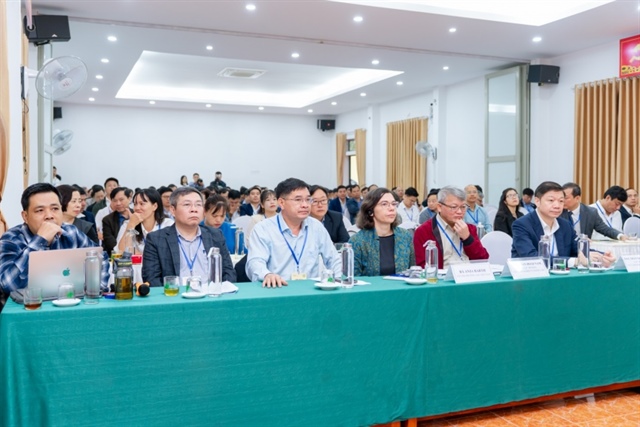
From December 7–8, 200 participants attended the conference at Pu Mat National Park in the central province. The event was organised with support from the Management and Protection of Protected Areas with Diverse Ecosystems (MEPA) programme, funded by the German government and jointly implemented by the German Development Agency (GIZ) and the Vietnam Forestry Administration (VNFOREST) for the 2025–2028 period.
The event serves as a national platform and aims to review the performance of special use and protection forest (PA) management in 2025, outline key priorities for 2026, and discuss policy orientations related to PA organisational and structural arrangements. These discussions aim to ensure that protected area governance remains effective, resilient, and well-adapted to evolving administrative and environmental conditions.
The conference agenda features a field visit highlighting PA financing models, ecotourism, cultivating and developing medicinal plants under forest canopy, discussions on organisational arrangements, a review of information and communication technology applications in PA management, and the announcement of the 'Green Passport Champion 2025' initiative.
This year’s conference reaffirmed Vietnam’s commitment to forest and biodiversity protection, in line with the Forestry Law, the Vietnam Forestry Development Strategy (2021–2030, vision 2050), and the National Forestry Master Plan. The country currently manages nearly 15 million hectares of forest, including over 10 million ha of natural forest and around five million ha of plantations, giving a forest cover of 42 per cent.
By 2030, special-use forests are expected to expand from 2.2 million ha to 2.46 million ha, while the number of protected areas is projected to rise from 176 to 225. Another key target is for all forests managed by institutional owners to be sustainably managed by 2030, enhancing natural resource efficiency, strengthening biodiversity conservation, maintaining protective forest functions, and reducing violations of the Forestry Law.
Tran Quang Bao, director general, VNFOREST, said, “As the advisory and state management agency for the forest sector, particularly for the system of special-use and protection forests, VNFOREST is committed to sustainable forest management, biodiversity conservation, and the development of multi-use forest values. We continue to strengthen protected-area governance, advance efforts to address climate change, and accelerate digitalisation to enhance monitoring and decision-making.”
The conference also takes place at a crucial moment as the country updates its Nationally Determined Contribution (NDC 3.0) to the UN Climate Convention, which reaffirms the goal of achieving net-zero emissions by 2050. Protected areas, which unite different natural ecosystems such as forests, oceans, wetlands, complex ecosystems, and more, play a central role in carbon sequestration, binding carbon in nature in the long term instead of releasing greenhouse gases into the atmosphere.
Strengthening forest protection, conservation, restoration of degraded ecosystems, and a whole-of-society approach to managing special-use and protection forests will be essential for delivering measurable climate change response and biodiversity outcomes.
VNFOREST is working towards digitalisation of forest management, having set the goal that by 2030, 70 per cent of protected areas are to apply technology in data management, patrolling, and biodiversity monitoring. The Vietnamese-German cooperation venture MEPA supports these priorities by institutionalising technical guidelines and strengthening capacity to apply technologies, such as the Spatial Monitoring and Reporting Tool and camera trapping, for the integrated management of protected areas.
Anja Barth, chief technical advisor, GIZ Vietnam, noted, “Protected areas as part of a holistic, landscape-based network or system are crucial for effective, long-term conservation. With the country’s forest development strategy, the national forestry and biodiversity master plans, as well as with all the efforts of each manager and staff, Vietnam is on the right track towards a connected network of protected areas that is far more resilient and effective than every single site can be by itself. In this regard, our cooperation with Vietnam aims to support a more resilient, better connected, and better financed special-use forest system.”
- 13:35 09/12/2025