Ericsson a trusted partner in the digital economy
Ericsson a trusted partner in the digital economy
Vietnam is entering a much more ambitious, innovation-led growth phase powered by 5G, AI, and cloud. Rita Mokbel, president of Ericsson Vietnam, talked to VIR’s Bich Thuy about transforming sectors with 5G, and how Ericsson is partnering with Vietnamese organisations for the same.
How do you define the new era for Vietnam’s digital economy, and what makes it different from the past decade?

Rita Mokbel, president of Ericsson Vietnam |
Over the past decade, Vietnam has laid the foundations of its digital economy through connectivity, ICT services, and early digital adoption. Today, we are entering a much more ambitious, innovation-led phase: one powered by 5G, AI, and cloud.
Vietnam has built a vision to become a high-income economy by 2045 with the digital economy contributing 30 per cent of the GDP by 2030. The Vietnamese government plays a very important role in terms of removing barriers and promoting the rapid infrastructure build out. Vietnam also plans to develop 100 smart cities by 2040.
The country plans to continue leveraging 5G to achieve the country’s digital transformation programme focusing on digital government, economy, and society. The recent launch of 5G in Vietnam serves to fulfil the government’s vision of leveraging science, technology, and innovation to drive the digital transformation of enterprises and accelerate the adoption of Industry 4.0 across the nation. It will also create the next wave of inclusive and sustainable socioeconomic development for Vietnam.
With 5G deemed critical infrastructure for the digital economy in Vietnam, how would you rank the urgency of deploying 5G, expanding fiber, and upgrading legacy networks?
5G is the backbone for digitalising economies and a driver of inclusive growth. Digital transformation is the closest thing to a silver bullet for tackling global challenges, helping countries and enterprises unlock economic growth and provide opportunities for people to earn, learn and socialise.
An Ericsson Study indicates that a 10 per cent increase in mobile broadband adoption can increase GDP by up to 0.8 per cent.
A balanced, simultaneous focus on all three areas – upgrading legacy infrastructure, expanding fiber-optic networks, and deploying 5G – is the most effective approach for Vietnam’s digital economy. These elements are interdependent and support each other, creating a stronger overall digital ecosystem. A prioritised, multi-pronged approach is essential for achieving Vietnam’s 2030 digital economy goals.
By focusing on all three areas in a coordinated manner, Vietnam can build robust, secure, and reliable digital infrastructure that supports current needs and is ready for the future.
It starts with the foundation, upgrading legacy networks to free up resources; building the backbone by expanding fiber-optic infrastructure, which is a prerequisite for a high-performing digital ecosystem; and then launching the innovation layer by deploying 5G, strategically targeting high-impact areas first to maximise economic benefits.
5G is a key enabler for the digital economy in Vietnam. It is a platform to connect everything that can be connected, from everyday wearables to industrial machinery, and delivery drones to logistical robots.
With the rollout of private 5G networks, how do you see these impacting sectors like manufacturing, logistics, healthcare, education, and smart cities?
When it comes to enterprises, 5G is the foundation for flexible efficient operations, increasing productivity, improving knowledge base and ensuring cost savings. There are also numerous existing and future 5G use-cases that can bring a paradigm shift across enterprises, helping them become more efficient and future-ready as well as sustainable.
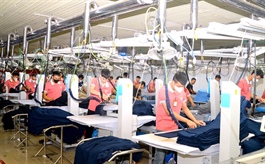
For example, the manufacturing industry stands to benefit from the deployment of Industry 4.0 concepts and technologies, deriving new level of efficiencies, quality improvement, and higher productivity.
Digitalisation will create opportunities to transform healthcare in Vietnam by enabling the transition from offline to online care. 5G is revolutionising the healthcare industry by enabling advanced connectivity solutions, improving surgeries and care in hospitals, and extending the hospital care to the patient’s homes.
As the leading hospital in the National University Health System, the National University Hospital in Singapore has adopted 5G as the advanced connectivity solution to develop innovative healthcare solutions that improve patient experience and proactively enhance healthcare availability and efficiency.
Another example I can cite is from ports. Efficient seaports are the backbone of modern shipping. Increasing terminal efficiency is a constant chase for better utilisation of quays, cranes, and vehicles, and a reduction in the environmental impact. The Rotterdam World Gateway is the world’s first fully electric and carbon-neutral container terminal and a port taking advantage of advanced 5G infrastructure.
Also, upgraded mobile infrastructure can support mission-critical applications as well as for ambulances, fire brigades, and drones for crisis situations.
5G is the common thread underpinning the success of new and exciting enterprise use cases and solutions due to its seamless, reliable, and secure connectivity.
Building the digital economy is also about talent and innovation. Can you share how Ericsson Vietnam is partnering with Vietnamese universities or institutions to develop a next-generation workforce?
We believe that technology alone is not enough to drive progress; it must go hand in hand with human capital development, innovation, and inclusive growth. That is why in Vietnam, our efforts extend well beyond deploying networks to supporting the country’s socioeconomic development in meaningful ways.
We are also committed to building Vietnam’s future talent pool. Through our Ericsson Educate programme in partnership with RMIT and PTIT, we are equipping students with essential knowledge in areas such as 5G, AI, and blockchain.
This programme not only provides access to world-class learning resources but creates opportunities for research collaboration and industry projects. By strengthening digital skills and encouraging innovation, we help to accelerate Vietnam’s digital economy while supporting a more inclusive and sustainable future.
- 10:33 03/12/2025