Vietnam motorcycle market slows amid transition
Vietnam motorcycle market slows amid transition
Vietnam’s motorcycle market faces a slowdown as sales decline and consumers await new emission standards and the shift to electric vehicles.
|
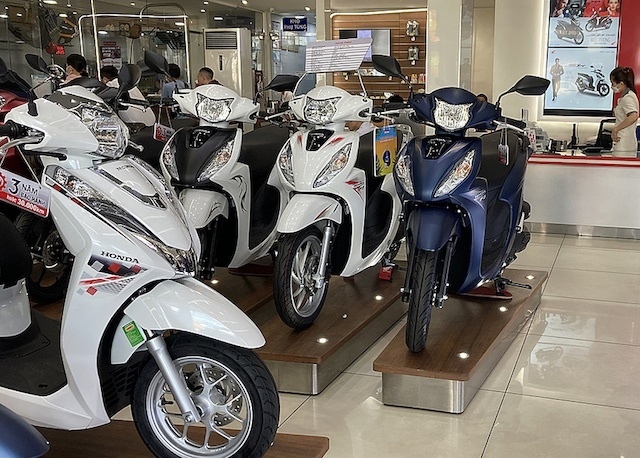
On October 10, the Vietnam Association of Motorcycle Manufacturers (VAMM) reported that combined sales from its five members – Honda, Yamaha, Piaggio, Suzuki, and SYM – totalled just under 622,000 units between July and September 2025, down almost 9.4 per cent on-year. Despite Vietnam remaining one of Southeast Asia’s largest motorcycle markets, the decline signals a pause after two decades of strong growth.
With around 80 per cent of market share, Honda continues to dominate, but has not been spared from the downturn. In September alone, Honda sold almost 164,000 motorcycles, down 11.4 per cent on-year. From April to September, its total sales amounted to just over 1 million units, a slight fall compared with the previous year.
Dealers report sharper drops in recent months, particularly in mid-range scooters, as consumers adopt a wait-and-see approach. “People are wondering whether buying a petrol bike now could restrict them later, or if it’s better to wait until EVs become more affordable. This hesitation is putting the entire market on pause,” a major distributor explained.
In contrast, non-VAMM players such as VinFast, Yadea, and Dat Bike are gaining traction in the two-wheeler EV segment, forcing traditional giants like Honda and Yamaha to accelerate their electrification strategies.
The policy landscape is also reshaping expectations. Under a directive issued by the Prime Minister in July, Hanoi authorities must implement measures to restrict fossil-fuelled motorbikes from operating within Ring Road 1 by July 2026. The following stages will limit petrol-powered private cars inside Ring Roads 1 and 2 by 2028, extending to Ring Road 3 by 2030.
In response, VAMM has petitioned the government, warning that the 2026 restrictions in Hanoi could impose significant burdens on both consumers and industry. The association argues that low-income households and families reliant on multiple petrol bikes would face steep costs in switching vehicles. For businesses, the abrupt shift risks disrupting the entire motorcycle ecosystem – from production and distribution to after-sales services.
“Manufacturers will be forced to make substantial investments in restructuring production lines, upgrading technology, and developing new products, without sufficient time or financial support. This could result in heavy losses, production disruptions, and even bankruptcies,” VAMM noted. Nearly 2,000 dealerships and 200 component suppliers tied to internal combustion engines are expected to bear the brunt of declining revenues, with supply chain fractures a likely consequence.
VAMM also pointed out that companies have already invested hundreds of thousands of dollars in new technology and equipment to meet forthcoming regulations effective from 2027, such as EURO4 emission standards and fuel consumption limits. A sudden pivot to EVs could render these efforts wasteful and undermine the effectiveness of recently enacted environmental policies.
To avoid a disorderly transition, VAMM has proposed a more phased approach with a minimum preparation window of two to three years, giving households, businesses, and regulators time to adapt and mitigate risks.
The association further explained that infrastructure remains a critical barrier. Public charging stations are still insufficient, while concerns over fire safety – particularly in ageing apartment buildings with degraded electrical systems – are rising. “Addressing these issues is essential for consumer confidence, business investment, and the safe, effective rollout of electric mobility,” the association stressed.
In addition, VAMM urged policymakers to introduce supportive incentives, such as tax breaks and preferential credit, to encourage consumer adoption of electric two-wheelers.
The motorcycle market is shifting from sheer volume growth to structural transformation. While 2025 has been a challenging year, analysts predict stabilisation from the second half of 2026 as economic growth resumes, incomes rise, and the green consumption trend strengthens.
The interplay of electrification, technological renewal, and consumer appetite for sustainable mobility is expected to shape the next growth cycle. In the long term, Vietnam will remain a pivotal two-wheeler market in ASEAN, not only for domestic consumption but also for its export potential.
- 18:59 13/10/2025