Vietnam urban areas in new development era
Vietnam urban areas in new development era
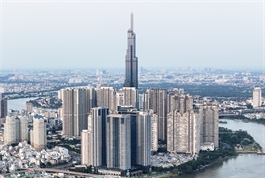
Contributing approximately 70 per cent of the country's GDP, Vietnamese cities still face many limitations in planning, infrastructure, and governance, requiring them to innovate development models in the coming period.
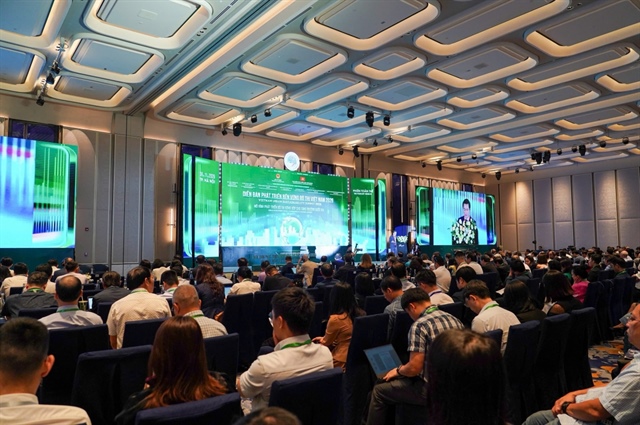
The Ministry of Construction (MoC), in collaboration with the Central Policy and Strategy Committee, organised the Vietnam Urban Sustainability Summit 2026 on November 6, attracting the participation of policymakers, experts and the business community.
The event, held on the occasion of the Vietnam Urban Day (November 8), focused on discussing the role of cities in economic growth, the limitations of the urbanisation process, and the need for innovation in urban development models, planning, resource mobilisation, and governance in the new era.
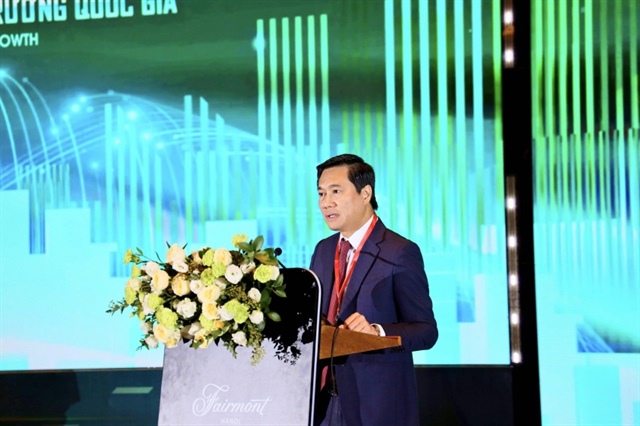
The Vietnam Urban Sustainability Summit 2026. Photo: MoC |
In his opening remarks, Nguyen Ngoc Tuan, deputy head of the Central Policy and Strategy Committee, stated that Vietnam was entering a new phase of development, aiming for an average economic growth rate of 10 per cent or higher during 2026-2030 and beyond.
“To achieve this goal, urbanisation and urban development play a crucial role, not only as places for population concentration and production and business activities, but also as a space for resource convergence, market connectivity, application of science and technology, and improvement of labour productivity,” he added.
According to the data presented by Tuan at the forum, the country has 910 urban areas. The average floor area of housing in urban areas is over 30 square metre per person.
Along with the development of urban systems, many strategic transportation projects, ring roads, and urban railways have been invested in, contributing to increased connectivity and expanded development space.
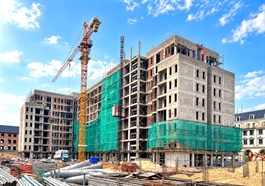
However, the quality and effectiveness of urbanisation have not been commensurate with its potential. Some localities still rely heavily on expanding construction space, land exploitation, and real estate investment, without being closely linked to high-productivity and innovative economic sectors.
Furthermore, the quality of planning and its implementation remains limited; infrastructure is not synchronised; traffic congestion, flooding, environmental pollution, and a lack of green space still occur in many urban areas. There are also shortcomings in the mobilisation and allocation of resources and urban governance capacity.
From this reality, Nguyen Ngoc Tuan believed that it is necessary to innovate the urban development model in the direction of improving productivity and efficiency in using land, infrastructure and resources, instead of mainly relying on expanding construction space.
According to the MoC, Vietnam's urbanisation rate is estimated to reach 53.3 per cent by August 2026. Urban areas currently contribute approximately 70 per cent of the country's GDP and serve as centres of economy, culture, sci-tech, and innovation.
On November 5, government Decision No.2116/QD-TTg was issued, approving the national smart city development for 2026-2030, with a vision to 2035.
Deputy Minister of Construction Nguyen Tuong Van said that the plan aims for all cities to develop and implement smart city development projects by 2030, build a shared urban database, and gradually form an integrated, unified, and interconnected urban governance platform.
|
Deputy Minister of Construction Nguyen Tuong Van. Photo: MoC |
"Developing smart cities is not just about investing in technology or building control centres, but also requires innovating management methods and applying data to improve the ability to analyse, predict, and solve urban problems," he said.
At the event, the other discussions focused on improving institutions, innovate mechanisms for mobilising resources, boost public-private partnerships, and research appropriate urban finance tools.
Anacláudia Rossbach, executive director of the United Nations Human Settlements Programme said that Vietnam had set an ambitious direction for the years ahead, to accelerate growth and transformation, advance modernisation and build a high-income economy by 2045. With the country also pursuing ambitious growth targets, the quality of urban development will be more important than ever.
“For Vietnam, this means that the next stage of urbanisation must go beyond expanding urban areas and building infrastructure. It means creating cities that are more productive, connected, liveable and resilient, making better use of land and infrastructure, mobilising investment effectively and ensuring that urban growth creates opportunities for people across generations and across the country,” she said.
- 21:42 06/11/2026