Việt Nam urged to step up post-market checks on beverages
Việt Nam urged to step up post-market checks on beverages
Việt Nam needs to strengthen risk-based post-market inspections of beer, alcoholic beverages and soft drinks, alongside tighter product traceability and greater use of digital data, as e-commerce pose growing challenges for food safety management.
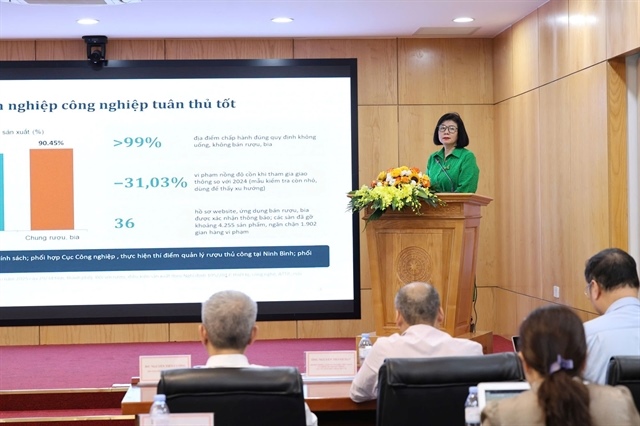
A view of a seminar on corporate responsibility and consumer trust for food safety in the production and trading of beer, alcoholic beverages and soft drinks was held on Wednesday. — Photo doisongsuckhoe.vn |
Việt Nam needs stronger risk-based post-market inspections, tighter product traceability and greater use of digital data to improve food safety management as e-commerce expands, a seminar on corporate responsibility and consumer trust in food safety heard on November 4.
The event, organised by the Department of Industry under the Ministry of Industry and Trade and Công Thương (Industry and Trade) newspaper, focused on food safety risks, enforcement challenges and policy recommendations for the beer, alcoholic beverage and soft drink sectors.
Nguyễn Tiến Cường, deputy editor-in-chief of Công Thương newspaper, said food safety in the beer, alcoholic beverage and soft drink sectors must be monitored throughout the supply chain, from raw materials and production to processing, transportation, storage and distribution.
This is not only essential to protecting consumer health but also directly affects corporate reputations and fair competition in the market, he said.
In the first nine months of 2026, industrial production in the beverage sector rose 17.4 per cent, while beer output increased 14.7 per cent.
The expansion in production has heightened the need for stricter quality management and food safety controls, according to the seminar.
A report by the Ministry of Health showed that authorities in 29 of Việt Nam's 34 provinces and centrally governed cities inspected 4,105 alcohol and beer production facilities in 2025. Of these, 3,713, or 90.45 per cent, met the required conditions.
Market surveillance authorities handled 210 violations related to alcohol and beer during the year, imposing administrative fines totalling more than VNĐ3 billion.
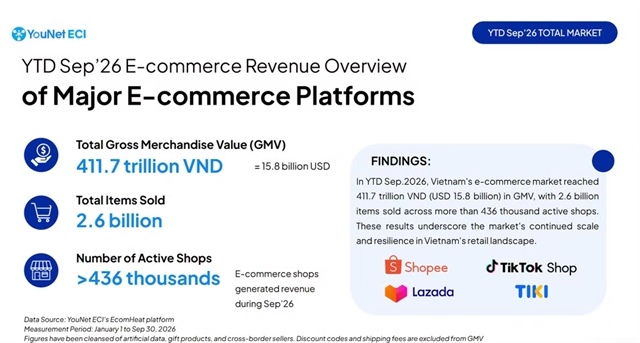
On e-commerce platforms, nearly 4,255 products were removed and 1,902 violating online stores were blocked.
This requires more flexible market surveillance methods and closer coordination among relevant authorities.
The Ministry of Health plans to submit the draft of amended Law on Food Safety to the 16th National Assembly's second session for consideration. The draft will have regulations on strengthening food safety controls from the initial production stage and moving towards risk-based management, greater use of technology, and clearer allocation of responsibilities among stakeholders.
The proposed changes are directly relevant to the production, product declaration, circulation and distribution of beer, alcoholic beverages and soft drinks.
|
A view of a seminar on corporate responsibility and consumer trust for food safety in the production and trading of beer, alcoholic beverages and soft drinks was held on Wednesday. — Photo doisongsuckhoe.vn |
Shift towards post-market inspections
Speaking at the seminar, Nguyễn Hương Giang, a representative of the Department of Industry under the Ministry of Industry and Trade, stressed the need to improve state management of food safety in the beer, alcoholic beverage and soft drink sectors.
She said regulations on food safety, alcohol trading and the prevention of the harmful effects of alcohol and beer should be reviewed to address overlaps and inconsistencies. Administrative reforms should be accompanied by risk-based post-market inspections, stronger product traceability, greater use of electronic data and clearer responsibilities for regulators and businesses.
The market continues to face risks from substandard raw materials, products of unknown origin, counterfeit goods and products that fail to meet quality and food safety requirements. Such violations threaten consumer health, damage legitimate businesses and distort competition.
Companies should maintain strict controls over raw materials, production hygiene, processing, packaging, storage and transportation. Distributors and retailers should also check suppliers, product origins, quality and storage conditions.
Trần Thị Dung, vice chairwoman of the Vietnam Consumer Protection Association, said food safety risks could arise throughout the supply chain, from raw materials and production to storage and counterfeit products.
She called for stronger public awareness campaigns to help consumers choose products with clear origins, complete labels, valid expiry dates and intact packaging. Authorities should also warn consumers about the harmful effects of improper consumption and encourage them to participate in market surveillance.
Efforts to prevent counterfeit and unsafe products should be supported by information sharing, risk alerts, traceability and product recalls. As e-commerce expands, digital technologies should improve data management and post-market inspections in both traditional and online markets.
- 17:55 04/11/2026