

HNX considers segmenting UPCoM market to help investors identify risks
HNX considers segmenting UPCoM market to help investors identify risks
Recent market performance has yet to fully reflect positive economic developments, with declining liquidity and persistent challenges to investor demand.
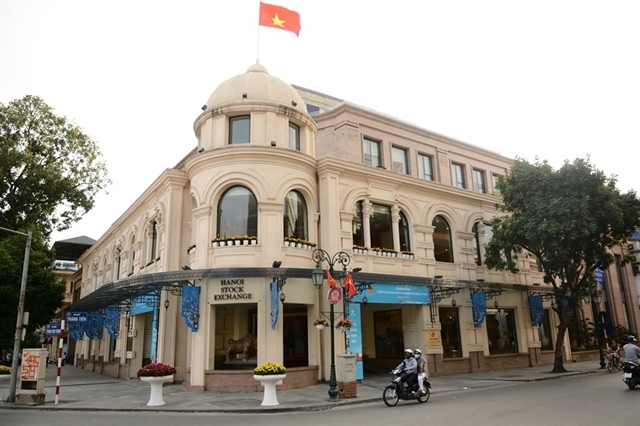
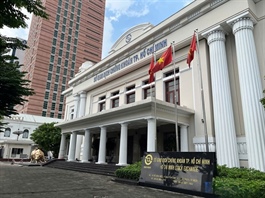
Hanoi Stock Exchange is considering UPCoM segmentation to help investors distinguish companies. — Photo HNX |
The Hanoi Stock Exchange (HNX) is studying plans to segment UPCoM to help investors distinguish companies requiring greater risk scrutiny from those meeting listing requirements.
This is part of efforts to improve market transparency and corporate governance following its upgrade to secondary emerging-market status.
The proposed segmentation is intended to help investors better assess and select stocks while improving the overall quality of the market, HNX said.
HNX General Director Vũ Thị Thúy Nga said at HNX’s annual business conference on November 10 that the stock market upgrade, effective from September 2026, marked an important milestone but the upgrade was not an end in itself but the starting point for a new phase of development.
Nga, however, noted that recent market performance has yet to fully reflect positive economic developments, with declining liquidity and persistent challenges to investor demand. Misinformation and fake news have also weighed on market sentiment, while corporate accountability and governance standards remain uneven, she said.
Statistics showed that 94 UPCoM stocks were placed under warning status because their annual financial statements had received qualified audit opinions for at least three consecutive years. Another 65 stocks faced trading restrictions after auditors either declined to express an opinion or issued an adverse opinion.
Other violations included incomplete disclosure of related-party transactions, failure to hold annual general meetings of shareholders on time, insufficient board meetings, and the absence of designated corporate governance officers or internal governance regulations.
Hồ Thị Phương Tú, director of HNX's Listing Management Department, said improving corporate quality would remain a key priority for the exchange in 2027.
Alongside its proposed UPCoM segmentation, HNX plans to continue training programmes on information disclosure and corporate governance in the fourth quarter of 2026 and throughout 2027.
HNX will also transfer listed shares to the HCM Stock Exchange (HOSE) in line with the prescribed roadmap and develop a trading market for innovative start-ups following the government's issuance of a relevant decree.
Regardless of where companies are listed, stronger governance and transparent disclosures remain essential to building investor confidence, broadening access to capital and supporting sustainable growth, she said.
Economist Trần Đình Thiên said that it is necessary to shift the government's approach from management towards enabling businesses, while expanding decentralisation and ensuring a level playing field to unlock the potential of the domestic private sector.
As of the end of October 2026, there are 1,110 companies on HNX and, including 299 listed firms and 811 registered for trading with a combined listed and registered value of VNĐ693 trillion (US$27.4 billion), up 5 per cent from the end of 2025, and market capitalisation of VNĐ1.721 quadrillion, up 3 per cent.
During the first 10 months of 2026, companies listed on HNX issued shares and completed additional listings worth a combined VNĐ42.3 trillion at par value, 1.8 times the total recorded in all of 2025.
On UPCoM, the value of additional share registrations reached VNĐ25.4 trillion, equivalent to 75 per cent of last year's full-year figure.
The corporate bond market also continued to expand, with the value of listed publicly issued corporate bonds reaching approximately VNĐ144 trillion at the end of October, up 16 per cent from the end of 2025.
- 08:26 12/11/2026