

Growth holds in agro-forestry-fishery exports during ten months
Growth holds in agro-forestry-fishery exports during ten months
Agricultural products accounted for the largest share of exports, generating $32.65 billion, up 3.9 per cent year on year.
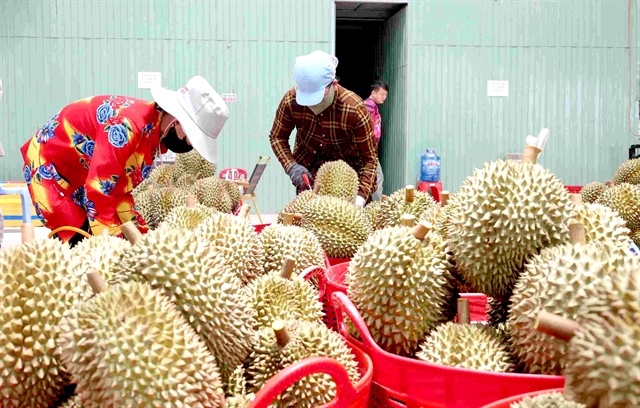
Durian in Đắk Lắk Province is harvested. Among major export commodities, fruit and vegetables continued to perform strongly in the first ten months of 2026. VNA/VNS Photo |
Exports of agricultural, forestry and fishery products reached $63.02 billion in the first 10 months of 2026, generating a trade surplus of around $18.9 billion, according to the Ministry of Agriculture and Environment.
Export earnings in October were estimated at $6.93 billion, up 7.9 per cent from September and 13.4 per cent from the same month last year. The 10-month total rose by 8 per cent year on year to $63.02 billion.
Imports of agricultural, forestry and fishery products were estimated at $4.64 billion in October, up 6.9 per cent month on month and 13.7 per cent year on year. For the January-October period, imports totalled $44.12 billion, an increase of 8.8 per cent.
However, diverging export performance among commodities and the concentration of several key products in a limited number of markets underscore the need to diversify export destinations, improve product quality and increase processing value.
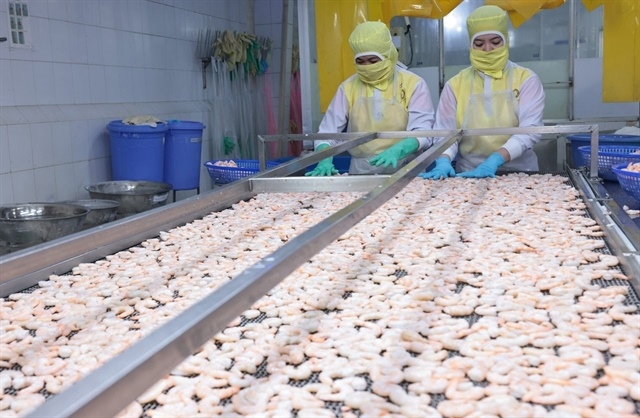
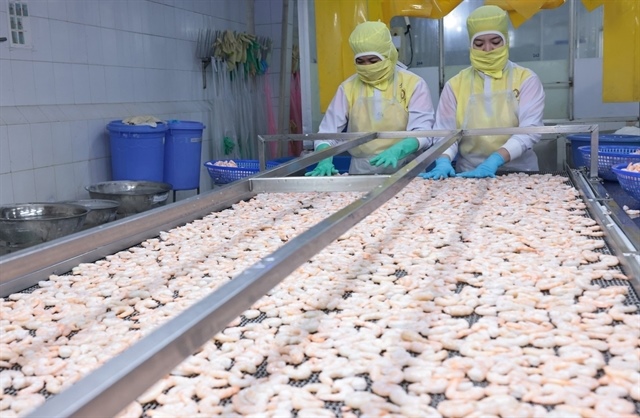
Agricultural products accounted for the largest share of exports, generating $32.65 billion, up 3.9 per cent year on year. Forestry products brought in $16.13 billion, up 7.3 per cent, while fishery products earned $10.44 billion, up 11.7 per cent. Livestock products recorded export revenue of $642.7 million, a rise of 25.1 per cent.
Among major export commodities, fruit and vegetables continued to perform strongly. Exports of these products were estimated at $1.05 billion in October, bringing the 10-month total to $8.32 billion, up 17.8 per cent from the same period last year.
Exports of wood and wooden products reached $15.02 billion in the first 10 months, up 6.9 per cent.
Several other commodities also recorded positive results. Cashew exports rose by 2.2 per cent in value to $4.38 billion, despite a 2 per cent decline in volume. Pepper exports increased by 13.1 per cent in value and 17.5 per cent in volume to $1.58 billion. Tea exports reached $197.4 million, up 4.3 per cent, although export volume fell by 4.6 per cent.
By contrast, some traditional export commodities faced pressure from weaker prices and volumes.
Around 1.6 million tonnes of coffee were exported in the first 10 months of 2026, earning $7.09 billion. Export volume increased by 18.7 per cent year on year, but export value fell by 5 per cent as the average export price dropped 19.9 per cent to $4,528 per tonne.
Rubber exports totalled 1.2 million tonnes, worth $2.54 billion, down by 16.8 per cent in volume and 2.5 per cent in value year on year. The average export price rose by 17.2 per cent to $2,060.5 per tonne, but the increase was insufficient to offset the decline in export volume.
Rice exports also fell in both volume and value. Việt Nam shipped 6.8 million tonnes of rice in the 10-month period, earning $3.31 billion, down by 4.6 per cent in volume and 9.7 per cent in value. The average export price was $484 per tonne, 5.4 per cent lower than in the same period of 2025.
By market, Asia remained the largest destination for Việt Nam’s agricultural, forestry and fishery exports, accounting for 49.7 per cent of the total.
The Americas ranked second with a 22.2 per cent share, followed by Europe at 13.4 per cent. Africa and Oceania accounted for smaller shares of 2.2 per cent and 1.5 per cent, respectively.
Compared with the same period last year, exports to Asia rose by 11.8 per cent, while shipments to the Americas increased by 2.2 per cent, Europe 4.4 per cent and Oceania 13.9 per cent. Exports to Africa, however, fell by 14.5 per cent.
Durian in Đắk Lắk Province is harvested. Among major export commodities, fruit and vegetables continued to perform strongly in the first ten months of 2026. VNA/VNS Photo |
Challenges
Deputy Minister of Agriculture and Environment Võ Văn Hưng said export value growth did not fully reflect the effectiveness of agricultural sales.
Although export prices had recovered for some commodities, the improvement had not been consistently reflected in purchasing prices at production areas.
Farmers and small cooperatives also lacked working capital, storage and drying facilities, as well as the financial capacity to wait for more favourable selling conditions. As a result, they often had to sell their produce quickly during peak harvest periods.
Weak links between production, procurement, processing and distribution were another major bottleneck. Production remained fragmented, off-take agreements were not sufficiently sustainable, and information on orders and harvest schedules was not shared in a timely manner.
Processing facilities were operating at only around 60-80 per cent of their designed capacity. Cold storage facilities, shared logistics centres and deep-processing technologies also remained inadequate.
Longstanding constraints in processing, preservation and supply-chain integration made it difficult for businesses to stockpile and manage supplies. Producers, meanwhile, were often forced to sell quickly during peak harvest periods, reducing their profits.
According to Vũ Huy Phúc from the Institute of Strategy and Policy for Agriculture and Environment, surveys of several commodity value chains found significant losses across the chains. Losses were recorded at 8.8 per cent for shrimp, 13.6 per cent for lychee, 9.2 per cent for coffee and 13.9 per cent for rice.
For fruit and vegetables, harvesting time, preliminary processing, packaging conditions and transportation directly affect spoilage rates. Some products have a short shelf life, while preliminary processing facilities, refrigerated storage and cold-chain transport remain inadequate, particularly during peak harvest periods.
In the rice sector, losses occur at multiple stages, from harvesting and transportation to drying, milling and storage. Adverse weather, harvesting at the wrong level of maturity, unsuitable grain moisture levels, limited drying and milling equipment, and inadequate storage conditions can all reduce recovery rates and rice quality.
Nguyễn Đỗ Anh Tuấn, director of the Ministry of Agriculture and Environment's Department of International Cooperation, said the ministry would continue to refine policies to promote high-tech agriculture, increase mechanisation and expand deep processing in an effort to reduce agricultural losses.
It would also promote green, ecological and circular agriculture, develop agricultural logistics systems and improve the flow of goods. The application of science and technology to make effective use of agricultural by-products would also be prioritised, helping improve economic efficiency, reduce resource waste and enhance the competitiveness of Vietnamese agricultural products in international markets.
- 07:02 09/11/2026