Green transition support key for SMEs facing emissions pressure
Green transition support key for SMEs facing emissions pressure
Rising emissions requirements are putting pressure on small- and medium-sized enterprises, making targeted financial, technological and cross-border support essential to turning green transition challenges into competitive advantages.
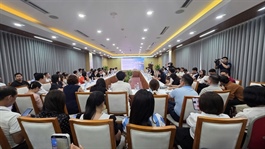
The message was conveyed at the 2026 Business Partner Cities (BPC) roundtable held on October 23 in Ho Chi Minh City where Shirley Ng, general manager, International Competitiveness at Australian Industry Group (Ai Group) noted thatreducing emission could become a competitive advantage for businesses.
“In pursuit of this goal, businesses need to assess current emission levels, build a roadmap to adjust production processes and allocate necessary resources aside technology investment, Moreover, the carbon border adjustment mechanism requires businesses to pay closer attention to emissions monitoring and reporting, as well as their ability to meet import markets’ standards,” she said.
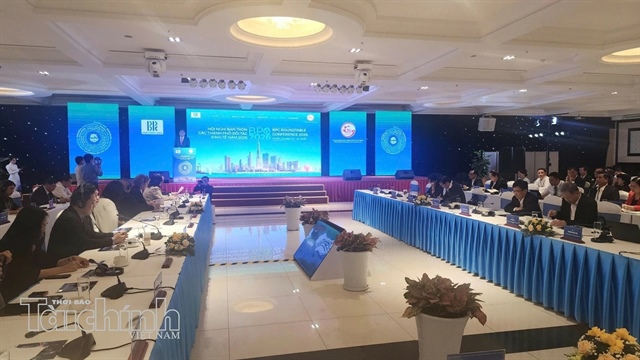
Photo: Lac Nguyen |
As for small- and medium-sized enterprises (SMEs), limited access to information, funding and resources can increase operating cost, prolong the transition process, as well as hinder them from making effective investment solutions.
Therefore, the challenge is to raise awareness of green production while equipping businesses to meet these requirements in practice.
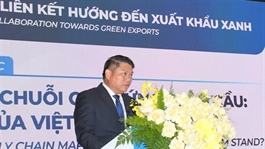
At the conference, Nguyen Loc Ha, Standing Vice Chairman of Ho Chi Minh City People’s Committee, noted that innovation must be closely linked to commercialisation and business development, while economic growth must go hand in hand with the efficient use of resources.
“These principles also underpin the green transition, requiring environmental solutions to deliver tangible business benefits and be practically implemented,” he said.
In Ho Chi Minh City, emissions reduction efforts are underway across multiple sectors.
Greenhouse gas inventories have been conducted at 360 facilities, of which 240 have developed 2026-2030 emissions reduction plans.
In the transport sector, around 68 per cent of buses run on electricity or other green energy, with the city targeting 100 per cent adoption by early 2027. Additionally, rooftop solar power capacity has reached 1.865,7 MWp.
However, these represent only an initial step for SMEs, as implementation depends on investment capital, technology and production ability.
There must be tailored support resolutions for different business groups, rather than simply prompting them to go green.
To that end, Ho Chi Minh City suggested strengthening market and investor connections, piloting technologies, and fostering collaboration among incubators within the BPC network.
Moriyama Ayako, director general of Economic Strategy Bureau of Osaka city government, said the city is working to put carbon-neutral technologies showcased at World Expo 2025 – a global technology exchange event – into practical use.
“Networking activities such as Vietnam Circular Economy Seminar and Tech Osaka Summit also help link environmental challenges with technology needs, business opportunities and international cooperation,” she said.
Osaka proposed providing SMEs with additional information about environmental challenges and business opportunities in partner cities, integrating green into existing policies and programmes, sharing business-matching events, and strengthening coordination among BPC organisations.
Such measures may help SMEs turn emissions reduction requirements into opportunities, improving production efficiency and maintaining competitiveness.
- 12:50 26/10/2026