FTSE upgrade opens door to $2 billion in passive fund inflows
FTSE upgrade opens door to $2 billion in passive fund inflows
Vietnam's stock market reclassification by FTSE Russell opens access to new capital flows, but interest rates, valuations, and macroeconomic conditions will continue to shape the direction and pace of inflows.
The official reclassification from Frontier to Secondary Emerging market status on September 21 marks a historic shift for capital flows. Experts said the move reflects improvements in market size, liquidity, infrastructure, and accessibility for international investors, beyond a simple change in classification.

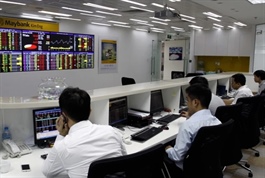
Photo: baodautu.vn |
Experts noted that this is not merely a change in classification but reflects improvements in market size, liquidity, infrastructure, and accessibility for international investors.
At an online seminar on September 29, Le Duc Khanh, director of Analysis at VPS Securities, said the reclassification is an important milestone in the formation and development of Vietnam’s stock market. He noted that one of the most closely watched impacts is the potential to attract additional capital from international investment funds.
"Capital from passive funds could be deployed gradually, with an estimated $130-150 million in the initial phase and total expected inflows of around $1.5-1.8 billion as implementation progresses. However, these flows do not mean all stocks will receive funds evenly," he said.
Khanh also noted that, in the long term, market development generally goes hand in hand with expansion in scale and value. However, in each period, stock prices remain dependent on corporate performance, earnings prospects, and valuations.
Nguyen The Minh, head of Investment Banking at An Binh Securities, estimates that capital from passive funds could reach around $2 billion following the reclassification.
"Active funds may also participate. Experience in some other markets shows that the scale of this group can be several times larger than that of passive funds," Minh said. "However, unlike index-tracking funds, it is difficult to determine exactly when active funds will deploy capital. The money may enter the market this year or wait until next year, depending on market conditions, valuations, and asset allocation strategies."
According to Minh, another benefit of the reclassification is an expanded investor base. In addition to traditional capital flows from Europe and Asia, Vietnam's market will have greater opportunities to access new sources of capital. Nevertheless, the reclassification does not mean capital will flow evenly into all stocks.
By sector, leading companies in finance, consumer goods, retail, energy, chemicals, and real estate could attract international capital, provided they meet criteria related to market size and investability.
The reclassification opens up a new source of demand but cannot immediately reverse the factors currently affecting the market. This partly explains why foreign investors have continued to be net sellers in recent times, despite Vietnam’s stock market having moved into the Secondary Emerging market group.
As regards to key market drivers, Minh said it is necessary to distinguish new capital flows arising from the reclassification from international capital already present in the market.
“Even with additional billions of dollars from passive and active funds, this amount is not particularly large compared with the current scale of Vietnam’s stock market. More importantly, Vietnam has gained new sources of capital and expanded its international investor base,” he said.
Reality shows that some existing capital flows continue to show a tendency to withdraw from emerging markets. A notable factor is interest-rate levels and bond yields in major markets.
When long-term bond yields remain high, the cost of capital for investment institutions rises. This reduces the relative attractiveness of assets in emerging markets and may encourage capital to move into defensive assets or return to investors’ home markets.
Therefore, according to Minh, an important condition for international capital to return more strongly to emerging markets, including Vietnam, is for global yields to cool. This development, in turn, is closely linked to inflation trends and monetary policy in major economies.
Domestically, interest rates are also one of the key variables for the market in the final months of the year. The economy’s demand for capital remains high, while deposit mobilisation has at times lagged credit growth, creating certain pressures on banking-system liquidity.
Alongside short-term variables, experts believe the reclassification is only a starting point. To attract long-term capital and move closer to MSCI standards, Vietnam needs to continue improving market accessibility, completing its clearing and settlement mechanisms, and enhancing the quality of listed securities.
- 12:12 07/10/2026